
Largest Therizinosaur Yet Found in China's Jehol Biota
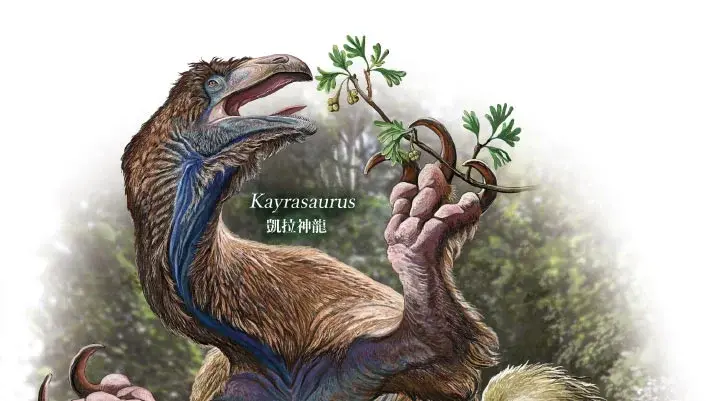
A nearly complete skeleton of a new therizinosaur, Kayrasaurus changliensis, was discovered in northeastern China. Dating to the Early Cretaceous, it is the largest known member of its group from the Jehol Biota, offering insights into the ecological diversity of these herbivorous dinosaurs.
Key points
- A new genus and species, Kayrasaurus changliensis, was described based on a nearly complete skeleton found in the Yixian Formation of western Liaoning, China.
- The fossil dates to the Early Cretaceous epoch, approximately 125 million years ago, within the fossil-rich Jehol Biota.
- The specimen is estimated to be over 3.6 meters long, making it at least 1.6 times larger than Beipiaosaurus, the second-largest therizinosaur from the region.
- The animal had more than 45 small, densely packed teeth in its lower jaw, the highest count among known therizinosaurs.
- Researchers suggest Kayrasaurus and Beipiaosaurus had robust builds for strong bites, while Jianchangosaurus and Lingyuanosaurus were lighter and more agile, indicating different ecological niches.
Background
Recent paleontological discoveries in North Dakota and Montana have highlighted new insights into Cretaceous ecosystems, including the first adult T. rex trackway and ancient bird feathers preserved in dinosaur coprolites. The discovery of Kayrasaurus adds to the growing understanding of dinosaur diversity and ecological strategies during the Early Cretaceous.
Why it matters
The discovery of Kayrasaurus changliensis provides crucial data for understanding the evolution and ecological diversity of therizinosaurs. By comparing body sizes and skeletal structures, scientists can better infer how these dinosaurs adapted to their environments, filling gaps in the fossil record of the Jehol Biota.
What to watch
Further fieldwork and biomechanical analyses are needed to confirm the provisional ecological interpretations of therizinosaurian diversity. Additional fossil discoveries may help clarify the evolutionary pathways and paleoecological roles of these enigmatic dinosaurs.
Want the full story? Read the original reporting
Read on sci.news