
New data suggests Indigenous Americas population peaked centuries before Columbus
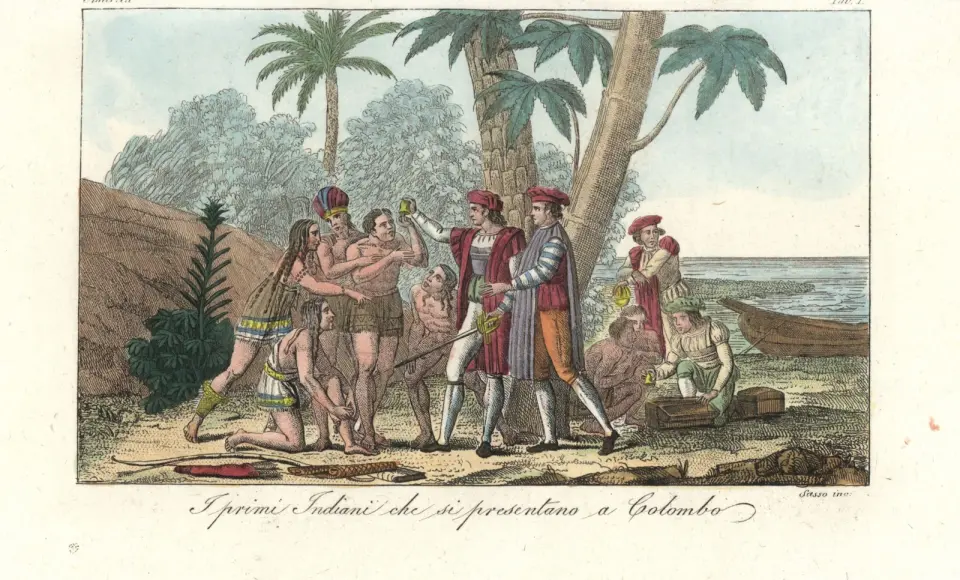
Researchers are refining estimates of the Indigenous population in the Americas prior to 1492, with new data suggesting a peak around A.D. 1150. While earlier estimates varied wildly from 1 million to 112 million, recent studies using radiocarbon dating and archaeological data place the North American population at approximately 1.8 million to 2.5 million at the time of European contact. This timeline indicates that the population had already begun declining before Columbus arrived, potentially due to disease and denser settlements. Experts emphasize that the Americas were not empty, with complex civilizations like Cahokia existing at the time, which could have significantly altered the course of history if Europeans had arrived earlier.
Key points
- Estimates of the pre-1492 Indigenous population in the Americas have historically varied widely, ranging from 1 million to 112 million.
- A 2019 study estimated the total Western Hemisphere population at 60.5 million, with North America holding between 3 million and 6 million people.
- Recent radiocarbon dating data from the Canadian Archaeological Radiocarbon Database suggests the North American population peaked around A.D. 1150.
- By 1492, the population in North America had declined to approximately 1.8 million, possibly due to diseases like tuberculosis in denser settlements.
- Archaeologist Robert Kelly notes that if Europeans had arrived in A.D. 1000, they would have encountered a much larger population and more organized societies.
Background
This topic has gained renewed attention following recent genetic studies that date the arrival of Indigenous ancestors to as early as 21,000 years ago, aligning with the end of the Last Glacial Maximum. Additionally, public discourse around land acknowledgments and reconciliation has highlighted the importance of accurately understanding pre-colonial demographics to contextualize historical narratives.
Why it matters
Accurate population estimates are crucial for understanding the scale of the 'Great Dying' caused by European colonization and for informing modern environmental and demographic models. Recognizing that the Americas were densely populated and home to complex civilizations challenges the myth of an 'empty continent' and supports efforts in Indigenous reconciliation and historical accuracy.
What to watch
Researchers continue to refine population models using expanded radiocarbon databases and archaeological data. Experts anticipate that a comprehensive, hemisphere-wide population estimate may eventually be achieved, though the process is described as time-consuming and laborious.
Want the full story? Read the original reporting
Read on Live Science