
Dutch Amateur Spends 352 Hours Imaging All 110 Messier Objects
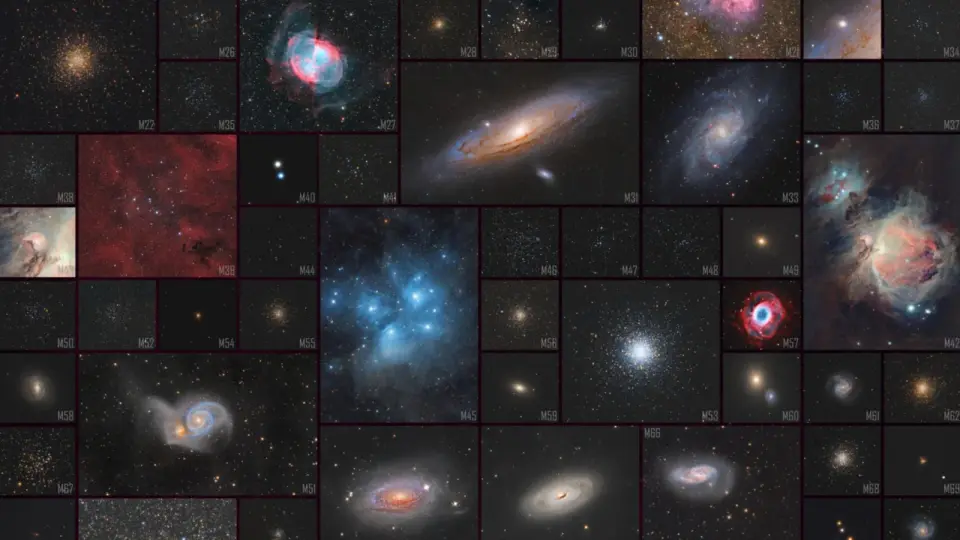
Amateur astrophotographer Cornelis van Zuilen has completed a comprehensive mosaic of all 110 objects in the Messier catalog, a project that required 352 hours of imaging time and extensive travel to dark-sky locations in the Netherlands. Using professional-grade equipment and specialized software, van Zuilen captured galaxies, star clusters, and nebulas, including the Andromeda Galaxy and the Pleiades, to create a single visual representation of this historic astronomical list. The effort involved sleeping in his vehicle to access optimal viewing sites, highlighting the dedication required for deep-sky imaging from a northern latitude.
Key points
- Cornelis van Zuilen, an amateur astrophotographer from Heiloo, Netherlands, created a mosaic containing all 110 objects in the Messier catalog.
- The project required a total of 352 hours and 13 minutes of light data collection.
- Van Zuilen utilized an Askar 103APO telescope and a William Optics Redcat 51 MK2.5, along with ZWO cameras and filters.
- Post-processing was performed using Photoshop and the astronomy software PixInsight.
- Many observations were conducted from his balcony, but others required travel to semi-dark fields to avoid light pollution and obstructions like treetops.
- Van Zuilen reported sleeping in his car during these trips, describing the experience as enjoyable and similar to camping.
Background
The Messier catalog, originally compiled by 18th-century astronomer Charles Messier, lists deep-sky objects that were historically mistaken for comets. It includes famous targets such as the Andromeda Galaxy (M31), the Pleiades (M45), and the Orion Nebula (M42). Recent archive coverage has highlighted other deep-sky imaging efforts, such as Andrew McCarthy’s 30-hour capture of the Dumbbell Nebula (Messier 27) for a 2027 calendar, which illustrates stellar evolution. Additionally, recent James Webb Space Telescope releases have detailed stellar nurseries in the Carina Nebula and NGC 7129, emphasizing the ongoing interest in mapping star formation and cosmic structures.
Why it matters
This achievement demonstrates the significant potential of amateur astrophotography to produce high-quality scientific and artistic imagery. By systematically capturing the entire Messier catalog, van Zuilen provides a complete visual reference for these key deep-sky objects, which are popular targets for both professional and amateur astronomers. The project also highlights the logistical challenges and dedication involved in ground-based astronomy, particularly for observers in regions with light pollution who must travel to remote locations to achieve clear views of the night sky.
What to watch
The completed mosaic serves as a final product for van Zuilen’s long-term project. While no specific future plans for new imaging campaigns were detailed in the source, the success of this catalog may inspire similar comprehensive projects by other amateur astronomers. The images may also be used for educational purposes or public outreach to showcase the beauty of the night sky accessible through dedicated observation.
Want the full story? Read the original reporting
Read on Space