
Venus Reaches Peak Brightness on September 18, Outshining Sirius by 20 Times
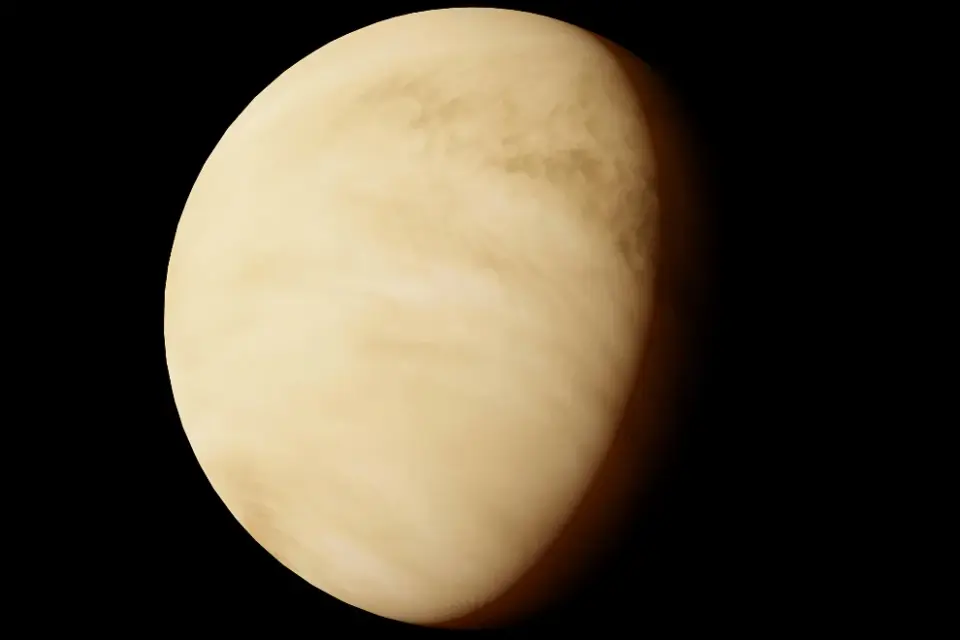
Venus reached its maximum brightness for 2026 on September 18, appearing as a brilliant white light low in the western sky. The planet achieved a magnitude of -4.8, making it significantly brighter than the star Sirius. This event is a regular astronomical occurrence, not a rare anomaly, and is easily visible to the naked eye.
Key points
- Venus reached peak brightness on September 18 at 23:00 GMT, with a magnitude of -4.8.
- The planet was visible low in the western sky, approximately 10 degrees above the horizon for observers at 35 degrees north latitude.
- Venus is currently more than 20 times brighter than Sirius, the brightest star in the night sky.
- The event is a regular consequence of Venus's orbital mechanics, repeating roughly every 19 months.
- The next peak brightness in the evening sky will not occur until April 2028.
Background
This event follows a busy September for skywatchers, which included the Perseid meteor shower and a partial solar eclipse in early August. Our archive notes that September 2026 was a month-long guide for celestial sights, including the Harvest Moon and the autumn equinox. The current Venus peak is part of a regular cycle, with the next peak in the morning sky scheduled for November 29, 2026.
How outlets are covering it
USA Today 10Best emphasizes the ease of viewing Venus with the naked eye and recommends binoculars or telescopes for enhanced viewing. Srpske.rs provides detailed astronomical data, noting that Venus's brightness barely changes between September 12 and 22, making cloudy evenings on the 18th not a missed opportunity. The Star, a Malaysian outlet, reports that Venus reached peak brightness in Thailand's western sky on September 22, highlighting regional variations in the event's timing and visibility. All sources agree on the magnitude of -4.8 and the general visibility of Venus in the western sky, but differ in the specific dates and regional focus.
Why it matters
Venus's peak brightness is a significant astronomical event that offers a rare opportunity for skywatchers to observe the planet at its most luminous. It serves as a reminder of the regular and predictable nature of celestial mechanics, and provides a chance for both amateur and professional astronomers to observe the planet's crescent phase and its relative brightness compared to other celestial objects.
What to watch
Venus will continue to move toward inferior conjunction, scheduled for October 23-24, 2026. After this, the planet will set faster each evening as the ecliptic meets the western horizon at a shallower angle. The next peak brightness in the evening sky will not occur until April 2028, with a morning peak scheduled for November 29, 2026.
- Skywatchers, take note: This planet will blaze tomorrow's night sky USA TODAY 10BEST
- Venus Is Putting on a Dazzling Show This Month National Geographic
- Venus to reach peak brightness in Thailand’s western sky on Sept 22 The Star
- Star Watch: Venus and the Moon Highlight the Sky This Week WJHL
- Venus Brightest on September 18, Magnitude -4.8 srpske.rs
Want the full story? Read the original reporting
Read on USA TODAY 10BEST