
Voyager 1 Endures at the Edge of Space on Tiny Nuclear Power
TL;DR
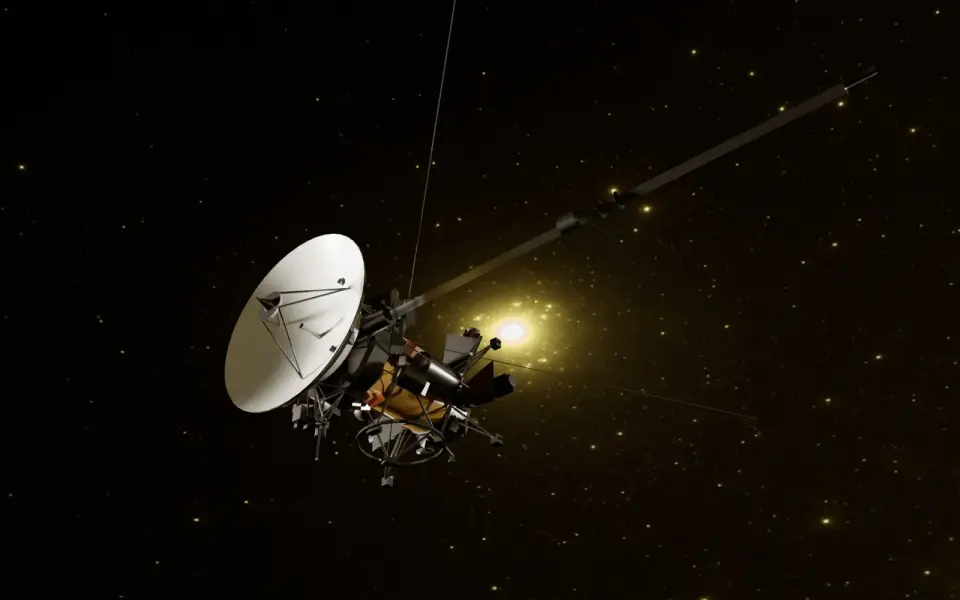
Voyager 1, launched in 1977, is now about 25 billion kilometres from Earth, so far that radio signals take more than 22 hours to reach it; it continues to send back data from interstellar space using a nuclear power source the size of a car battery. Its plutonium generators now deliver ~230 watts (down from ~470 W at launch), fading about 4 watts per year, leading NASA to progressively shut down nonessential systems to extend the mission into the 2030s. Two instruments remain active as it drifts beyond the heliopause, with signals traveling via NASA’s Deep Space Network, a faint whisper from humanity's farthest probe.
Topics:science#deep-space-network#heliopause#interstellar-space#plutonium-power-source#science#voyager-1
- The Voyager 1 probe, launched in 1977, is now so far from Earth that a radio signal travelling at the speed of light takes over 22 hours to reach it, and it is still sending data back from interstellar space on a power source the size of a car battery Space Daily
- Voyager 1 launched in 1977 on a four-year mission, and in November 2026, nearly half a century later, it will become the first object ever to reach one light-day from Earth — so distant that a signal now takes a full 24 hours to cross the emptiness back home 19FortyFive
- Voyager 1 to reach 1 light-day from Earth on November 18 EarthSky
- A voyage to infinity and beyond: Voyager's remarkable journey continues Vision IAS
- Why was the Voyager 1 spacecraft in the news? - Ask Your Science Teacher La Crosse Tribune
Want the full story? Read the original reporting
Read on Space Daily