Tag

Heliopause

All articles tagged with #heliopause

Voyager 1 Endures at the Edge of Space on Tiny Nuclear Power
science7 days ago

Voyager 1 Endures at the Edge of Space on Tiny Nuclear Power

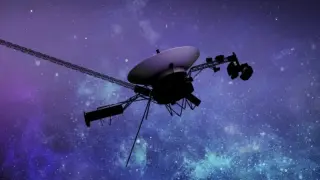
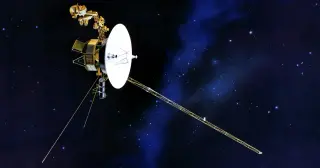
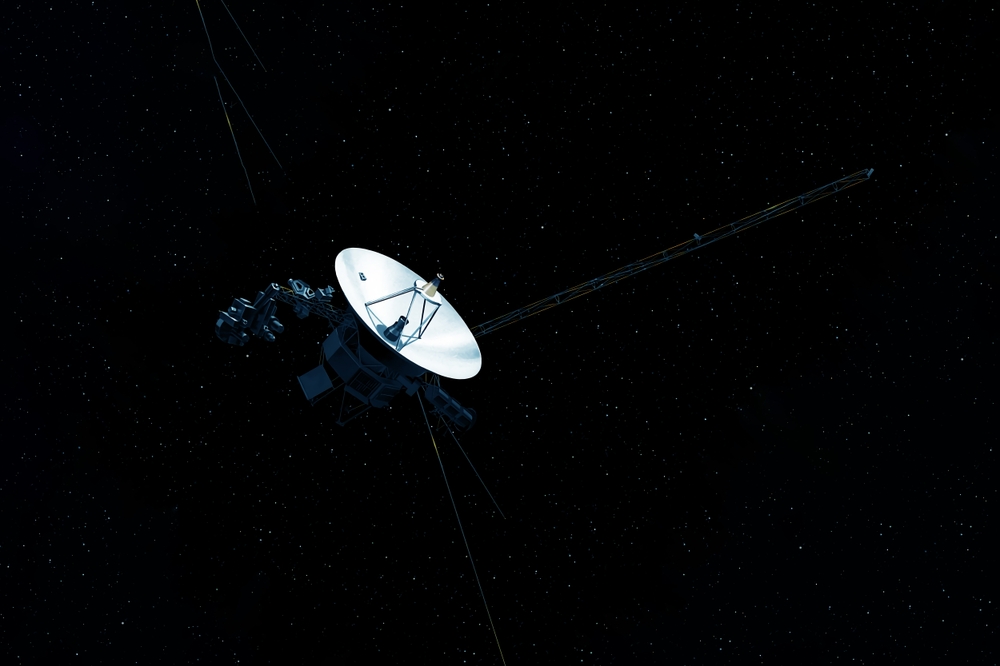
Voyager 1, launched in 1977, is now about 25 billion kilometres from Earth, so far that radio signals take more than 22 hours to reach it; it continues to send back data from interstellar space using a nuclear power source the size of a car battery. Its plutonium generators now deliver ~230 watts (down from ~470 W at launch), fading about 4 watts per year, leading NASA to progressively shut down nonessential systems to extend the mission into the 2030s. Two instruments remain active as it drifts beyond the heliopause, with signals traveling via NASA’s Deep Space Network, a faint whisper from humanity's farthest probe.

Voyager 1 Reaches 1 Light-Day Milestone From Earth
space14 days ago

Voyager 1 Reaches 1 Light-Day Milestone From Earth

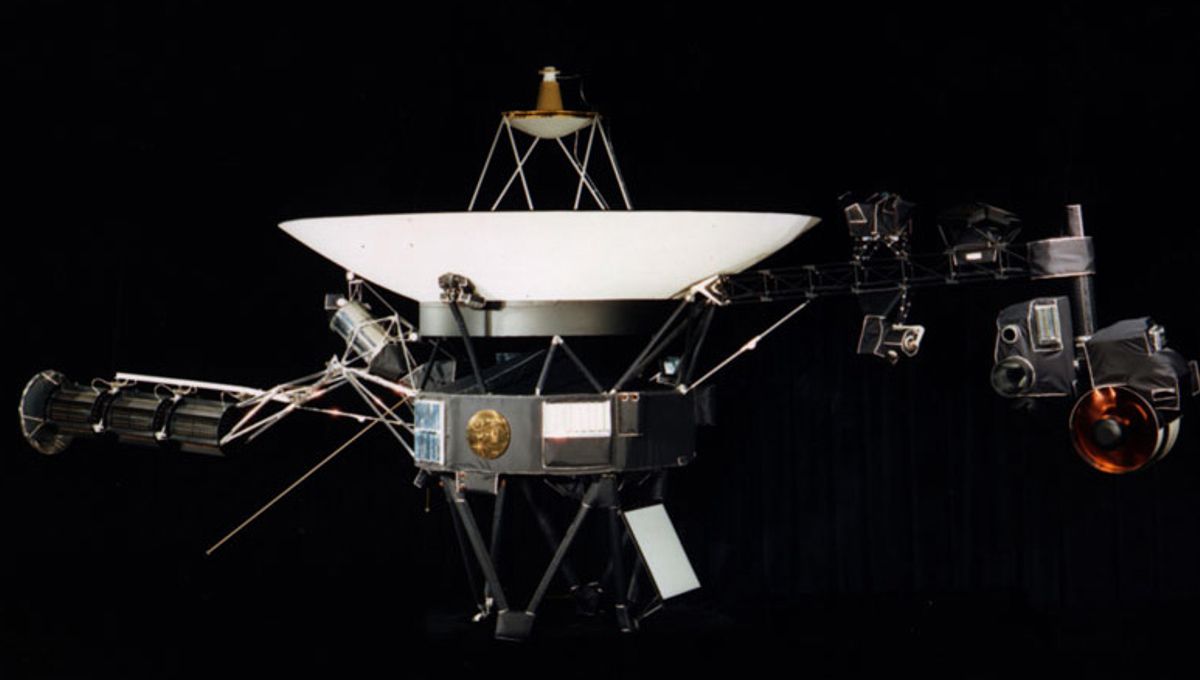
NASA has announced that Voyager 1 will reach 1 light-day from Earth on November 18, 2026—about 16.1 billion miles (25.9 billion km, 173 AU). Launched in 1977, it left the solar system in 2012 and remains the most distant human-made object in contact with Earth, though many instruments are powered down to conserve energy. Voyager 2 is about 2 billion miles closer to Earth than Voyager 1 and travels in a different direction; both carry golden records as a symbol of Earth.

Voyager 1 Keeps Coasting Toward a Light-Day Milestone
space19 days ago

Voyager 1 Keeps Coasting Toward a Light-Day Milestone

Voyager 1, launched in 1977, remains the fastest and most distant human-made object, cruising at about 17 km/s with no engine. It has crossed the heliopause into interstellar space and sits roughly 25 billion kilometers from the Sun (about 170 AU). NASA expects it to reach about one light-day from Earth by November 2026, a distance at which light takes a day to reach Voyager and come back. Power is fading—from an initial ~470 watts to well under half—so engineers are shutting instruments offline; only two remain as the team plans further power-saving steps. When power runs out, Voyager 1 will go quiet but continue coasting for thousands of years, not aimed at any particular star (in ~40,000 years it will pass about 1.6 light-years from Gliese 445).

NASA downshifts Voyager 1 instrument to stretch its interstellar voyage
space2 months ago

NASA downshifts Voyager 1 instrument to stretch its interstellar voyage

NASA engineers shut down the Low-energy Charged Particles (LECP) instrument on Voyager 1 on April 17 to conserve dwindling nuclear power, allowing the spacecraft to continue studying the interstellar medium beyond the solar system. Voyager 2’s LECP was silenced earlier in 2025, and only a handful of instruments remain active on both Voyagers. Voyager 1 is currently more than 15 billion miles (about 24 billion kilometers) from Earth, making it the farthest human-made object, and the instrument shutdown is part of a planned retirement sequence to maximize science as the power supply declines.

Voyager Encounters Unexpected 50,000 Kelvin Boundary at Solar System's Edge
science6 months ago

Voyager Encounters Unexpected 50,000 Kelvin Boundary at Solar System's Edge

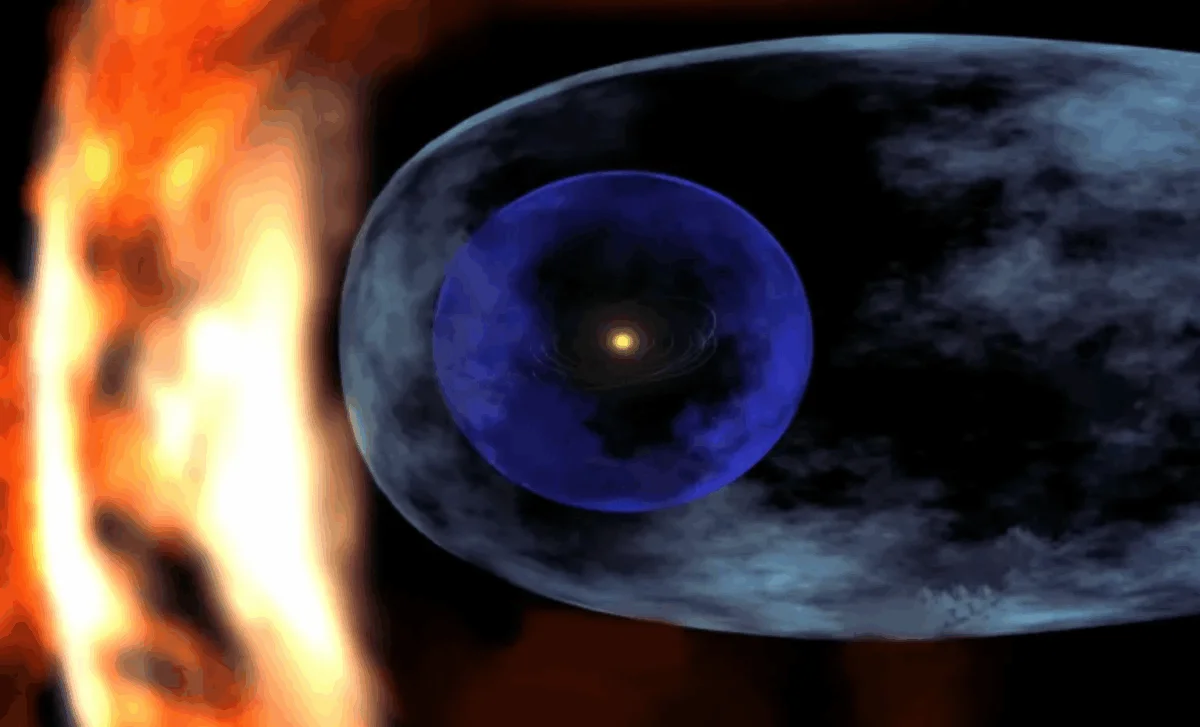
NASA's Voyager 1 and Voyager 2 spacecraft have detected a hot, energetic boundary at the edge of our solar system called the heliopause, where temperatures spike to 30,000-50,000 Kelvin, marking the transition from solar to interstellar space. The findings challenge previous assumptions about the magnetic field and permeability of this boundary, providing new insights into how our solar system interacts with the galaxy.

NASA's Voyager Encounters a Fiery Barrier at the Solar System's Edge
science8 months ago

NASA's Voyager Encounters a Fiery Barrier at the Solar System's Edge

NASA's Voyager 1 has encountered a 'wall of fire' at the edge of the Solar System, a hot zone near the heliopause, which marks the boundary between our Solar System and interstellar space. Data from Voyager 1 and Voyager 2 reveal that beyond this boundary, magnetic fields are aligned parallel to those inside the heliosphere, providing new insights into the nature of this frontier.

NASA's Voyager Detects Hot 'Wall' at Solar System's Edge Linked to 1977 Wow! Signal
science8 months ago

NASA's Voyager Detects Hot 'Wall' at Solar System's Edge Linked to 1977 Wow! Signal

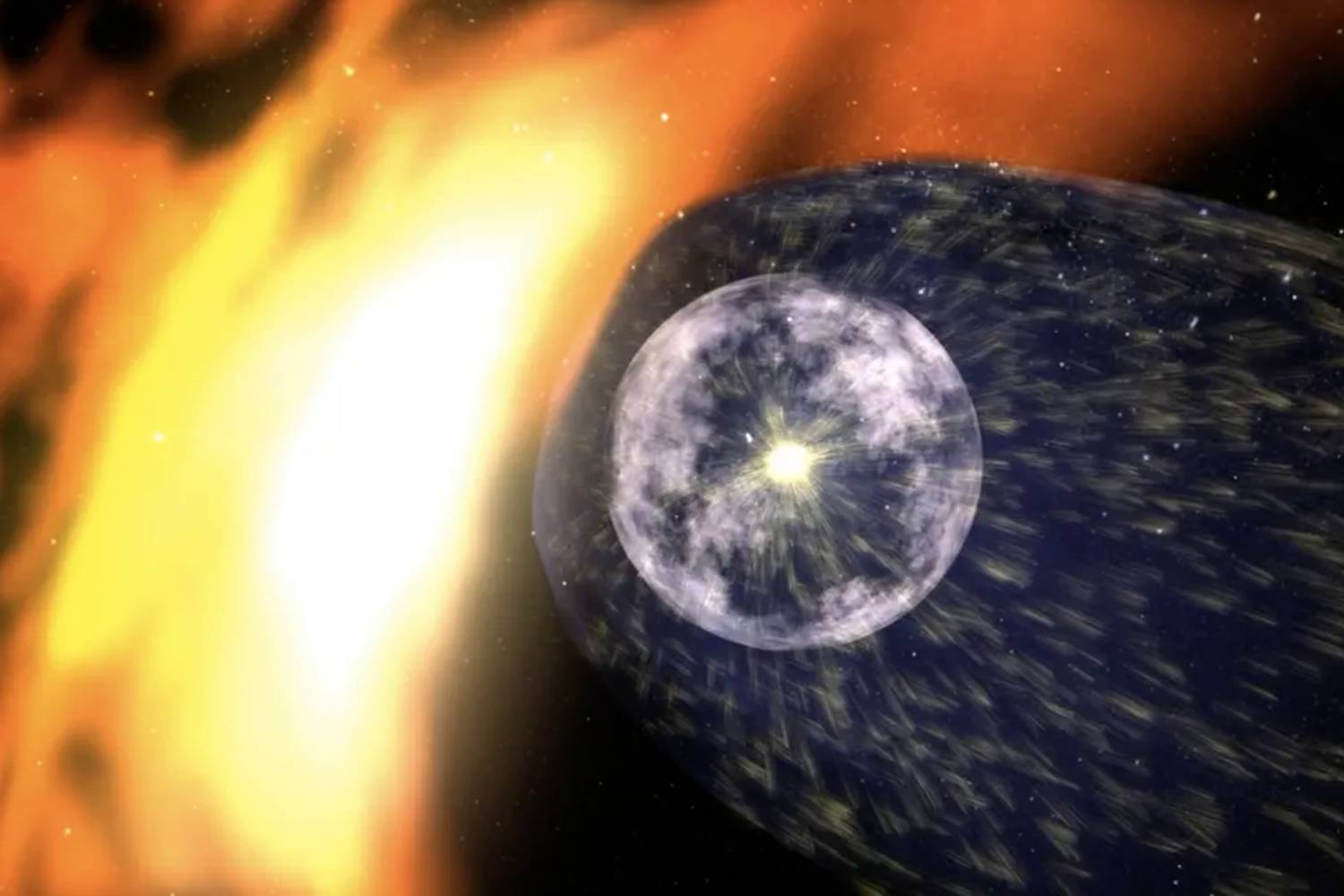
NASA's Voyager spacecraft discovered a 'wall of fire' at the edge of the solar system, with temperatures between 30,000 and 50,000 Kelvin, as they crossed the heliopause, marking the boundary where the solar wind meets interstellar space. Despite the extreme temperatures, the probes survived due to the sparse particle environment, providing valuable data about the solar system's outer limits and magnetic field alignment beyond the heliosphere.

"The Outer Boundary of the Solar System: Where Does It End?"
astronomy2 years ago

"The Outer Boundary of the Solar System: Where Does It End?"

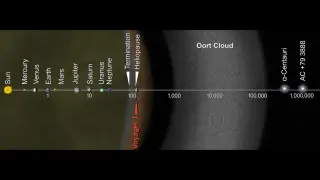
The solar system has three potential boundaries: the Kuiper Belt, the heliopause, and the Oort Cloud. The Kuiper Belt, located 30-50 AU from the sun, is considered by some as the edge due to its representation of the sun's protoplanetary disk. The heliopause, the outer edge of the sun's magnetic influence, is often used to define the solar system's edge due to its distinct properties. The Oort Cloud, extending up to 100,000 AU from the sun, is considered by some as the clear choice for a solar system boundary. While the heliopause is most commonly used to define the solar system's edge, some researchers argue for multiple boundaries.