
Western Australia’s 3.5 Billion-Year-Old Microbialite Archive Faces Severe Threats
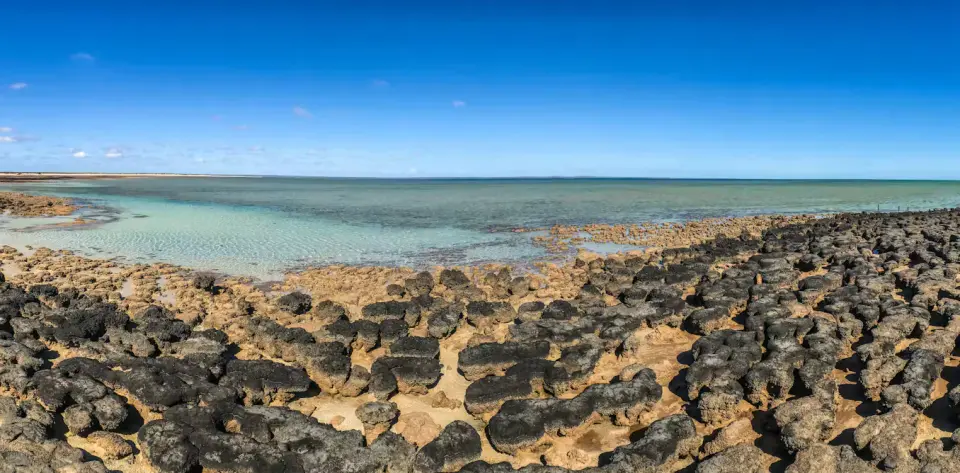
A new review in the journal Alcheringa highlights that microbialites, Earth’s oldest visible evidence of life, are critically vulnerable. While Western Australia preserves records spanning 3.5 billion years, living and fossil sites face damage from tourism, climate change, and poor geoheritage protection.
Key points
- Microbialites are mounded structures formed by microbes precipitating minerals or binding sediment, with stromatolites featuring layers and thrombolites having a clotted texture.
- Western Australia holds the oldest known microbialite fossils, dating back nearly 3.5 billion years in the Pilbara region, alongside living examples in Shark Bay and Lake Clifton.
- In May 2024, dozens of aurora chasers trampled 2,000-year-old thrombolites at Lake Clifton, causing damage that may take decades or centuries to repair due to slow growth rates.
- The 2021 Australian State of the Environment report concluded that geoheritage protection is poor due to a lack of national frameworks and resourcing, a situation that remains largely unchanged.
- Scientists still debate how to distinguish biological microbialites from non-biological structures and understand the environmental conditions that formed ancient examples.
Background
Recent scientific discussions have focused on the deep-time resilience of life, including studies on super-Earths orbiting orange stars that may support complex ecosystems for billions of years longer than Earth. This aligns with the current focus on microbialites, which provide a deep-time perspective on how ecosystems respond to environmental upheaval and mass extinctions. Unlike the Neanderthal violence or Stone Age rope-making discoveries, microbialites offer a continuous biological record spanning billions of years, serving as a potential 'Rosetta Stone' for understanding ancient life and atmospheric evolution.
Why it matters
Microbialites offer critical insights into the evolution of life, the oxygenation of Earth's atmosphere, and how ecosystems respond to environmental stress. Preserving these archives is essential for future scientific inquiries, yet current geoheritage protections in Australia are inadequate, risking the loss of irreplaceable evidence that could inform our understanding of modern biodiversity challenges.
What to watch
Researchers aim to fill knowledge gaps regarding microbialite morphology and environmental formation, while advocates push for stronger national geoheritage frameworks to protect living and fossil sites from tourism and climate impacts.
Want the full story? Read the original reporting
Read on The Conversation