
Webb Uncovers a Black Hole Star: The Cosmos’ New Object Class
TL;DR
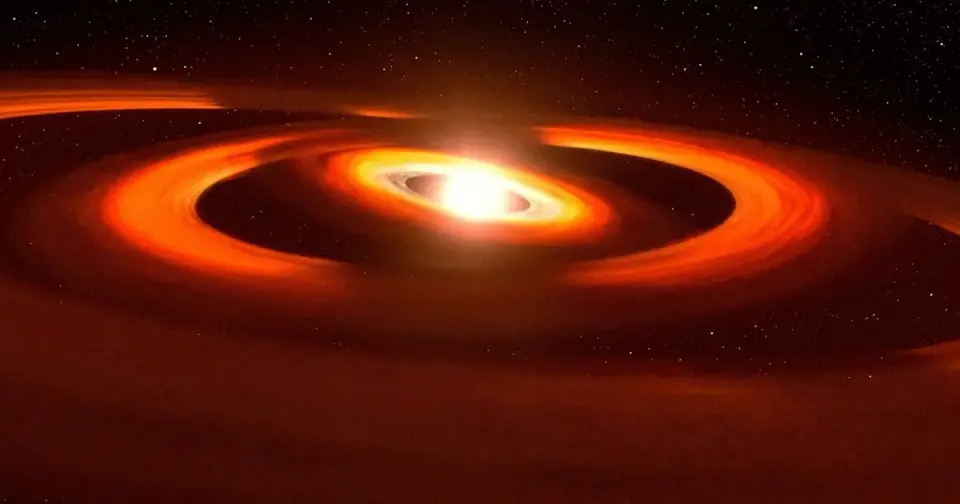
Using the James Webb Space Telescope, scientists have identified MoM-BH*-1—a black hole star about 100,000 solar masses formed less than 700 million years after the Big Bang. Its center is a black hole that relentlessly accretes matter, emitting about 100 billion times more energy than a typical star, while a dense gas shell makes it appear star-sized. The finding suggests other so-called 'Little Red Dots' could be black hole stars, potentially reshaping our understanding of early galaxies and black hole growth.
Topics:sciencespace-and-astronomy#astronomy#black-holes#early-universe#james-webb-space-telescope#little-red-dots#space-and-astronomy
- Astronomers Discover an Entirely New Type of Object: a “Black Hole Star” Yahoo
- A gas-enshrouded and gas-reddened black hole at cosmic dawn Nature
- Astronomers Peered at the Early Universe and May Have Discovered a New Kind of Celestial Object: Black Hole Stars Smithsonian Magazine
- Astronomers discover a new kind of cosmic object – a black hole ‘star’ The Guardian
- Astronomers discover a brand-new type of astrophysical object: A black hole star MIT News
Want the full story? Read the original reporting
Read on Yahoo