
ESA Report Warns of Exponential Orbital Collisions by Mid-Century
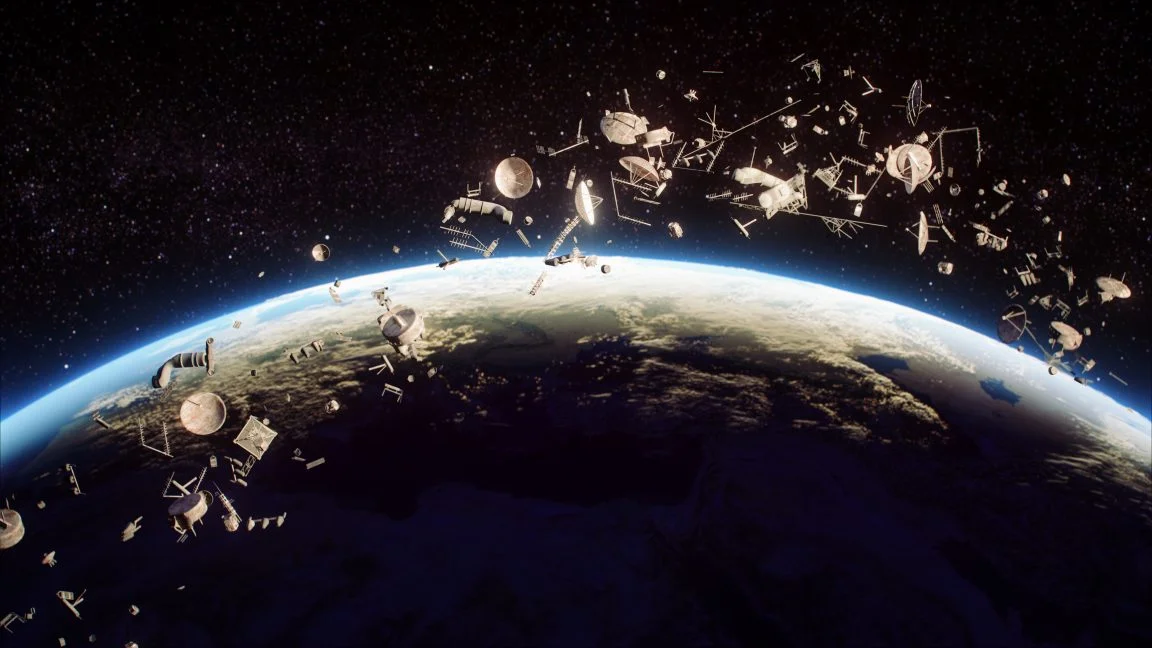
The European Space Agency’s 2026 Space Environment Report projects that current satellite launch trends will lead to an unstable orbital environment with exponentially increasing collision rates by mid-century, even if operators follow best practices for disposal. Active satellites have surged from 1,000 in 2013 to 17,000 today, driven largely by SpaceX’s Starlink constellation, which now holds approximately 11,000 satellites. While SpaceX performs nearly 35,000 collision-avoidance maneuvers monthly, experts warn that some orbital bands have reached a 'collisional-runaway threshold,' where debris generation outpaces natural removal. The report excludes potential orbital data centers, which could further exacerbate the crisis if deployed.
Key points
- Active satellites in orbit have increased from 1,000 in 2013 to 17,000 in 2026, with SpaceX’s Starlink accounting for roughly 11,000 of these.
- The ESA 2026 report projects that continued launch growth will lead to an unstable orbital environment with exponentially rising collision rates, even with current mitigation efforts.
- SpaceX performs approximately 35,000 collision-avoidance maneuvers per month, up from 500 five years ago, using a conservative probability threshold of 3-in-10 million.
- A 2025 study by Hugh Lewis and Donald Kessler indicates that some orbital bands between 520 km and 1,000 km have reached a 'collisional-runaway threshold,' where debris accumulates faster than it decays.
- The ESA report does not include potential orbital data centers, which could add hundreds of thousands of satellites and accelerate the risk of a Kessler syndrome scenario.
Background
This follows earlier developments in 2026, including Isar Aerospace’s milestone as Europe’s first private orbital launch, highlighting the continent’s growing focus on autonomous space capabilities. The current debris crisis contrasts with the optimistic expansion of commercial spaceflight, as noted in recent coverage of European private spaceflight efforts.
How outlets are covering it
Ars Technica highlights the stark contrast between pessimistic warnings from experts like Moriba Jah and Elon Musk’s dismissal of orbital crowding, citing the ESA report as a credible middle ground. Noticias Ambientales emphasizes the sheer volume of debris, noting 17,000 tons of junk orbiting Earth, and focuses on ESA’s active planning for debris removal, whereas Ars Technica focuses more on the statistical inevitability of collisions under current trends.
Why it matters
The rising density of satellites and debris threatens the long-term usability of low-Earth orbit, potentially leading to a Kessler syndrome where cascading collisions render orbits unusable. This could disrupt global communications, increase operational costs for space agencies, and pose safety risks to astronauts and ground populations from reentering debris.
What to watch
Operators will likely face higher costs for collision avoidance and launch window scheduling. The ESA may continue to refine its debris removal strategies, while the potential deployment of orbital data centers could become a critical tipping point for orbital sustainability in the coming decade.
- A new report from Europe raises serious alarms about orbital collisions Ars Technica
- Houston, we have a trash problem: Inside the rush to clean up Low Earth Orbit Hindustan Times
- Space debris: there are 17,000 tons of junk orbiting the Earth and ESA is already planning how to remove it Noticias Ambientales
- Space Junk Crisis Spurs Startup Gold Rush in Orbital Debris Cleanup - Quarterly Earnings Report dars.gov.et
- Crowded Space Electronics Weekly
Want the full story? Read the original reporting
Read on Ars Technica