Tag

Orbital Sustainability

All articles tagged with #orbital sustainability

Orbital Congestion Drives New Financial and Robotic Cleanup Strategies
space1 month ago

Orbital Congestion Drives New Financial and Robotic Cleanup Strategies

Earth’s orbit faces severe congestion, with active satellites projected to reach 60,000 by 2035 and over 1.2 million debris fragments currently tracked. To mitigate the risk of cascading collisions, stakeholders are implementing financial incentives, such as a proposed $200,000 deposit system, and deploying robotic 'space trucks' for active debris removal. Agencies like ESA and NASA are tightening regulations, while companies like Astroscale and Orbit Fab are advancing in-orbit servicing and refueling technologies to extend satellite lifespans and reduce new waste.

Financial Bonds and Robotic Trucks: The New Era of Space Debris Management
technology1 month ago

Financial Bonds and Robotic Trucks: The New Era of Space Debris Management

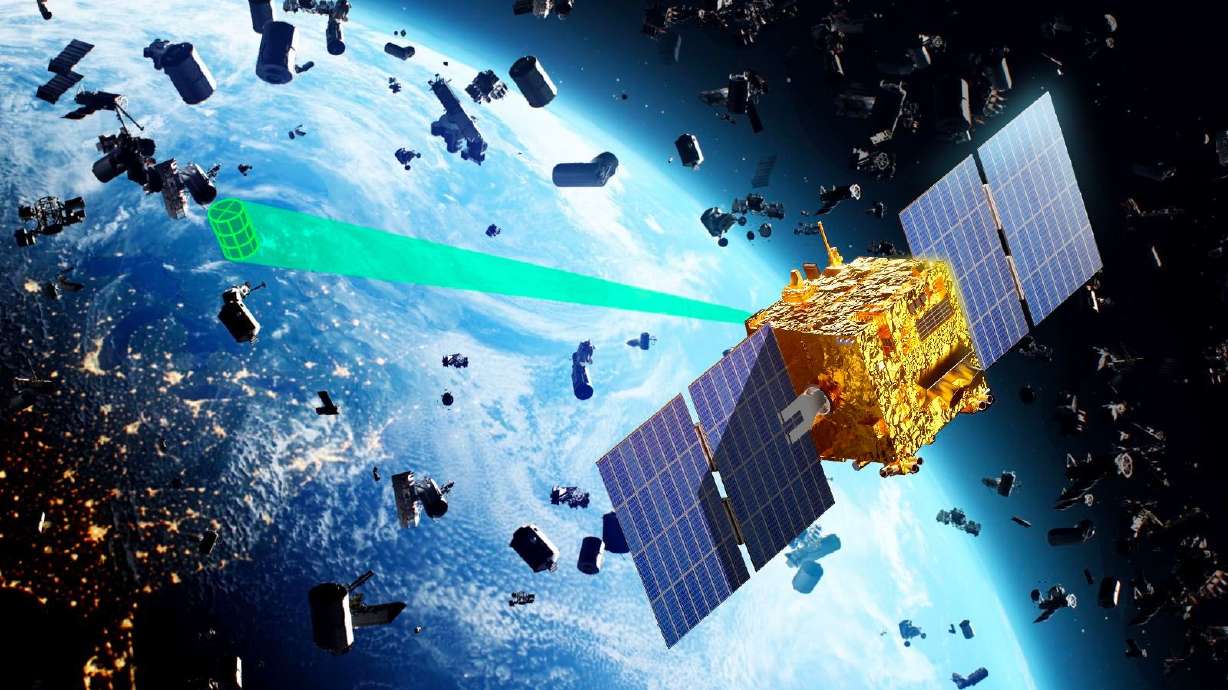
As orbital congestion threatens global infrastructure, new financial and technological strategies are emerging to mitigate space debris. Researchers propose a $200,000 deposit system for satellite launches to incentivize deorbiting, while commercial firms develop robotic 'space trucks' for active debris removal. Simultaneously, agencies like ESA and NASA are tightening regulations, and academic research is advancing laser-based remediation techniques to ensure long-term orbital sustainability.

ESA Report Warns of Exponential Orbital Collisions by Mid-Century
space-and-technology2 months ago

ESA Report Warns of Exponential Orbital Collisions by Mid-Century

The European Space Agency’s 2026 Space Environment Report projects that current satellite launch trends will lead to an unstable orbital environment with exponentially increasing collision rates by mid-century, even if operators follow best practices for disposal. Active satellites have surged from 1,000 in 2013 to 17,000 today, driven largely by SpaceX’s Starlink constellation, which now holds approximately 11,000 satellites. While SpaceX performs nearly 35,000 collision-avoidance maneuvers monthly, experts warn that some orbital bands have reached a 'collisional-runaway threshold,' where debris generation outpaces natural removal. The report excludes potential orbital data centers, which could further exacerbate the crisis if deployed.

Earth's Orbit Faces Growing Crisis from Space Debris and Satellite Risks
science-and-technology1 year ago

Earth's Orbit Faces Growing Crisis from Space Debris and Satellite Risks

The European Space Agency has introduced a space environment health index to assess the long-term impact of space debris, revealing that Earth's orbit is in serious crisis with levels four times above the safe threshold, emphasizing the urgent need for debris mitigation and sustainable space practices to prevent future chaos and ensure the viability of space activities.

Innovative Methods to Remove Space Junk and Protect Satellites
science1 year ago

Innovative Methods to Remove Space Junk and Protect Satellites

Astroscale, a 2025 Gizmodo Science Fair winner, successfully launched its ADRAS-J mission to approach and observe a defunct Japanese rocket stage in orbit, demonstrating the potential for space debris removal and promoting sustainable use of Earth's orbital environment. The mission paves the way for future debris removal efforts, aiming to reduce space junk and extend satellite lifespans.

"Space Junk: A Growing Threat to Earth's Orbit"
space2 years ago

"Space Junk: A Growing Threat to Earth's Orbit"

The increasing number of satellites and space debris in near-Earth orbit is causing concerns for astronomers and scientists due to light pollution and potential environmental impacts. Manmade debris is already affecting the stratosphere, with predictions that it will make up 50% of stratospheric aerosols in the future. Companies like Astroscale are working on technologies to address the orbital debris issue, including missions to capture and remove space junk, while efforts are also being made to launch biodegradable satellites.