
Interlune’s 4-Hour Solar Wind Test Validates Lunar Helium-3 Mining Strategy
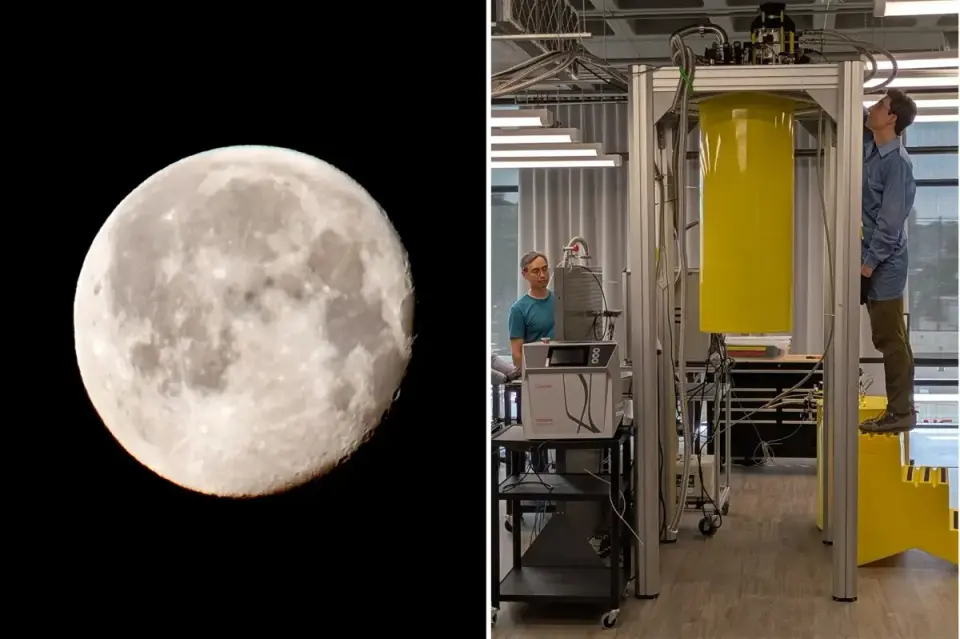
Seattle-based Interlune has successfully simulated 15,000 years of solar wind exposure on lunar soil in just four hours, creating a viable testbed for helium-3 extraction technology. The company aims to begin experimental moon mining by 2028, backed by a $6.9 million NASA contract and $23 million in total funding. While the resource is valued at $20 quadrillion, significant technical and geopolitical hurdles remain.
Key points
- Interlune’s team, led by planetary scientist Elizabeth Frank, used ionized helium in a vacuum chamber to implant solar wind particles into lunar regolith simulants, replicating millennia of exposure in hours.
- The company secured $23 million in funding, including a $6.9 million contract with NASA, to advance its cryogenic distillation technology for separating helium-3 from lunar soil.
- Interlune plans to launch a prototype mission later this decade, potentially aligning with the 2028 Artemis III expedition, to test extraction robots on the lunar surface.
- The firm is seeking strategic partnerships with Australian mining companies to leverage their expertise in both space exploration and terrestrial mining operations.
- China is developing a magnetic space launcher for helium-3 extraction, though it has not signed the US-backed Artemis Accords, raising questions about future competition in lunar resource rights.
Background
Previous coverage in August 2026 highlighted how next-generation AI could serve as the autonomous backbone for space exploration, enabling predictive maintenance and on-site resource processing for lunar and Martian settlements. This aligns with Interlune’s current focus on developing autonomous robotic systems for lunar mining, as human presence on the moon remains limited and costly. The broader push for lunar resource utilization reflects a shift from purely exploratory missions to commercial exploitation, driven by the scarcity of rare isotopes like helium-3 on Earth.
How outlets are covering it
The New York Post emphasizes the massive financial potential of helium-3, valuing the lunar reserve at $20 quadrillion, and highlights Interlune’s ambition to begin mining by 2028. It also notes the geopolitical tension with China, which is investing in its own lunar mining technology. Ars Technica focuses on the technical breakthrough of the solar wind simulation, detailing how Interlune’s team created a more accurate lunar soil simulant to test extraction hardware without consuming rare Apollo samples. The Economic Times provides a balanced view, acknowledging the technical progress but cautioning that the experiment does not yet prove the economic viability of lunar mining, given the low concentration of helium-3 in lunar soil. All three sources agree on the significance of Interlune’s work but differ in their emphasis on financial potential, technical innovation, and economic feasibility.
Why it matters
The success of Interlune’s solar wind simulation is a critical step toward making lunar helium-3 mining a commercial reality. Helium-3 is essential for quantum computing, medical imaging, and potentially nuclear fusion, making it a highly valuable resource. If Interlune can successfully extract and return helium-3 from the moon, it could revolutionize multiple industries and establish a new era of commercial space activity. However, the challenge lies in scaling up the technology to process the vast quantities of lunar soil required to extract economically viable amounts of helium-3, as well as navigating the geopolitical landscape of international space competition.
What to watch
Interlune plans to use its new lunar soil simulant to test its extraction hardware on Earth before launching a prototype mission to the moon later this decade. The company is also seeking partnerships with Australian mining firms to enhance its capabilities. In the near term, the focus will be on refining the cryogenic distillation process and ensuring the reliability of autonomous extraction robots. Longer-term, the success of these tests will determine whether helium-3 mining becomes a viable commercial venture, potentially influencing future space policy and international cooperation in lunar resource extraction.
- US start-up seeks miners in race for $20 quadrillion moon resource New York Post
- 15,000 years of solar wind in four hours? A Seattle company gives it a go. Ars Technica
- In 2026, scientists recreated 15,000 years of solar wind exposure on Moon soil in 4 hours; the experiment The Economic Times
- Interlune Implants Helium into Simulated Moon Dirt, Advancing the Ability to Test Moon-Bound Hardware on Earth Morningstar
- Company That Makes Moon Excavator Is Now Better at Producing Solar Wind Than the Sun Itself. Kind Of autoevolution
Want the full story? Read the original reporting
Read on New York Post