
Ariane 6 Completes Historic Maiden Voyage in July 2024
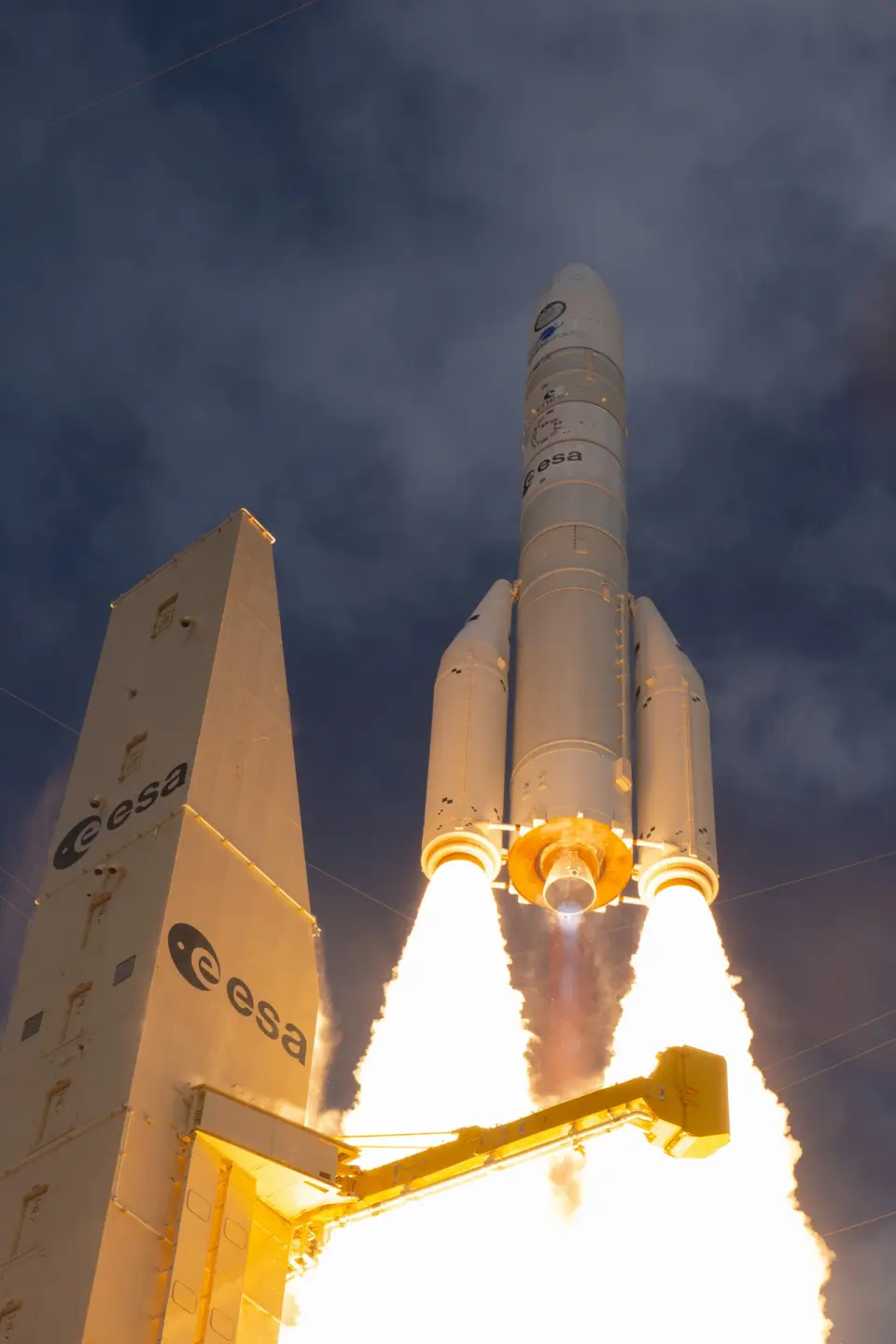
The European Space Agency confirmed that Ariane 6 successfully completed its inaugural flight, designated VA262, on July 9, 2024. This launch marked the debut of Europe’s newest heavy-lift rocket, which is designed to offer greater power and flexibility at a lower cost than previous models. The mission demonstrated the vehicle’s capability to handle multiple missions and orbits efficiently.
Key points
- Ariane 6 launched on July 9, 2024, for its first flight, designated VA262.
- The rocket is described as Europe’s newest heavy-lift launcher, offering increased power and flexibility.
- The design aims to reduce costs compared to predecessors while improving efficiency.
- The launcher features an upgraded main stage and a new restartable upper stage.
- It offers a choice between two or four powerful boosters to suit different mission requirements.
Background
This development follows recent attention on other launch vehicles, such as SpaceX’s Starship Flight 13, which targeted a July 2026 liftoff from Starbase, Texas, after earlier scrubs and engine swaps. While those recent events focused on non-orbital tests and satellite deployment, the Ariane 6 milestone represents a distinct advancement in European heavy-lift capabilities, emphasizing cost-efficiency and multi-orbit flexibility for international missions.
Why it matters
The successful maiden flight of Ariane 6 signifies a critical step for the European Space Agency in modernizing its launch infrastructure. By offering a more cost-effective and flexible platform, Europe can better compete in the global space market and support a wider variety of missions, including those requiring multiple orbital insertions. The restartable upper stage and deorbiting capability also address sustainability concerns in space transportation.
What to watch
Following the successful VA262 flight, the focus will shift to subsequent missions utilizing Ariane 6’s new configurations. The European Space Agency will likely monitor performance data to refine operations and prepare for future launches that leverage the rocket’s ability to place multiple payloads into different orbits. Further commercial and governmental contracts may follow as confidence in the new platform grows.
Want the full story? Read the original reporting
Read on European Space Agency