
Artemis II Commander Reveals Moment of Terror When Distance Counter Overshot Target
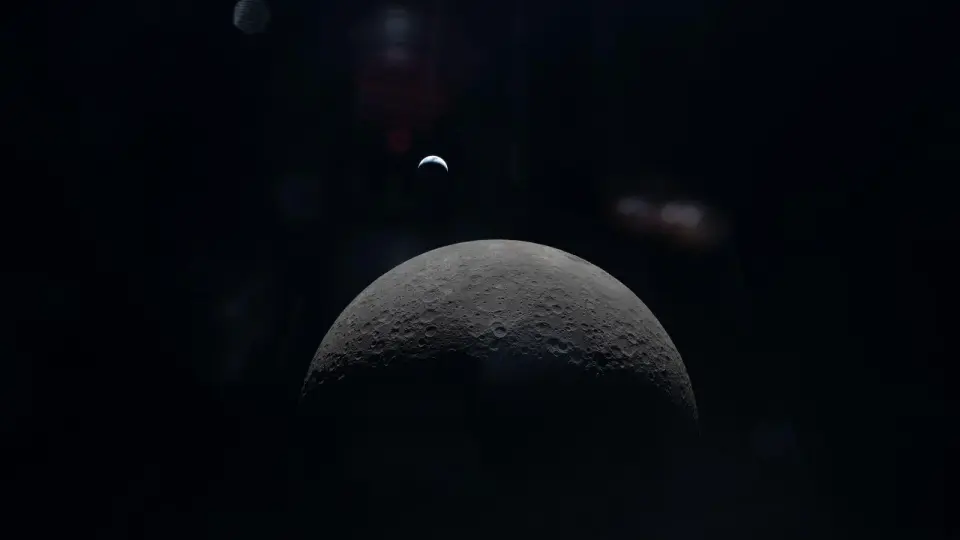
Reid Wiseman, commander of the historic Artemis II lunar flyby, disclosed that he experienced a moment of genuine fear during the mission when the spacecraft’s distance from Earth exceeded the planned maximum. Speaking at the Starmus VIII festival in Tenerife, Spain, Wiseman described watching the odometer tick past 219,667 nautical miles, the intended turnaround point. The counter continued to rise to 219,669 nautical miles, causing him to worry the crew would not return home. The fear subsided when the counter began to drop, confirming the spacecraft was on its way back. This revelation highlights the tension of the first crewed lunar mission since 1972, which set a new record for the farthest humans have traveled from Earth.
Key points
- Reid Wiseman stated that the most terrifying moment of the Artemis II mission occurred when the spacecraft’s distance from Earth exceeded the planned maximum of 219,667 nautical miles.
- Wiseman reported that the distance counter continued to rise to 219,669 nautical miles, causing him to fear the crew would not return home.
- The fear ended when the counter began to drop, indicating the spacecraft was successfully turning back toward Earth.
- Wiseman shared this account at the Starmus VIII festival in Tenerife, Spain, where the Artemis II crew received the Stephen Hawking Medal for Science Communication.
- The Artemis II mission, which launched on April 1, 2026, was the first crewed lunar flyby since Apollo 17 in 1972 and set a new record for the farthest humans have traveled from Earth.
Background
The Artemis II mission, which launched from Kennedy Space Center on April 1, 2026, was a 10-day crewed lunar flyby that set a new record for the farthest humans have traveled from Earth. The mission was the first crewed lunar mission since Apollo 17 in 1972. Following the mission, Wiseman and pilot Victor Glover transitioned to emeritus status at NASA, while Christina Koch remained the only active crew member. The crew was honored at the Starmus VIII festival in October 2026, where they received the Stephen Hawking Medal for Science Communication for making the mission accessible to the public.
How outlets are covering it
Live Science and The Independent both reported Wiseman’s account of the distance counter overshooting the planned maximum, emphasizing the fear he experienced. The Independent noted that Wiseman has since retired from active spaceflight and joined NASA’s emeritus astronaut program. Johns Hopkins University highlighted Wiseman’s visit to the university, where he discussed the emotional impact of viewing Earth from space and the tight bond formed among the crew during the 45 minutes they were cut off from Earth behind the moon. The Telegraph’s content was inaccessible due to a security block, so its perspective could not be assessed. All sources agree on the core facts of the mission and Wiseman’s account, but differ in emphasis: Live Science and The Independent focus on the technical scare, while Johns Hopkins focuses on the emotional and human aspects of the mission.
Why it matters
Wiseman’s account underscores the inherent risks of space exploration, even in a mission designed as a test of equipment rather than a lunar landing. The moment of fear highlights the precision required in spaceflight and the reliance on ground-based teams for mission success. It also serves as a reminder of the human element in space exploration, where astronauts must manage fear and uncertainty in extreme environments. The Artemis II mission’s success, despite this scare, validates the engineering and flight control teams’ efforts and sets the stage for future missions, including the planned lunar landing in 2028.
What to watch
NASA’s Artemis program will continue with Artemis III, a crewed launch to low-Earth orbit scheduled for 2027, to test key equipment for the lunar landing. This will be followed by Artemis IV, the full lunar landing, expected in 2028. Wiseman and Glover, now in emeritus status, will continue to support future missions through training and mentorship. The success of Artemis II, despite the scare, provides confidence for these future missions, which aim to establish a sustainable human presence on the moon.
- 3 minutes of fear: Artemis II commander recalls the moment he thought he'd be lost in space forever Live Science
- Artemis II Commander Reid Wiseman describes crossing behind the moon Johns Hopkins University
- Nasa’s Artemis astronaut feared they would never get home as they flew around the Moon The Independent
- Artemis II astronaut feared crew would be lost in space The Telegraph
- 219,666...219,669 - When Artemis II astronauts feared getting LOST IN SPACE WION
Want the full story? Read the original reporting
Read on Live Science