
NASA awards Advanced Space contract for CAPSTONE 02 dual-probe lunar test
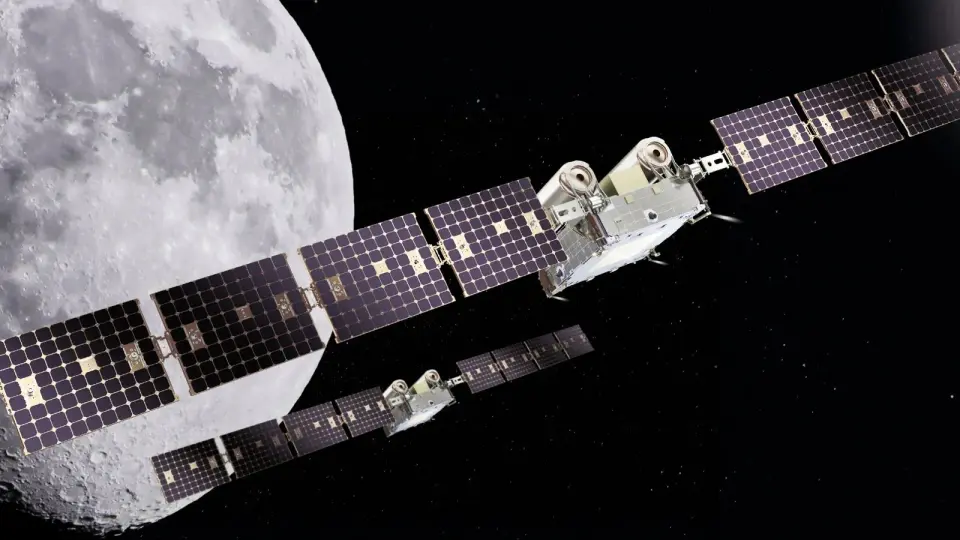
NASA has selected Advanced Space to manage the CAPSTONE 02 mission, which will launch two 400-kilogram probes in 2027 to test autonomous rendezvous and proximity operations in cislunar space. The mission aims to validate navigation technologies required for future Artemis missions and lunar infrastructure.
Key points
- NASA awarded the CAPSTONE 02 contract to Advanced Space on July 24, 2026, with a target launch date of 2027.
- The mission involves two identical 400-kilogram spacecraft built by Terran Orbital, a Lockheed Martin subsidiary.
- The probes will perform Rendezvous and Proximity Operations (RPO), swapping between 'chaser' and 'target' roles to test autonomous navigation in complex three-body orbits.
- The spacecraft will carry an advanced imager from Lawrence Livermore National Laboratory for both navigation and lunar surface imaging.
- House appropriators directed NASA to spend between $20 million and $60 million on the mission in 2027, though the exact contract value was not disclosed.
- CAPSTONE 02 is a follow-up to the original CAPSTONE mission, which successfully tested near-rectilinear halo orbits for the lunar Gateway station until June 2026.
Background
The original CAPSTONE mission, a 25-kilogram CubeSat launched in 2022, validated the near-rectilinear halo orbit (NRHO) intended for the Artemis Gateway. It operated well beyond its planned 18-month lifespan, concluding extended missions in June 2026. This success paved the way for CAPSTONE 02, which scales up the technology to address more complex cislunar operations. Recent Artemis III planning highlights the increasing complexity of multi-spacecraft coordination in lunar space, underscoring the need for autonomous docking capabilities.
How outlets are covering it
Space.com emphasizes the foundational role of CAPSTONE 02 in maturing cislunar capabilities for Artemis and future deep space missions, quoting NASA’s Sean Fuller. SpaceNews provides specific contractual details, noting that Advanced Space was selected on July 24, 2026, and highlighting the involvement of Terran Orbital and Lawrence Livermore National Laboratory. Gagadget.com focuses on the technical necessity of autonomous rendezvous due to the 2.4-second communication delay between Earth and the Moon, stressing that human-in-the-loop control is impractical for precision maneuvers. All sources agree on the 2027 launch target and the 400-kilogram mass of the probes, but SpaceNews uniquely mentions the congressional funding range of $20 million to $60 million, while Gagadget notes the 16-fold increase in mass compared to the original CAPSTONE CubeSat.
Why it matters
CAPSTONE 02 is critical for de-risking future lunar operations. By proving that spacecraft can autonomously find, approach, and station-keep relative to each other in the complex gravitational environment of cislunar space, NASA ensures the feasibility of the Artemis program, the lunar Gateway station, and potential commercial lunar infrastructure. Success in these tests will enable sustained human presence and logistics in lunar orbit without relying on real-time Earth-based control.
What to watch
The next step is the 2027 launch of the two CAPSTONE 02 probes. Following launch, the spacecraft will conduct a series of Rendezvous and Proximity Operations, swapping roles to test autonomous navigation software suites. Data from these maneuvers will inform the design of future cislunar communications architectures and autonomous docking systems for Artemis missions and potential lunar fuel depots.
- NASA is sending 2 probes to the moon to test complex 'three-body orbits' Space
- New Small Spacecraft Technology Demonstration Mission at the Moon NASA (.gov)
- NASA selects successor to CAPSTONE lunar mission SpaceNews
- NASA’s Minor CAPSTONE Moon Mission Was Actually So Big a Redo Will Forever Reshape Space Exploration autoevolution
- NASA's CAPSTONE 02 will send two robot spacecraft to chase each other around the Moon Gagadget.com
Want the full story? Read the original reporting
Read on Space