Tag

Cislunar Space

All articles tagged with #cislunar space

U.S. Confirms First Public Acknowledgment of On-Orbit Space Weapons Amid Lunar and Orbital Arms Race
geopolitics-and-defense25 days ago

U.S. Confirms First Public Acknowledgment of On-Orbit Space Weapons Amid Lunar and Orbital Arms Race

U.S. Air Force Secretary Troy Meink publicly confirmed for the first time that the United States possesses 'on-orbit space control weapons' capable of defending military forces against hostile actions in space. This disclosure, made at the Air, Space & Cyber Conference in National Harbor, Maryland, coincides with Joint Chiefs Chairman Gen. Dan Caine’s assertion that the modern battlefield now extends to cislunar space, including the Moon. While the U.S. has historically relied on satellites for navigation, communication, and reconnaissance, officials acknowledge that China and Russia have long tested and deployed counter-space capabilities, including jammers and co-orbital interceptors. The U.S. move is framed as a deterrent and a measured response to closing a capability gap, though critics warn that vague disclosures may limit deterrence effectiveness and risk escalating a new domain of conflict.


US Military Confirms First Deployment of Weapons in Orbit, Signals Shift to Lunar Combat
geopolitics26 days ago

US Military Confirms First Deployment of Weapons in Orbit, Signals Shift to Lunar Combat

US Air Force Secretary Troy Meink confirmed the deployment of 'on-orbit space control weapons' for the first time, while Joint Chiefs Chairman Dan Caine stated the military must prepare to fight in cislunar space (between Earth and the moon). These announcements, made at the Air, Space and Cyber Conference, mark a shift from ground-based satellite defense to active orbital combat readiness, citing threats from China and Russia.

Moon Crash Sparks Debris Alarm as SpaceX Upper Stage Leaves Fresh Crater
space2 months ago

Moon Crash Sparks Debris Alarm as SpaceX Upper Stage Leaves Fresh Crater

A spent SpaceX Falcon 9 upper stage from a 2025 mission struck the Moon at about 8,700 km/h, punching a new crater and blasting lunar dust into the air. Danuri orbiter images showed a darker patch at the impact site, with scientists estimating a crater roughly 20 meters wide and 5 meters deep. The event wasn’t planned, but it serves as a real-world warning about the growing amount of artificial debris in cislunar space as Moon missions increase.

Cislunar Highways May Redraw the Global Economy
science5 months ago

Cislunar Highways May Redraw the Global Economy

A new analysis warns that the Earth–Moon space between them, called cislunar space, could become a strategic chokepoint as NASA’s Artemis program and private lunar ventures boost traffic. Control over key transit points and corridors could influence navigation, communications, and the flow of lunar resources, risking disruptions or enabling expansive future space infrastructure and Earth-based supply chains, making these routes a critical geopolitical and economic concern.

Cislunar chokepoint: the Moon's orbit could become the next strategic space frontier
space5 months ago

Cislunar chokepoint: the Moon's orbit could become the next strategic space frontier

Experts warn that the space between Earth and the Moon—cislunar space—could become a strategic chokepoint similar to the Strait of Hormuz, as the US Space Force creates an office to study the region’s military/strategic value and NASA advances Artemis. Analysts say lunar resources, orbital infrastructure, and key transit corridors could drive a multi-trillion-dollar space economy, making disruptions in cislunar access potentially disruptive to lunar data centers, communications, and manufacturing—and to the broader global economy.

Space Force Creates Cislunar Acquisition Office to Back NASA Moon-Base Plans
technology5 months ago

Space Force Creates Cislunar Acquisition Office to Back NASA Moon-Base Plans

The U.S. Space Force is standing up a Cislunar Coordination Office within its acquisition arm to map government players, develop roadmaps, and coordinate technology and partnerships for a NASA-backed lunar outpost by 2030, led by Jamie Stearns, aiming to enable secure, continuous comms and scalable launch infrastructure as it works with NASA, DARPA, AFRL and DNI; AFRL’s Oracle Prime cislunar monitoring satellite is planned for launch near L1 to enhance space situational awareness, alongside ongoing CAPSTONE and Artemis II efforts.

NASA Tests New "Autopilot" Software for Moon Missions
space-exploration2 years ago

NASA Tests New "Autopilot" Software for Moon Missions

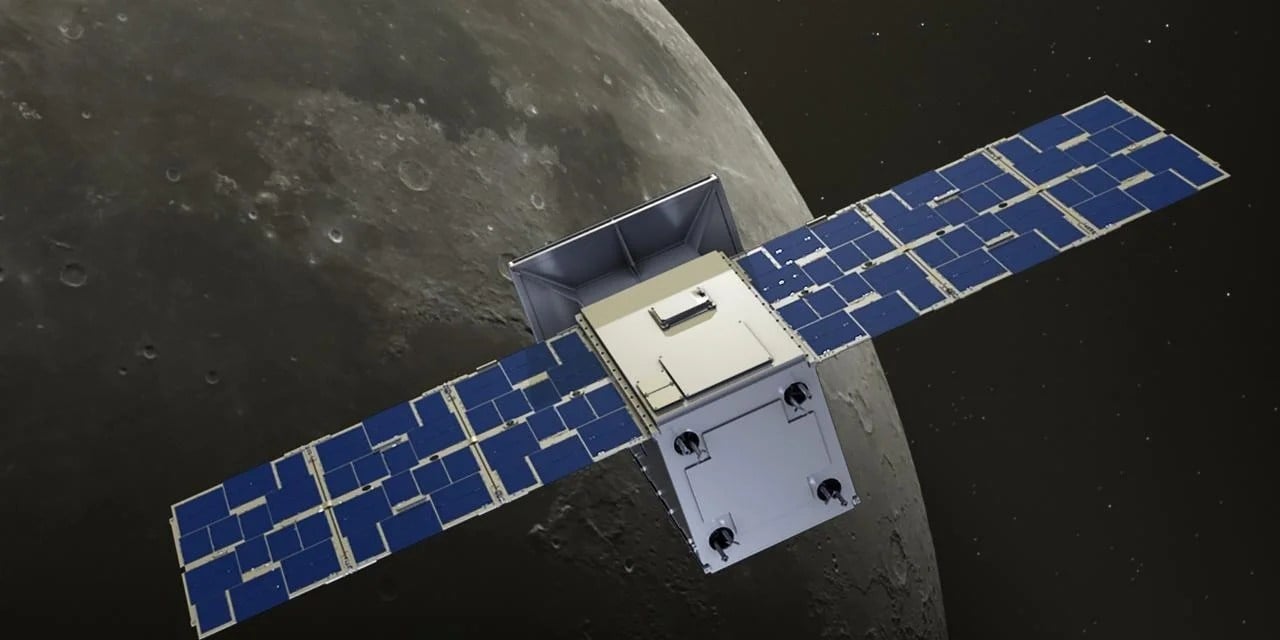
NASA's CAPSTONE mission, a cubesat launched in 2022, is testing advanced autonomous navigation and maneuvering software in cislunar space. Despite early technical issues, the spacecraft is now operational and aiding in the development of the cislunar Gateway space station. The mission, costing around $30 million, includes testing software for precision navigation, anomaly detection, and deep space maneuvering, aiming to enhance future spacecraft operations in the lunar vicinity.

NASA Advances Space Sustainability Strategy
space2 years ago

NASA Advances Space Sustainability Strategy

NASA Deputy Administrator Pam Melroy reported significant progress on the agency's space sustainability strategy, including developing a framework for assessing space sustainability, analyzing collision risk uncertainties, and planning investments in debris management and space situational awareness. The strategy, initially focused on Earth orbit, is expanding to include cislunar space, with ongoing interagency and international coordination and the appointment of Trudy Kortes as interim director of space sustainability.

"Urgent Call for Increased US Investment in Cislunar Space Infrastructure"
space-and-defense2 years ago

"Urgent Call for Increased US Investment in Cislunar Space Infrastructure"

A new report from the Mitchell Institute for Aerospace Studies calls for increased U.S. military collaboration with NASA and investment in infrastructure for cislunar space to counter China's lunar ambitions. The report suggests that the Department of Defense (DoD) should allocate an additional $250 million annually for cislunar space activities to support scientific and economic endeavors and address potential threats. Former NASA administrator Jim Bridenstine endorsed the report's recommendations, emphasizing the importance of DoD investments in non-combative technologies for space security.

Quantum Space Unveils Scout-1 Satellite and Sentry Mission for Cislunar Network
space2 years ago

Quantum Space Unveils Scout-1 Satellite and Sentry Mission for Cislunar Network

Quantum Space plans to launch its first satellite, Scout-1, in March 2024 as part of its QuantumNet constellation, which aims to provide communications, navigation, and space situational awareness services in geostationary and cislunar space. The Scout-1 satellite will test a sensor that will track resident space objects and demonstrate communications between Quantum Space's ground and space infrastructures. The two-year Sentry mission will refine image-processing algorithms and serve as a stepping stone towards expanding into cislunar space. Quantum Space aims to support deep space commerce, national security, and scientific exploration by building the necessary infrastructure.