
"Parker Solar Probe's Groundbreaking Observations of Solar Turbulence and Coronal Mass Ejections"
TL;DR Summary
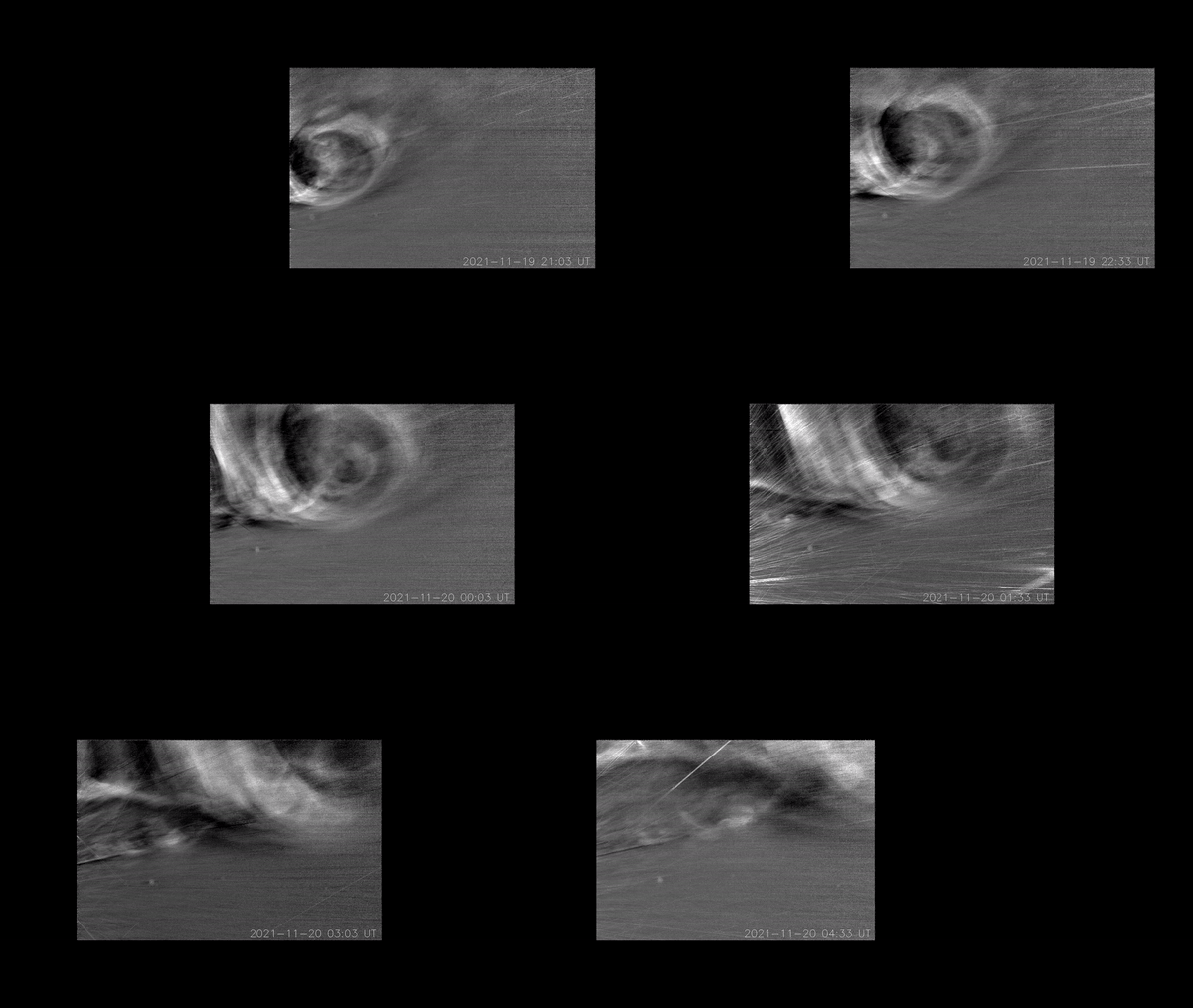
NASA's Parker Solar Probe has made a groundbreaking observation within a coronal mass ejection (CME) from the sun, capturing turbulent eddies known as Kelvin-Helmholtz instabilities (KHI) using its Wide-field Imager for Parker Solar Probe (WISPR) instrument. This marks the first time such phenomena have been observed within a CME, providing valuable insights for solar physicists in understanding CME evolution and kinematics. The probe's elliptical orbit has allowed it to enter the sun's corona closer than ever before, and it is set to tighten its orbit around the sun in the coming years through gravitational assists from Venus.
Topics:science#coronal-mass-ejection#nasa#parker-solar-probe#solar-physics#space-exploration#space-science
- NASA's Parker Solar Probe makes 1st-of-its-kind observation within a coronal mass ejection Space.com
- Solar probe captures turbulence phenomenon in Sun's atmosphere for the first time Space Daily
- Parker Solar Probe Was Blasted by Coronal Mass Ejections 28 Times in 4 Years Universe Today
- WISPR Team Captures First Images of Solar Transients Turbulence Mirage News
Reading Insights
Total Reads
0
Unique Readers
10
Time Saved
2 min
vs 3 min read
Condensed
80%
492 → 97 words
Want the full story? Read the original article
Read on Space.com