space-science7.35 min read
Moon’s Far Side Rocks Recast Early Solar System Bombardment
2 months ago•Source: SciTechDaily

The latest space science stories, each synthesized from multiple sources with added background and context.
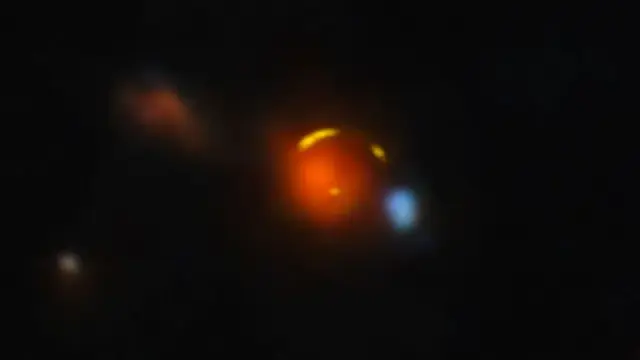
A high-energy neutrino detected by IceCube may have originated from Shadow Blaster, a dust-enshrouded, intensely star-forming galaxy 11 billion light-years away that is gravitationally lensed. This link, while tentative (about 1% chance of a random coincidence), suggests star-forming galaxies could contribute a significant fraction of the diffuse neutrino background, and motivates deeper multiwavelength follow-up with facilities like ALMA and JWST to pinpoint more such sources.
SciTechDaily•4 months ago
European Space Agency•5 months ago
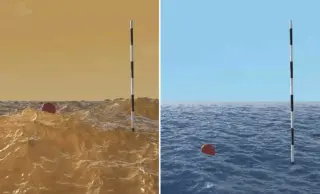
MIT and Woods Hole researchers unveiled a generalized wave-model showing that ocean waves on alien seas (like Titan’s methane/ethane lakes) can be dramatically different from Earth’s, driven by gravity, liquid composition, and atmospheric density; on Titan, simulations predict tall, slow-moving waves due to its low gravity and thick atmosphere, reshaping expectations for shoreline erosion, sediment transport, and the design of future landers or floating probes.
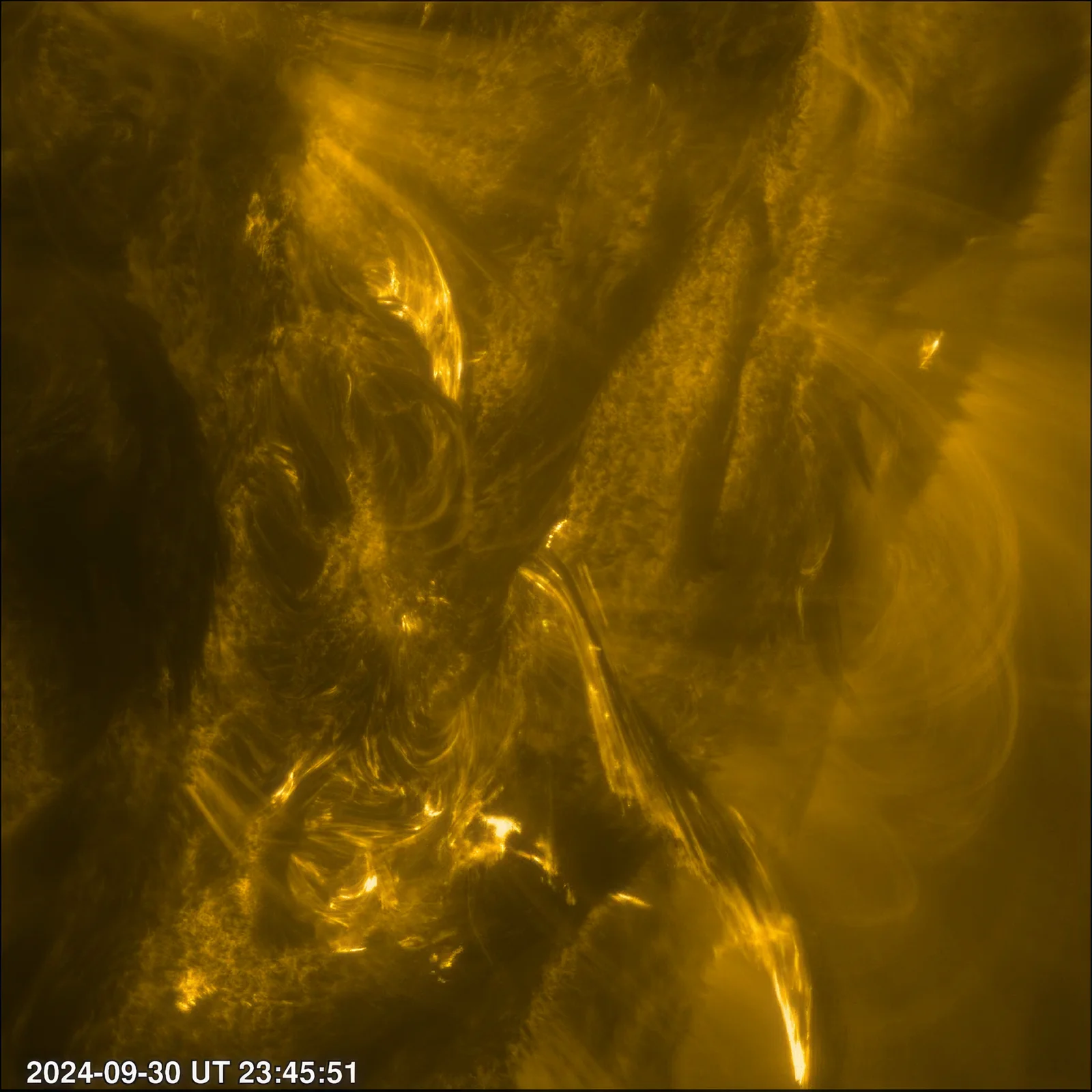
ESA's Solar Orbiter captured a large solar flare as a cascade of rapid reconnection events—an avalanche that builds from weak disturbances to a full eruption—producing rain-like plasma blobs and high-energy X-rays; four instruments provided a detailed, multi-instrument view, supporting avalanche models and improving understanding of energy transfer from magnetic fields to plasma and particles, with implications for space weather forecasting.
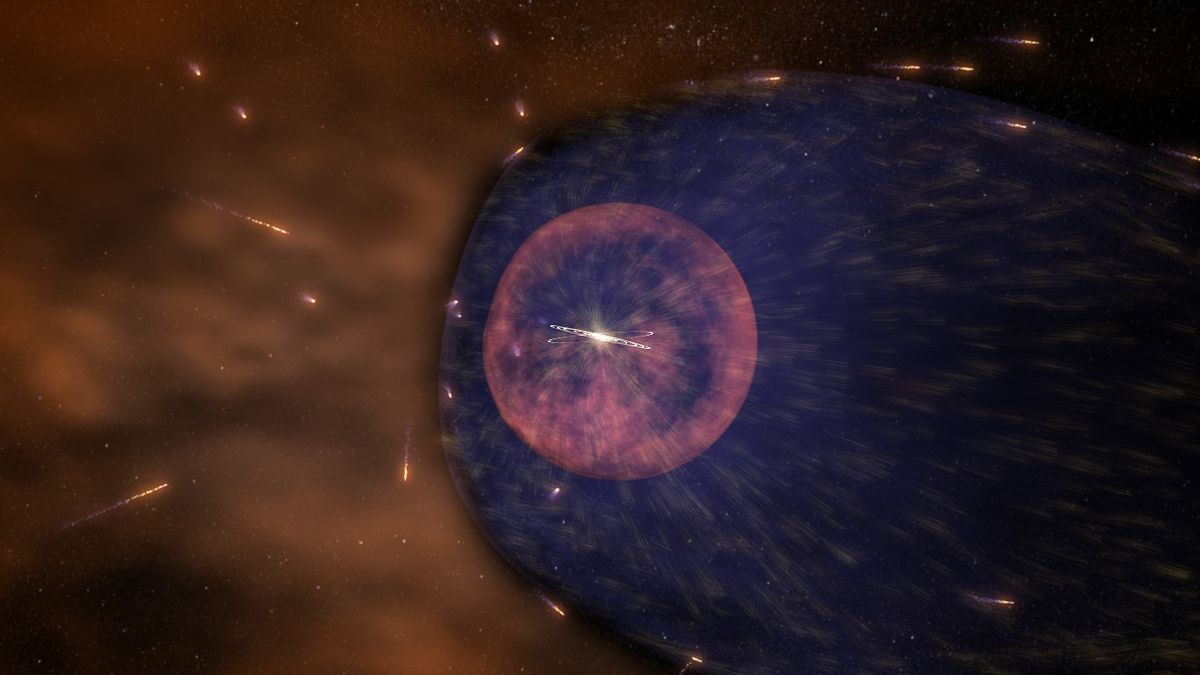
The heliosphere, the vast region of space influenced by the sun, acts as a shield against cosmic rays and interstellar particles. Scientists aim to understand its shape and interactions with the interstellar medium, but current probes like Voyager lack the necessary instruments. NASA is considering launching a new interstellar probe to study the heliosphere from the outside, which could provide invaluable data on its structure and behavior.
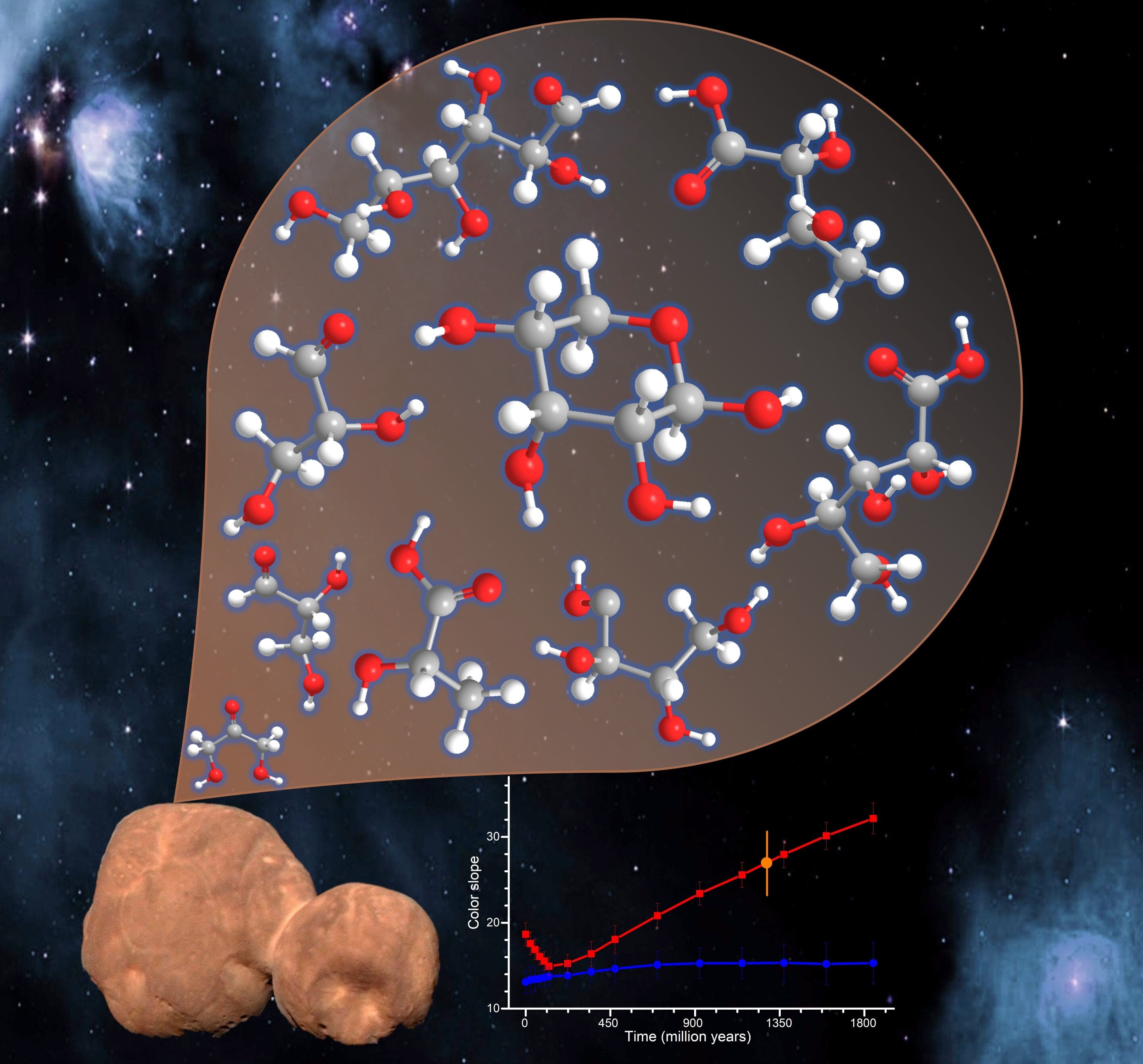
Researchers have simulated the conditions on the planetesimal Arrokoth and found that its red color likely comes from a surface rich in sugars formed by cosmic ray bombardment over 1.8 billion years. This discovery, made using data from NASA's New Horizons spacecraft, suggests that similar processes on comets could have contributed to the origins of life on Earth.
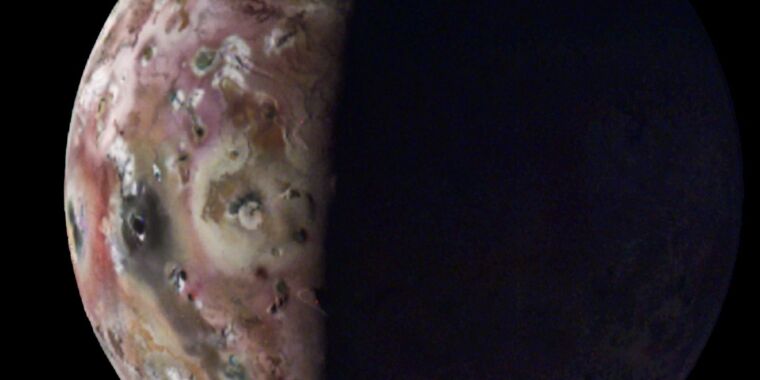
New images from the Juno orbiter reveal a lake of lava on Jupiter's moon Io, with an island within it, indicating signs of permanent volcanism. The volcanic activity has reshaped Io's surface, erasing impact craters, and the Juno team found smooth areas within the lava lake, possibly indicating the formation of obsidian glass. Additionally, research using the Atacama Large Millimeter Array (ALMA) suggests that volcanic emissions have been reshaping Io since its formation, providing insights into the moon's history of volcanism through the analysis of sulfur and chlorine isotopes in its atmosphere.
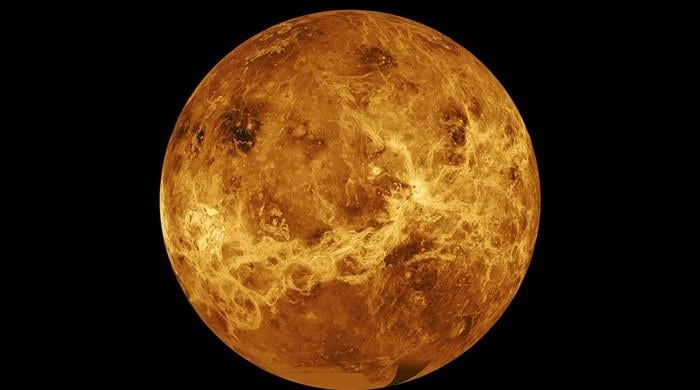
Scientists are puzzled by the unusual activity on Venus, where gases including carbon and oxygen are being ejected into space at high speeds, possibly due to an "induced magnetosphere" formed by charged solar winds. The BepiColombo space mission observed this phenomenon, which could provide crucial insights into Venus's evolution. Unlike Earth, Venus lacks a protective magnetic field, allowing its atmosphere to be stripped away. This discovery sheds light on the planet's history and its transformation from a potentially Earth-like environment to the scorching world it is today.
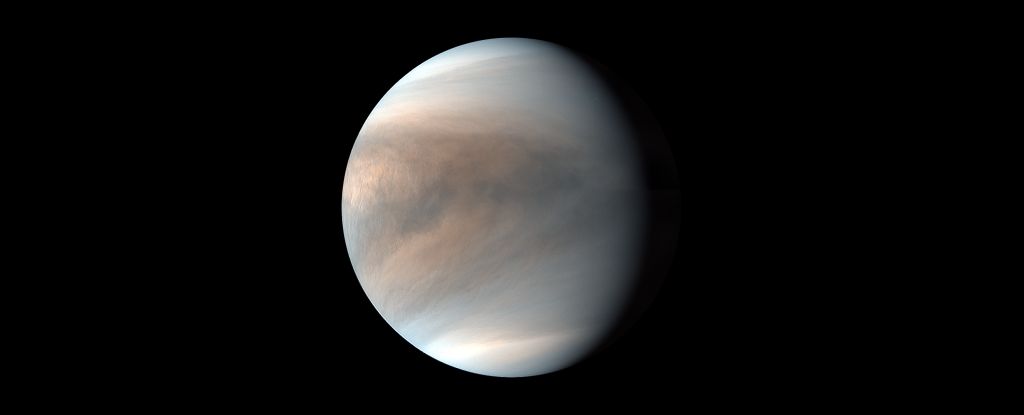
The BepiColombo spacecraft has detected carbon and oxygen leaking from Venus, adding to previous findings on the loss of hydrogen and potentially providing clues to the planet's transformation from a temperate world to a scorching, acidic environment. The discovery, made during flybys of Venus, suggests that the planet's atmosphere has evolved and lost its water over time. With limited in-situ information about Venus, upcoming missions aim to study its escape mechanisms, volcanic activity, and potential for life, shedding light on its historical evolution.
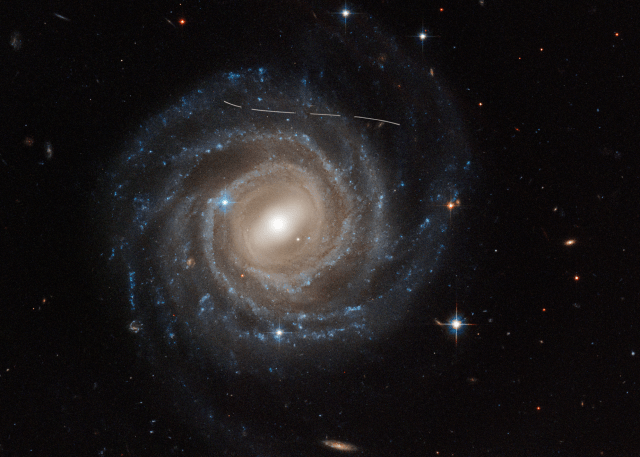
Astronomers used archived images from NASA's Hubble Space Telescope to identify 1,701 asteroid trails, with 1,031 of them previously uncatalogued, including about 400 below 1 kilometer in size. Citizen scientists and a machine learning algorithm were crucial in this effort. The findings provide new insights into the formation and evolution of the asteroid belt, supporting the idea that small asteroids are fragments of larger ones that have collided and broken apart over billions of years. The project will continue to explore the properties of these asteroids and their orbits.
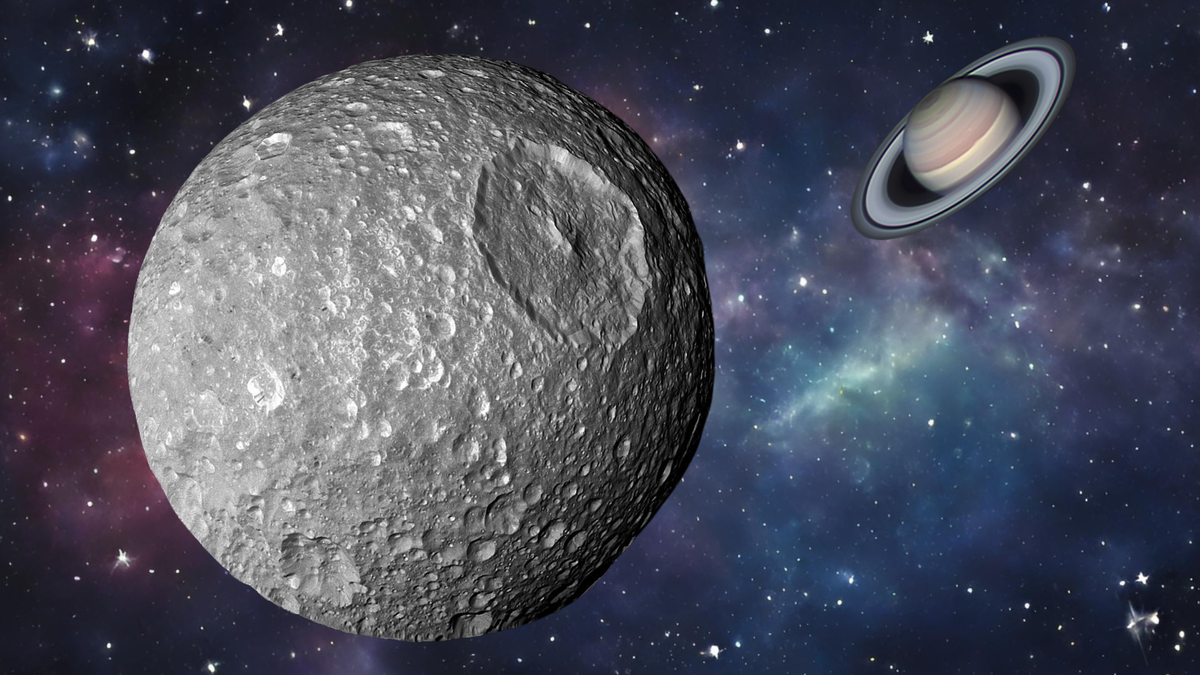
Researchers have proposed that Saturn's moon Mimas may have developed a vast buried ocean due to the planet's gravitational pull, causing the moon's icy shell to melt and thin. This discovery challenges previous assumptions about the potential for subsurface oceans on small moons and could impact the search for life in the solar system. The ocean is estimated to be relatively young, between 2 million and 25 million years old, and accounts for a significant portion of Mimas' volume. The process of tidal heating, driven by the moon's elliptical orbit, is believed to be responsible for the current thinning of the icy shell. This research sheds new light on the formation of subsurface seas and suggests that Mimas may be in a particularly interesting phase of its evolution.
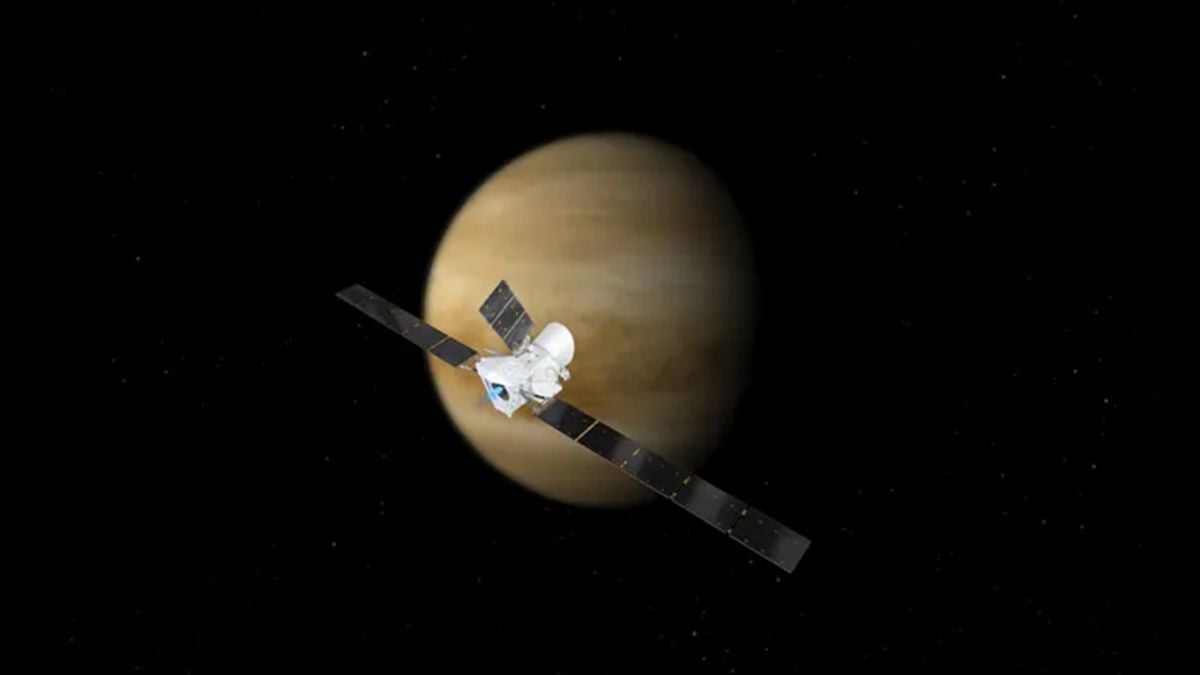
Data from the BepiColombo space probe indicates that Venus is losing carbon and oxygen from its atmosphere due to the escape of charged particles accelerated by sunlight. The lack of a stable magnetic field on Venus allows these ions to escape into space, shedding light on the planet's fragile magnetic environment. Understanding the mechanisms behind this atmospheric loss is crucial for comprehending Venus' evolution and the depletion of its water. This research could pave the way for future missions to Venus, including the upcoming Envision spacecraft and the delayed NASA's DAVINCI and VERITAS missions.