Tag

Space Science

All articles tagged with #space science

Psyche’s Mars flyby primes its long-awaited asteroid rendezvous
space6 days ago

Psyche’s Mars flyby primes its long-awaited asteroid rendezvous

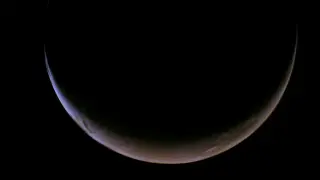
NASA’s Psyche spacecraft used a Mars flyby as a gravity assist to gain speed and adjust its orbit on the way to the metal-rich asteroid Psyche in 2029, while testing its science suite (a dual-camera multispectral imager, gamma-ray/neutron spectrometer, and magnetometer). The Mars encounter yielded rare imagery from a high phase angle, including a crescent view and a southern polar to Valles Marineris panorama, helping calibrate instruments ahead of the asteroid mission. The gravity assist boosted speed by about 1,000 mph and nudged the orbit by roughly 1 degree; Psyche launched in Oct 2023 and will complete a 2.2-billion-mile journey.

Earth Plows Through Ancient Supernova Debris Preserved in Antarctic Ice
space-science9 days ago

Earth Plows Through Ancient Supernova Debris Preserved in Antarctic Ice

A new study detects iron-60 in Antarctic ice aged 40,000–80,000 years, tying Earth’s passage through the Local Interstellar Cloud to debris from a past supernova. Using accelerator mass spectrometry on hundreds of kilograms of ice and corroborating isotopes, researchers show the cloud around the Solar System contains material from an ancient stellar explosion, with the iron-60 signal varying over tens of thousands of years and supporting the idea that our cosmic neighborhood records such events.

Curiosity Unearths Giant Honeycomb Textures Across Martian Rocks
space-and-spaceflight1 month ago

Curiosity Unearths Giant Honeycomb Textures Across Martian Rocks

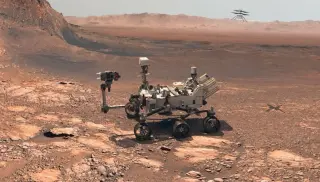
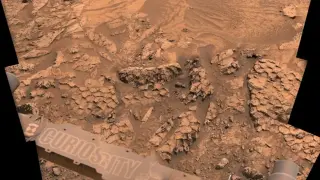
NASA’s Curiosity rover captured Mastcam mosaics showing thousands of polygonal, honeycomb-like textures across rocks near Antofagasta crater in Gale Crater, a pattern scientists are evaluating as a clue to Mars’ ancient watery past; researchers are testing hypotheses from drying/wetting cycles and groundwater mineralization, complementing other recent findings of organics in Martian rocks.

Euclid Lens Hunt Invites the Public to Map Dark Matter with Space Warps
space-science1 month ago

Euclid Lens Hunt Invites the Public to Map Dark Matter with Space Warps

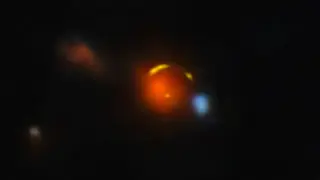
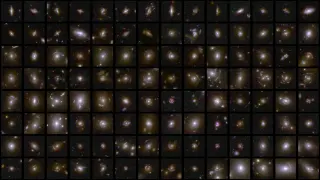
The European Space Agency’s Euclid telescope is powering a new citizen-science project on Zooniverse called Space Warps, enlisting volunteers to identify strong gravitational lenses in Euclid’s high‑quality images. This work helps study dark matter, dark energy, and cosmic expansion, with around 300,000 AI‑preselected images guiding the search and the team expecting to uncover more than 10,000 new lens candidates from Euclid Data Release 1.

Titan and Beyond: A New Model Reveals Giant, Slow Waves on Alien Seas
space-science1 month ago

Titan and Beyond: A New Model Reveals Giant, Slow Waves on Alien Seas

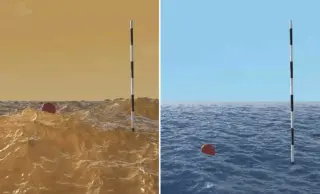
MIT and Woods Hole researchers unveiled a generalized wave-model showing that ocean waves on alien seas (like Titan’s methane/ethane lakes) can be dramatically different from Earth’s, driven by gravity, liquid composition, and atmospheric density; on Titan, simulations predict tall, slow-moving waves due to its low gravity and thick atmosphere, reshaping expectations for shoreline erosion, sediment transport, and the design of future landers or floating probes.

Space Mutations Boost Phages in the Battle Against Superbugs
science3 months ago

Space Mutations Boost Phages in the Battle Against Superbugs

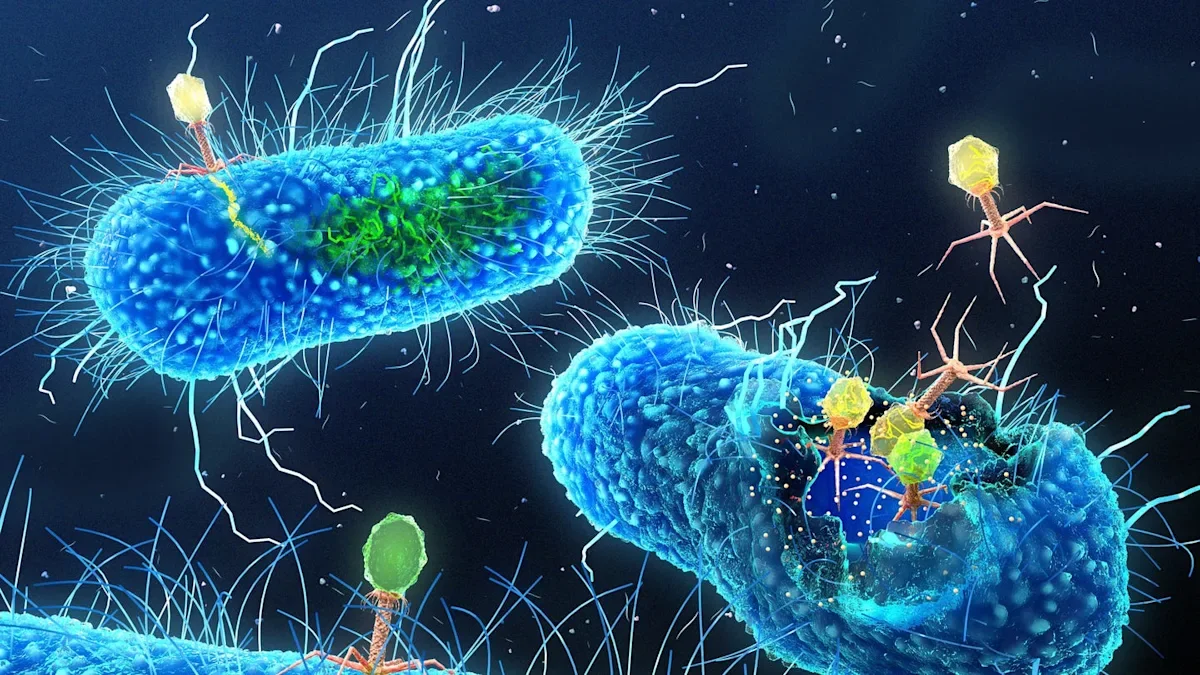
A UW–Madison-led study compared a E. coli–T7 phage clash on Earth and in microgravity aboard the ISS. In space, phages infect more slowly but still acquire mutations that improve their ability to bind bacterial receptors, while the bacteria develop space-specific defenses—demonstrating space-driven evolutionary paths that could inform phage-based strategies against drug‑resistant pathogens on Earth.

2032 Moon Impact Could Unleash New Lunar Science from a Tiny Asteroid
space3 months ago

2032 Moon Impact Could Unleash New Lunar Science from a Tiny Asteroid

A 60-meter asteroid (2024 YR4) has about a 4% chance to strike the Moon on December 22, 2032. If it hits, it could form a ~1 km crater with a 100 m molten pool, trigger a magnitude-5.0 “moonquake,” vaporize rock, and loft up to 400 kg of debris that could reach Earth, potentially posing risks to satellites and even ground hazards. Yet scientists see this as a rare, invaluable chance to study lunar geology, interior structure, and crater formation in real time using telescopes and space assets, while some agencies consider deflection to prevent the impact. The piece notes Universe Today as the original source.

Avalanche of magnetic reconnection powers solar flare, Solar Orbiter reveals
space-science4 months ago

Avalanche of magnetic reconnection powers solar flare, Solar Orbiter reveals

ESA's Solar Orbiter captured a large solar flare as a cascade of rapid reconnection events—an avalanche that builds from weak disturbances to a full eruption—producing rain-like plasma blobs and high-energy X-rays; four instruments provided a detailed, multi-instrument view, supporting avalanche models and improving understanding of energy transfer from magnetic fields to plasma and particles, with implications for space weather forecasting.

Perihelion: Earth's Closest Sun Point Doesn't Change Our Seasons
science4 months ago

Perihelion: Earth's Closest Sun Point Doesn't Change Our Seasons

In 2026, Earth reached perihelion—its closest approach to the Sun—on Jan 3 at about 91.4 million miles (147,099,894 km). The roughly 3% distance change compared with its farthest point yields negligible shifts in global temperatures; seasons are driven primarily by the tilt of Earth's axis, not distance to the Sun. Perihelion matters more for highly elliptical orbits like comets or spacecraft such as NASA's Parker Solar Probe.

1970s Scientific Error Set Back Mars Exploration
science6 months ago

1970s Scientific Error Set Back Mars Exploration

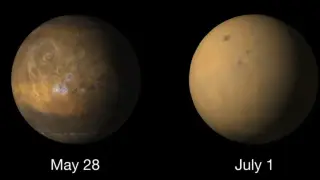
A 50-year-old scientific conclusion from the Viking Mars mission, which declared Mars lifeless due to the absence of detected organics, is now believed to be mistaken. New evidence from recent missions suggests that Mars may harbor or have harbored life, prompting a reevaluation of past assumptions and the need for dedicated future missions to search for life on Mars.