Tag

Solar Physics

All articles tagged with #solar physics

Sun's 19-Day Radio Burst Sets New Record, Tracked Across the Solar System
space11 days ago

Sun's 19-Day Radio Burst Sets New Record, Tracked Across the Solar System

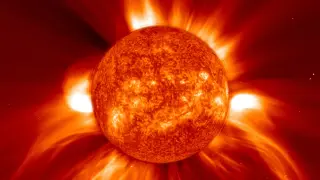
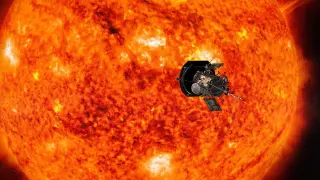
NASA and international spacecraft tracked a 19-day Type IV solar radio burst—the longest ever observed—originating from a helmet streamer in the Sun's outer atmosphere. The event, likely powered by a sequence of three coronal mass ejections, kept electrons trapped and replenished, extending radio emissions well beyond typical durations. Observations from Parker Solar Probe, Solar Orbiter, STEREO, and Wind allowed near-continuous monitoring as the Sun rotated, offering new insights for forecasting space weather and understanding large-scale solar magnetic structures.

CubeSat neutrino detector aims to illuminate solar core from orbit
space13 days ago

CubeSat neutrino detector aims to illuminate solar core from orbit

Space.com reports the world’s first space-based neutrino detector, SNAPPY, has launched to a ~310‑mile Earth orbit aboard SpaceX CAS500‑2 for about two years. The 3U CubeSat carries gallium‑tungsten detector crystals to catch solar neutrinos closer to the Sun, testing space-based detection technology and potentially enabling future solar-neutrino missions and imaging of solar fusion shells.

Magnetic Avalanches Trigger Solar Flares, New Solar Orbiter View Reveals
science4 months ago

Magnetic Avalanches Trigger Solar Flares, New Solar Orbiter View Reveals

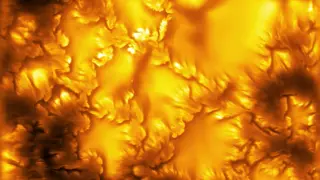
ESA's Solar Orbiter captured high-cadence observations showing solar flares arise from avalanche-like magnetic reconnection: a weak disturbance spawns a cascade of twisted field strands that rapidly reconnect, creating bright ribbons, fast plasma outflows up to ~400 km/s, and continued plasma rain after the flare, implying energy moves from magnetic fields to solar plasma and this avalanche mechanism may be common across flares.

Debunking the Myth: Is the Sun a Dwarf Star?
science5 months ago

Debunking the Myth: Is the Sun a Dwarf Star?

The sun is technically classified as a G2V main-sequence star, often called a dwarf star, but it is much larger than what is typically considered a dwarf star. It is a yellow, hydrogen-fusing star that will eventually become a red giant in about 5 billion years. Despite its name, the sun appears yellow due to atmospheric scattering, and it is the largest object in our solar system.

Scientists Uncover Explanation for Rain on the Sun
science7 months ago

Scientists Uncover Explanation for Rain on the Sun

Researchers at the University of Hawai'i have discovered that the mysterious rain on the Sun, composed of superheated plasma, is influenced by shifting flows of elements like iron, silicon, and magnesium in the Sun's corona. This finding helps explain the rapid formation of coronal rain and suggests new insights into solar atmospheric dynamics and coronal heating. The study challenges previous models assuming constant elemental distribution and opens avenues for further research into solar phenomena.