
1986 Halley’s Comet: A Visual Disappointment That Revolutionized Science
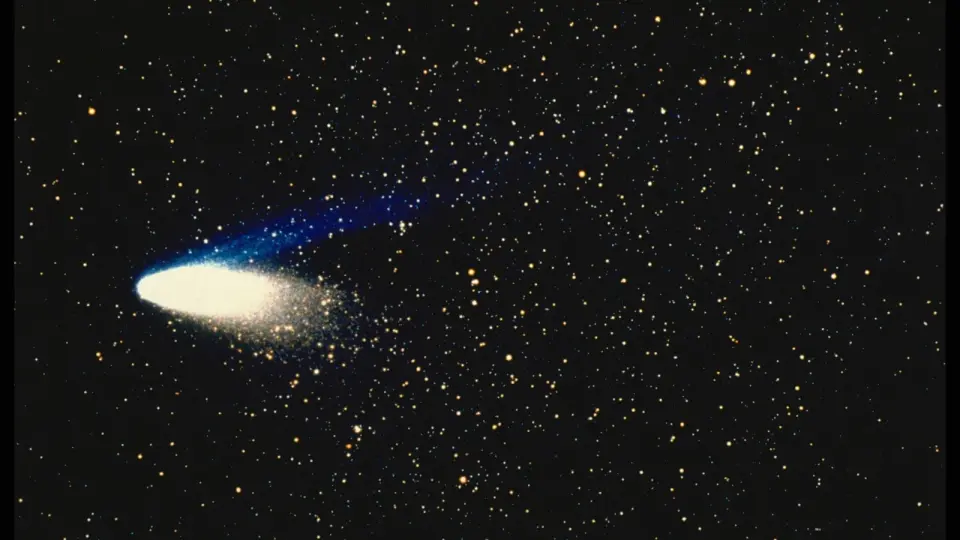
The 1986 return of Halley's Comet was visually underwhelming for skywatchers but marked a historic scientific milestone. An international fleet of spacecraft provided unprecedented data, fundamentally changing our understanding of cometary composition and structure. This event serves as a 40-year retrospective on how a 'disappointing' visual appearance yielded a 'scientific gold mine' of discoveries.
Key points
- The 1986 appearance was the 30th recorded sighting of Halley's Comet, which returns roughly every 76 years.
- Skywatchers were disappointed by the comet's visual brightness, but it became a major scientific success.
- An international fleet of spacecraft studied the comet, revealing secrets about its composition and structure.
- The event is described as a 'scientific gold mine' that changed astronomy forever.
- Historical records of Halley's Comet date back to A.D. 66, with appearances documented in the Bayeux Tapestry (1066) and Giotto's frescoes (1301).
Background
Recent coverage of the Orionid meteor shower, which peaks in late October 2026, highlights the ongoing relevance of Halley's Comet debris. These meteors, traveling at 41 miles per second, are remnants of the comet's past passages. The 1986 return remains the most recent close approach, with the next expected in 2061.
Why it matters
The 1986 event demonstrates that scientific value often outweighs visual spectacle. The data gathered from the 1986 flyby provided foundational knowledge about cometary nuclei and tails, influencing subsequent missions and our understanding of the solar system's formation. It serves as a reminder that 'disappointing' visual events can yield profound scientific insights.
What to watch
The next appearance of Halley's Comet is scheduled for 2061. Until then, its debris continues to produce the Orionid meteor shower, offering annual opportunities for observation and study of the comet's legacy.
Want the full story? Read the original reporting
Read on Space