
Ancient supernova debris spotted near the Milky Way’s black hole
TL;DR
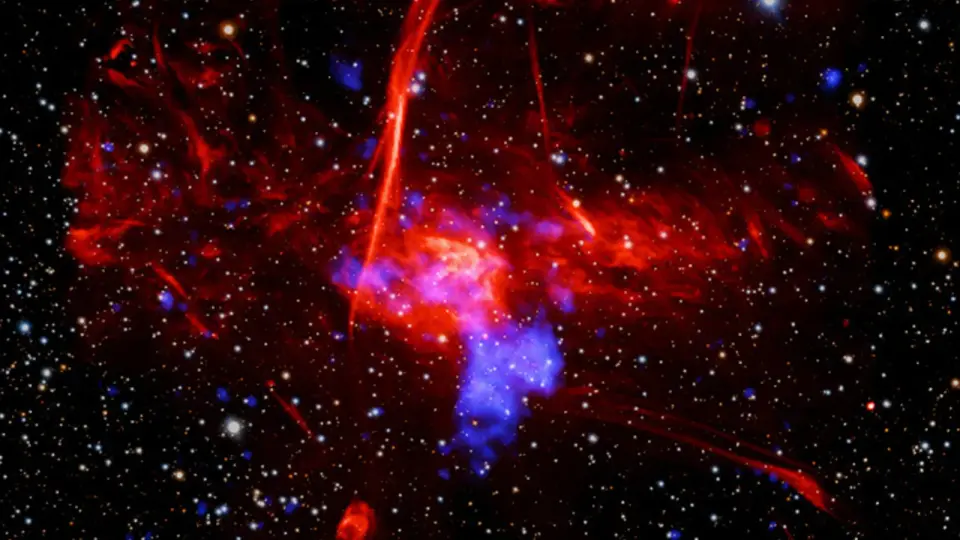
NASA’s Chandra X-ray Observatory, with help from XMM-Newton, detected a bright X-ray blob near the Milky Way’s center—likely the wreckage of a supernova that exploded about 1,700 years ago and is the closest such debris to Sagittarius A*. The debris lies in a bubble of ionized gas dubbed Sagittarius C and is seen moving at roughly 2 million mph. While an SN origin is favored, some uncertainty remains whether the emission could be from gas heated by nearby massive stars. The study, published in The Astrophysical Journal, highlights how such debris contributes to chemical enrichment and the birth of future stars and planets.
- NASA X-ray spacecraft discovers supernova wreckage at the heart of the Milky Way Space
- NASA’s Chandra Finds Unexpected Fireworks in Aftermath of Stellar Explosions NASA Science (.gov)
- NASA spots the possible remains of a massive supernova in the middle of the Milky Way Scientific American
- Astronomers May Have Found Supernova Remnant near Milky Way’s Central Black Hole Sci.News
- NASA's Chandra discovers possible supernova remnant in galactic center Phys.org
Want the full story? Read the original reporting
Read on Space