Tag

Andromeda

All articles tagged with #andromeda

Andromeda's Star Formation Slows Over 500 Million Years
space11 days ago

Andromeda's Star Formation Slows Over 500 Million Years

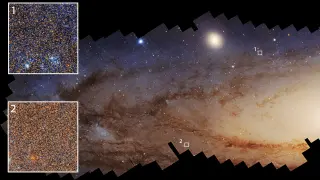
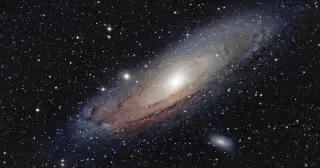
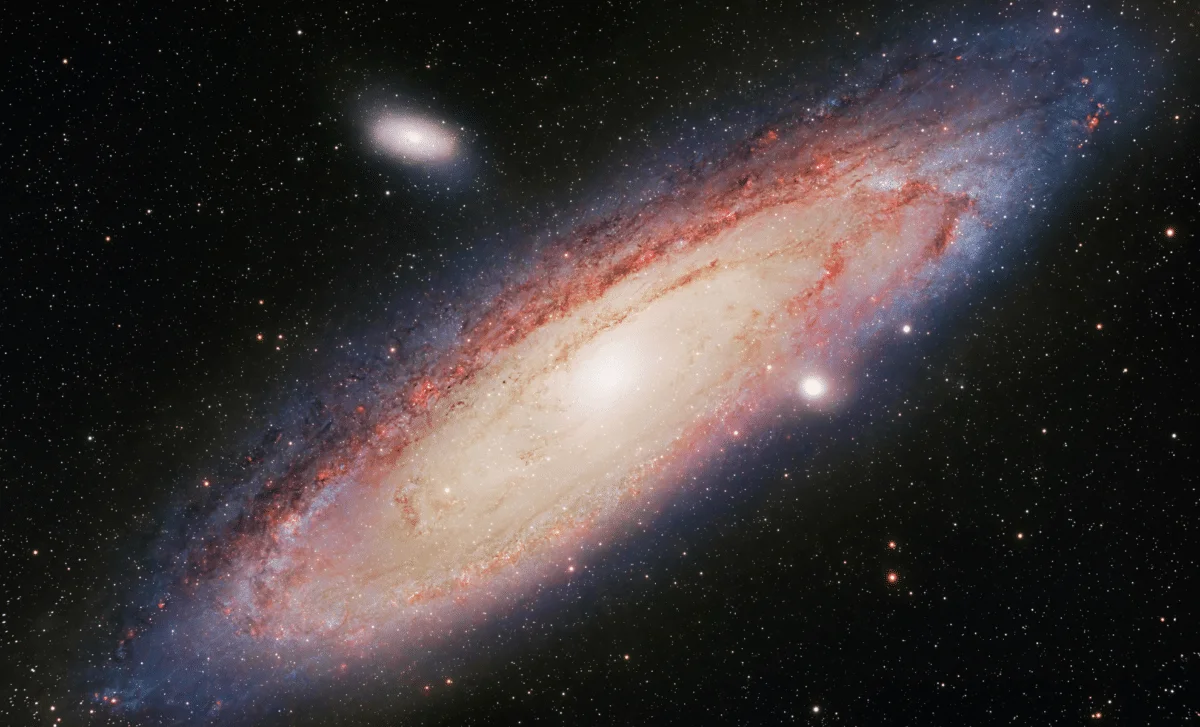
A Hubble-based study of Andromeda (M31) using PHAT/PHAST surveys finds its star formation has declined for about 500 million years, with a sharper drop in the last 40 million, especially on the side near the satellite galaxy M32. While not proven, M32 is the leading candidate for helping slow star birth. The work highlights Andromeda as a Milky Way analog and points to future Roman Space Telescope observations that could map the entire disk and add hundreds of millions of stars to the record.

Andromeda's Star Formation Slows, Suspected Trigger: a Neighbor Named M32
space15 days ago

Andromeda's Star Formation Slows, Suspected Trigger: a Neighbor Named M32

Hubble observations show the Andromeda galaxy’s rate of turning gas into stars has dramatically slowed in the last ~40 million years, with the slowdown most pronounced on the side facing its tiny neighbor M32. While researchers acknowledge they can’t prove M32 caused the decline, it is the leading suspect, possibly due to a past collision. The study mapped Andromeda’s history across two-thirds of its disk, finding current star formation at about 0.2 solar masses per year (roughly one-fifth the Milky Way’s rate). The Nancy Grace Roman Space Telescope will help measure more of Andromeda’s stars to further test the M32-link in the coming years.

Hubble’s deep dive shows Andromeda winding down its star formation
space23 days ago

Hubble’s deep dive shows Andromeda winding down its star formation

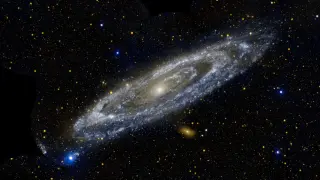
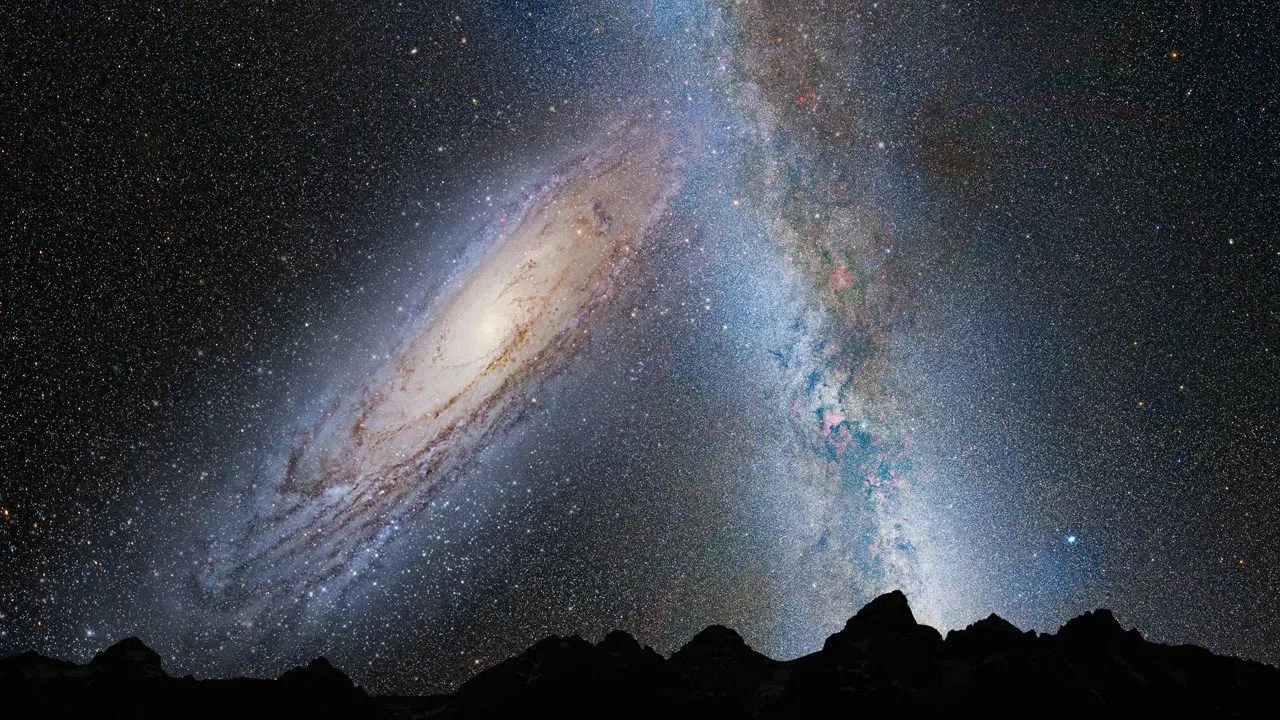
Using two major Hubble surveys mapping roughly two-thirds of Andromeda’s disk, researchers traced star formation over the past 500 million years and found the galaxy’s rate has declined from about 1 solar mass per year to roughly 0.2 per year, with most recent star formation concentrated in a ring about 32,000 light-years from the center. This winding-down pattern suggests Andromeda is returning to a quiescent state after a past starburst likely tied to a merger with its companion M32; its collision with the Milky Way, about 5 billion years away, remains uncertain. The work, published July 27, 2026 in The Astrophysical Journal, underscores Hubble’s detailed view and points to broader surveys by NASA’s Roman Space Telescope.

Andromeda's Light Lets Us See a 2.5-Million-Year Moment
space2 months ago

Andromeda's Light Lets Us See a 2.5-Million-Year Moment

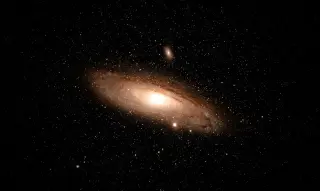
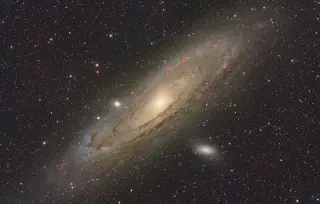
Seeing Andromeda with the naked eye means viewing light that began its journey about 2.5 million years ago—the era when early Homo in Africa were first making stone tools; Andromeda (M31) is the Local Group’s largest galaxy and the farthest naked-eye object at 2.5 million light-years, approaching the Milky Way at ~110 km/s with a predicted merger in ~4.5 billion years; the visible glow is the bright core, while deep images reveal hundreds of millions of stars, illustrating astronomy as time travel into the past.

Bridenstine Named Quantum Space CEO to Drive Ranger’s National-Security Push
commercial3 months ago

Bridenstine Named Quantum Space CEO to Drive Ranger’s National-Security Push

Former NASA administrator Jim Bridenstine is joining Quantum Space as CEO, with Kerry Wisnosky remaining president to focus on operations and spacecraft development. Bridenstine says Ranger’s high maneuverability and refuelability make it attractive for national-security applications, in line with DARPA’s LASSO program and Space Force’s Andromeda program, with the first Ranger launch planned for Q2 2027. The Artemis Group will continue under senior partner Gabe Sherman as Quantum Space expands partnerships amid rising space-defense spending.

Andromeda star quietly collapses into a black hole, archival data reveal
space6 months ago

Andromeda star quietly collapses into a black hole, archival data reveal

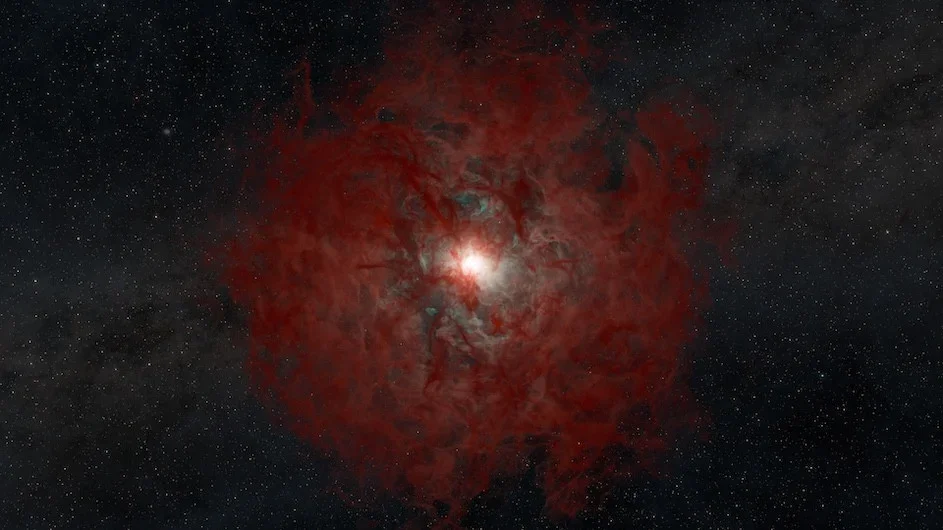
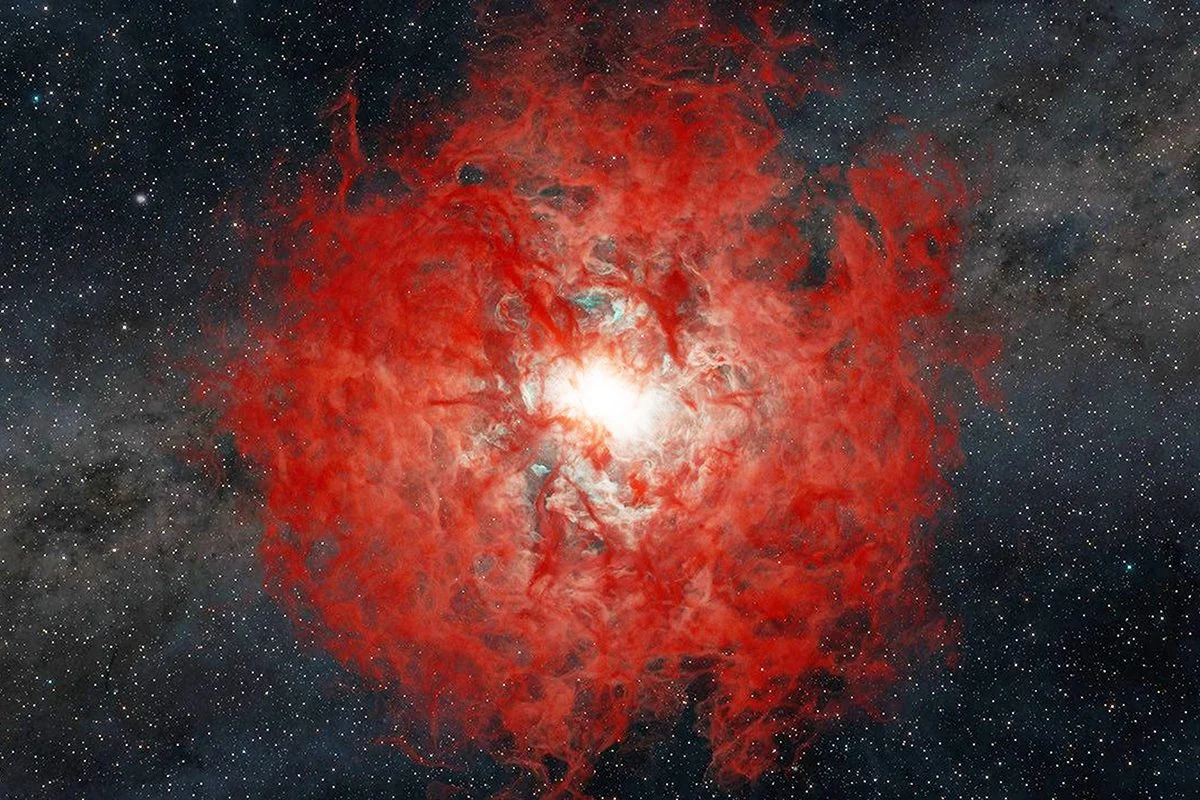
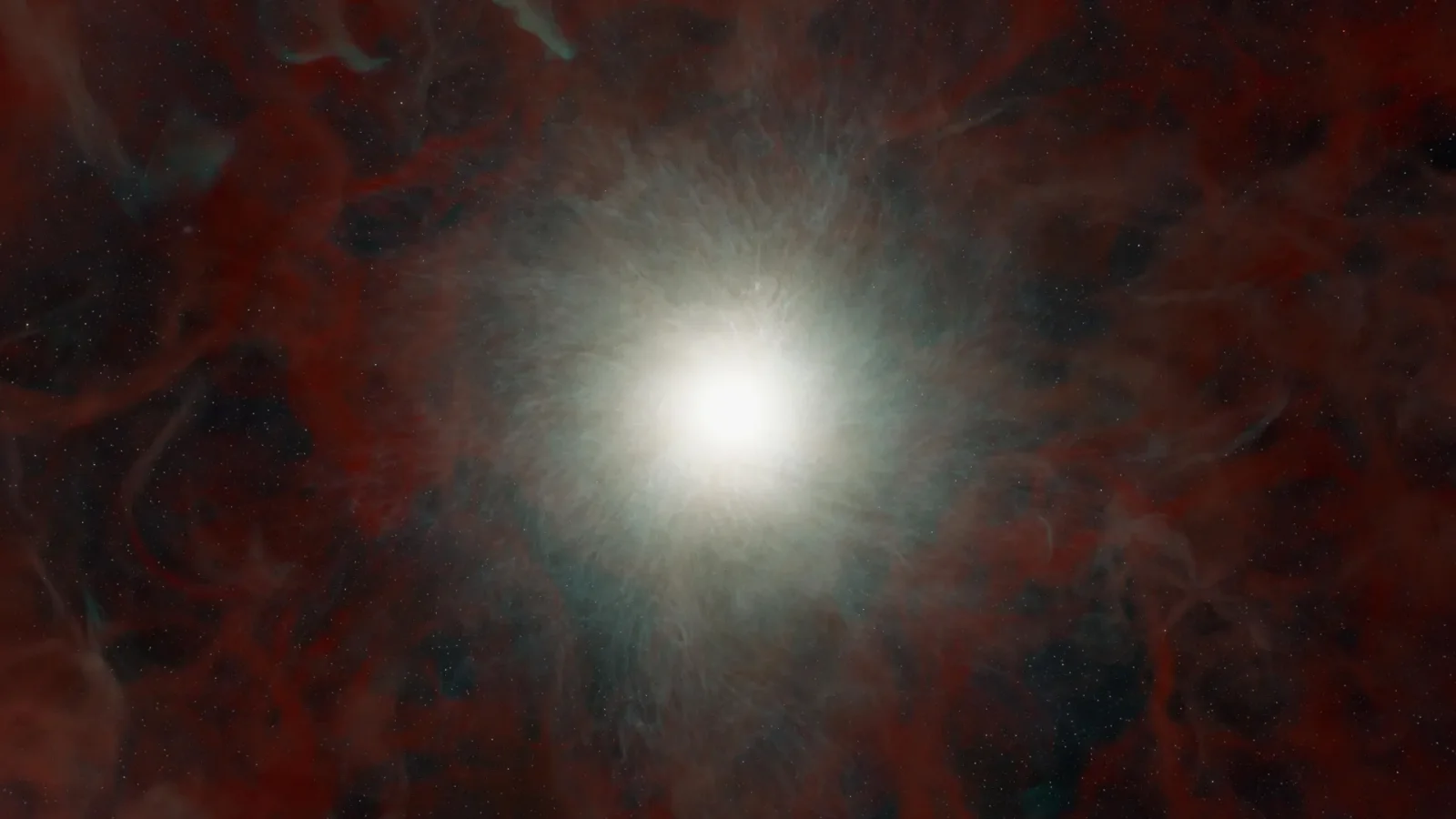
Astronomers using archival NEOWISE infrared data have captured the clearest evidence yet that a massive star in the Andromeda Galaxy directly collapsed into a black hole, after brightening in infrared for about three years and leaving a dust shell; the event (M31-2014-DS1) from 2014 suggests some massive stars die without a supernova, refining ideas about stellar deaths.

Andromeda Star Quietly Forms a Black Hole Without a Supernova
science6 months ago

Andromeda Star Quietly Forms a Black Hole Without a Supernova

Astronomers tracked a massive star in the Andromeda Galaxy (M31-2014-DS1) that brightened in infrared in 2014, then faded and effectively disappeared by 2022–2023, indicating it collapsed into a black hole rather than exploding in a supernova. The remaining dust and gas emit a long-lasting mid-infrared glow as material slowly falls back, a process driven by convection that delays accretion and explains the dimming over decades. This event, linked to a similar case (NGC 6946-BH1), supports a broader class of failed supernovae and improves understanding of how some massive stars end their lives.

Flat Dark Matter Sheet Nudges Andromeda Toward the Milky Way
science6 months ago

Flat Dark Matter Sheet Nudges Andromeda Toward the Milky Way

A Nature Astronomy study finds that a vast, flat sheet of dark matter surrounding the Milky Way and Andromeda reshapes local gravity, slowing the motion of closer galaxies and accelerating more distant ones, which explains why Andromeda is on a collision course with the Milky Way and underscores dark matter’s key role in the dynamics of our cosmic neighborhood.

Flat dark-matter sheet explains Andromeda’s inbound motion amid receding neighbors
space6 months ago

Flat dark-matter sheet explains Andromeda’s inbound motion amid receding neighbors

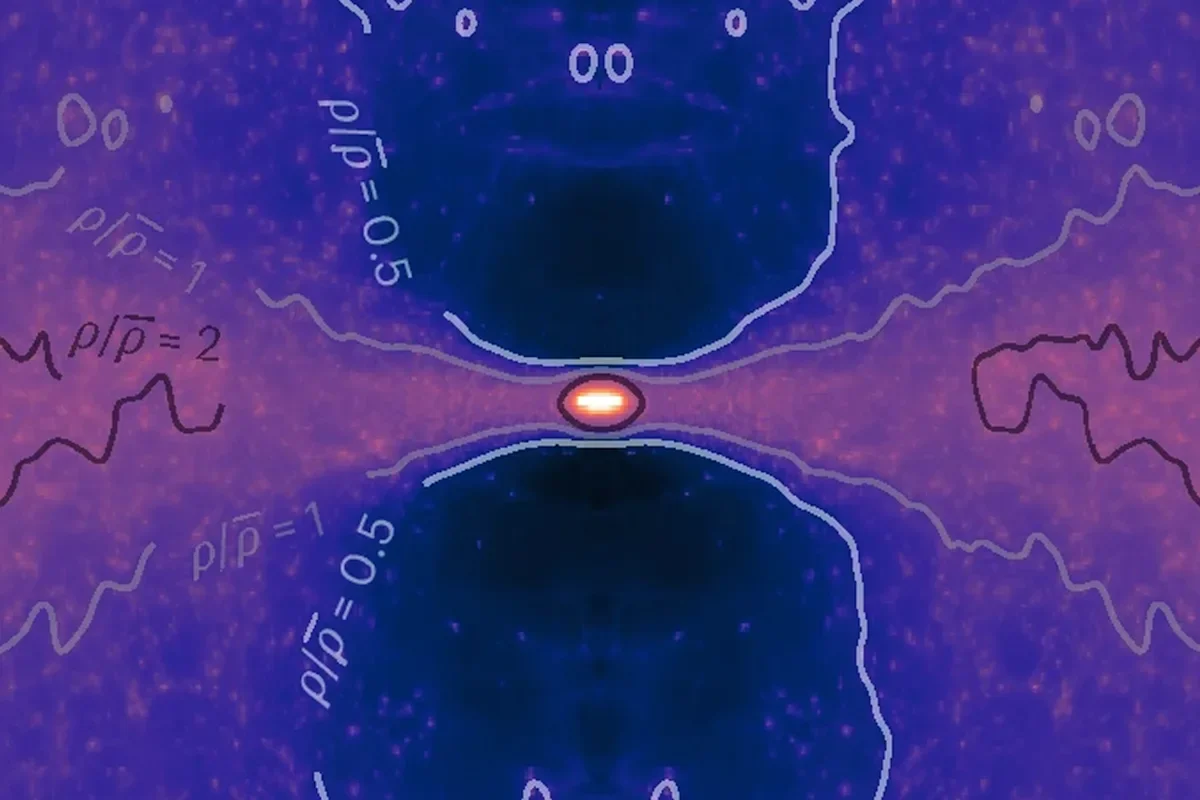
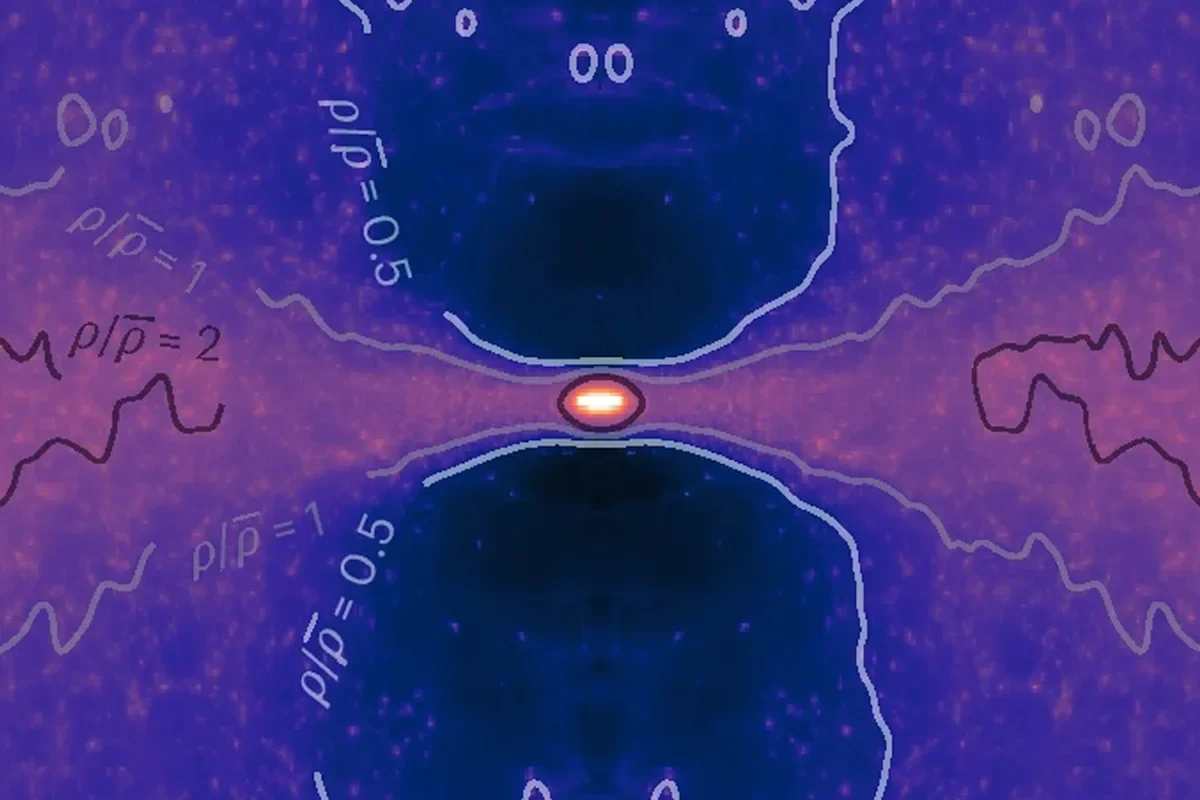
A Nature Astronomy study using local-universe simulations finds a vast, flat sheet of dark matter surrounding the Local Group that counteracts the Milky Way–Andromeda attraction. This sheet’s gravity pulls nearby galaxies outward, explaining why Andromeda is approaching us while other nearby galaxies are receding with cosmic expansion, reconciling observations with the standard cosmological model.

Local Group Lies in a Giant Dark-Matter Sheet, New Study Finds
science6 months ago

Local Group Lies in a Giant Dark-Matter Sheet, New Study Finds

A Nature Astronomy study using a virtual twin of the Local Group proposes that the Milky Way and its neighboring galaxies are embedded in a vast, sheet-like distribution of dark matter bordered by cosmic voids. This flat geometry could explain peculiar motions that spherical dark matter halos struggle to account for, with simulations aligning with observed galaxy dynamics.

Andromeda’s Vanished Star Triggers Black Hole or Merger Theories
space7 months ago

Andromeda’s Vanished Star Triggers Black Hole or Merger Theories

A 13-solar-mass yellow supergiant in the Andromeda Galaxy (M31-2014-DS1) brightened in 2014 but faded by 2018 without a canonical supernova. Two studies offer competing explanations: one proposes a failed supernova—a direct collapse into a black hole shrouded in dust that hides X‑ray emissions—leaving a faint red source surrounded by a dust shell. A second team questions this, noting no X‑ray activity and suggesting a stellar merger could produce the observed infrared glow and dust, with the central source possibly reappearing as the dust dissipates. Ongoing JWST observations and further monitoring are needed to confirm whether the star collapsed invisibly, merged, or will brighten again.

Roberts’ 1888 Andromeda Photo: A Spiral Revealed Without Space Telescopes
science7 months ago

Roberts’ 1888 Andromeda Photo: A Spiral Revealed Without Space Telescopes

An 1888 photograph by Isaac Roberts using a 510 mm reflector captured Andromeda, revealing its spiral structure long before space telescopes—demonstrating that innovative tracking and long exposures with modest gear could unveil galaxy details; the piece compares Roberts’ work to modern Hubble imagery, notes his invention of copper-plate stellar maps, and mentions his telescope is in the Science Museum while encouraging learning astrophotography today.