Tag

Direct Imaging

All articles tagged with #direct imaging

space24 days ago

Glimpse of a Hidden Giant: Beta Pictoris d Emerges from Archival Data

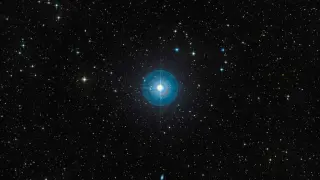
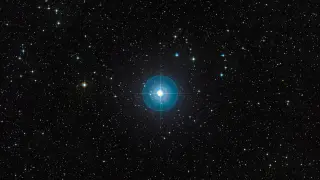
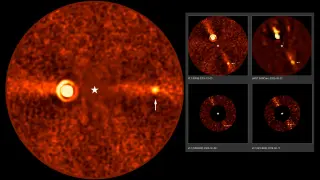
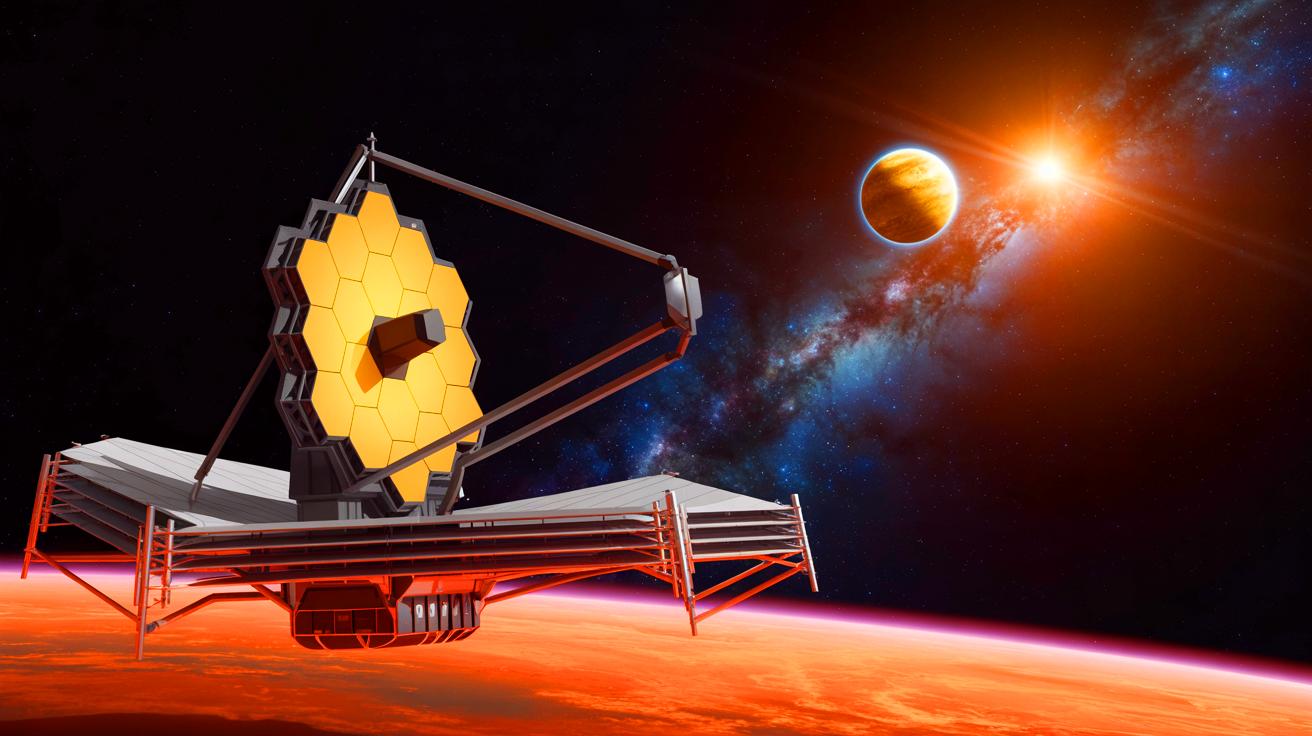
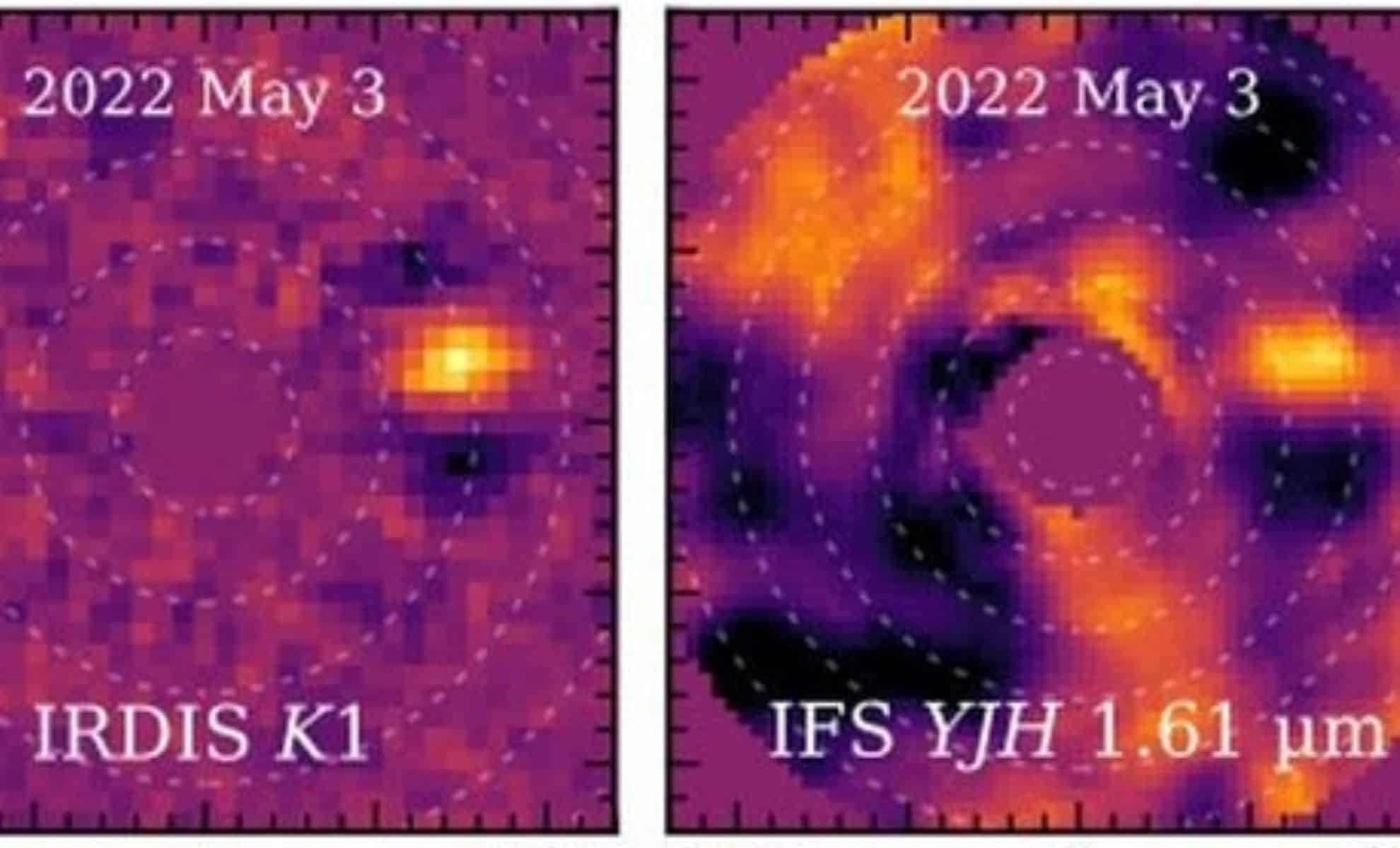
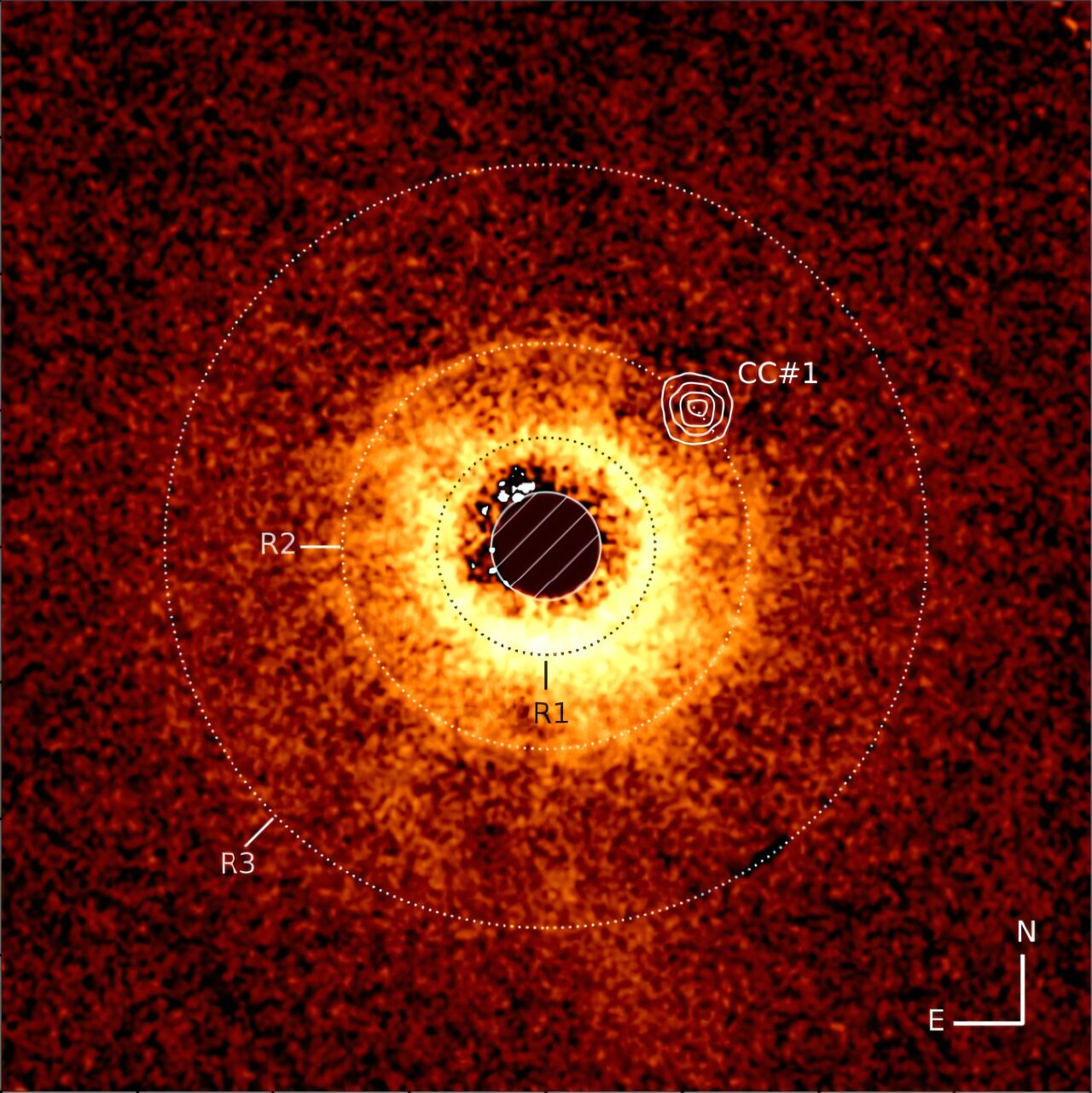
Astronomers have directly imaged a faint gas giant, Beta Pictoris d, orbiting the young nearby star Beta Pictoris—first seen in archival VLT SPHERE data and independently confirmed by JWST. Weighing roughly 2.4 Jupiter masses and orbiting at about 26 AU with a ~91-year period, it is the faintest exoplanet imaged from the ground (100x fainter than Beta Pictoris b). JWST spectra revealed methane, carbon monoxide, and water vapor, helping distinguish the planet from the debris disk. This discovery makes Beta Pictoris the second system with three directly imaged planets and offers a valuable lab for studying planet formation and disk sculpting, with ELT prospects for uncovering more hidden worlds.

Directly imaged planet orbits two suns closer than any prior circumbinary world
space1 month ago

Directly imaged planet orbits two suns closer than any prior circumbinary world

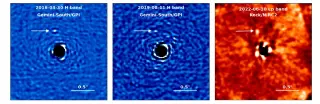
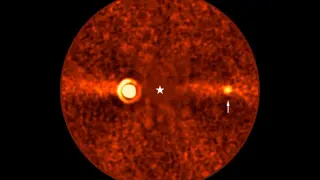
A young giant planet about 5.6 times Jupiter’s mass, HD 143811 AB b, was directly imaged in a binary star system roughly 446 light-years away. It orbits the two stars at about 63 AU with a 320-year period, six times closer to the stellar pair than any previously imaged circumbinary planet. The discovery, made through reanalysis of archival Gemini/GPI and Keck/NIRC2 data, challenges current ideas about planet formation and migration in dynamically complex circumbinary disks and provides a valuable three-body laboratory for refining models of how such worlds form and evolve.

Direct Imaging Reveals Beta Pictoris d, the Faintest Exoplanet Seen from Earth
science1 month ago

Direct Imaging Reveals Beta Pictoris d, the Faintest Exoplanet Seen from Earth

Using ESO's Very Large Telescope and archival JWST data, researchers confirmed Beta Pictoris d—an outer, 2.4-Jupiter-mass planet orbiting the nearby star Beta Pictoris. It is the faintest exoplanet ever directly imaged from Earth, lying more than twice as far from its star as its siblings and at about 64 light-years away. With a temperature around 330°C, it demonstrates how repeated observations and advanced instruments can reveal low-mass worlds hidden in bright starlight, and suggests there are likely more planets awaiting discovery in this young system with future telescopes like the ELT.

Dim Exoplanet Hidden Near Beta Pictoris Emerges After 11-Year Hunt
science1 month ago

Dim Exoplanet Hidden Near Beta Pictoris Emerges After 11-Year Hunt

Two independent teams using the European Southern Observatory’s Very Large Telescope and NASA’s James Webb Space Telescope independently detected a faint gas giant orbiting the young star Beta Pictoris—the dimmest exoplanet imaged from Earth—roughly 63 light-years away. The planet, slightly larger than Jupiter, completes a 91-year orbit in a system about 20 million years old, offering a rare glimpse into early planetary formation as astronomers dug through archival data and confirmed the discovery across two observations.

Dim Jovian World Emerges Around a Young Star
space1 month ago

Dim Jovian World Emerges Around a Young Star

Astronomers using ESO's Very Large Telescope and NASA's James Webb Space Telescope independently detected a faint, Jupiter-sized planet orbiting the young star Beta Pictoris, making it the dimmest exoplanet directly imaged from Earth. The planet, slightly larger than Jupiter, completes an orbit every 91 years around a system about 20 million years old, offering a rare glimpse into planetary formation as the system stabilizes after its birth.

Faintest-Ever Exoplanet Unmasked: Beta Pictoris d Revealed from Earth
space1 month ago

Faintest-Ever Exoplanet Unmasked: Beta Pictoris d Revealed from Earth

After more than a decade of archival data, astronomers directly imaged Beta Pictoris d, a roughly 2.4 Jupiter-mass gas giant about 63 light-years away, making it the faintest exoplanet ever seen directly from Earth and helping explain the star system’s debris disk; the find places Beta Pictoris among the few multi-planet systems detectable via direct imaging and may be followed up by the ELT.

Nearby GJ 251 c emerges as a prime target for future direct imaging of a temperate world
space1 month ago

Nearby GJ 251 c emerges as a prime target for future direct imaging of a temperate world

A nearby red-dwarf system hosts GJ 251 c, a candidate 3.8-Earth-mass super-Earth in the star’s habitable zone detected by radial-velocity methods; its radius and atmosphere remain unknown, but at ~18 light-years away its geometry could let future 30-meter telescopes directly image it and probe for water, air, and possible biosignatures—though no definitive signs exist yet.

James Webb Telescope Reveals First Direct Images of Exoplanets, Including a Saturn-Sized World
science1 year ago

James Webb Telescope Reveals First Direct Images of Exoplanets, Including a Saturn-Sized World

The James Webb Space Telescope has directly imaged its first exoplanet, TWA 7b, a Saturn-mass planet about 100 light-years away, marking a major milestone in astronomy by demonstrating advanced capabilities in direct imaging and opening new avenues for studying planetary formation and the potential for habitable worlds.

James Webb Telescope Reveals Its First Direct Image of a Saturn-Sized Exoplanet
science1 year ago

James Webb Telescope Reveals Its First Direct Image of a Saturn-Sized Exoplanet

The James Webb Space Telescope has successfully captured its first direct image of an exoplanet, TWA 7b, a small, cold planet similar in mass to Saturn, orbiting the star TWA 7 about 100 light years away. This achievement marks a significant advancement in the ability to directly image smaller exoplanets, which are key targets in the search for habitable worlds beyond our solar system.

Revolutionary Planet-Hunting Instrument Enhances Very Large Telescope's Capabilities
astronomy2 years ago

Revolutionary Planet-Hunting Instrument Enhances Very Large Telescope's Capabilities

The High-Resolution Imaging and Spectroscopy of Exoplanets (HiRISE) instrument has been installed on the European Southern Observatory's Very Large Telescope (VLT), enhancing its imaging capabilities for exoplanet research. HiRISE combines the SPHERE imager with the upgraded CRIRES spectrograph, allowing for high-resolution spectroscopy and the characterization of exoplanet atmospheres. This cost-effective upgrade will aid in the study of exoplanet formation, composition, and evolution, and may serve as a pathfinder for future instruments on the Extremely Large Telescopes (ELTs).