
Black holes' delayed radio burps decoded
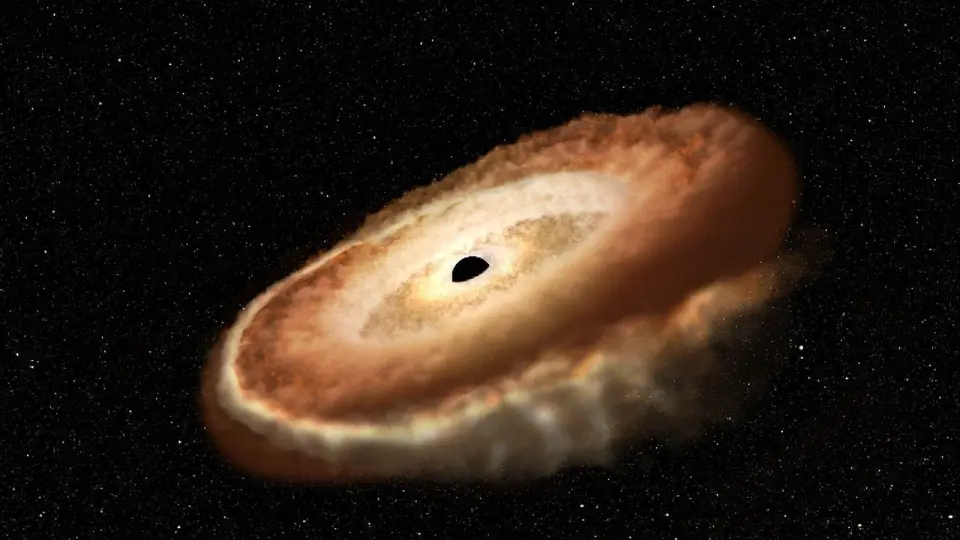
Scientists reveal that the delayed radio bursts from tidal disruption events (stars torn apart by supermassive black holes) occur when the black hole’s feeding rate is either too fast or too slow, ejecting gas that slams into surrounding material to produce radio emissions. By combining decades of VLA radio data with optical/UV and X-ray follow-ups for 31 well-tracked TDEs (from a larger sample of 91 candidates), researchers mapped the actual gas consumption over time and linked late flares to two feeding-rate extremes. A helium emission signature in early spectra also signals a delayed disk formation. The study suggests a two-to-six-year window after discovery to detect these late emissions and shows the mechanism works across vastly different black-hole masses, helping scientists optimize telescope time.
- Astronomers solve the mystery of black holes' delayed cosmic 'burps' Space
- Black holes unleash delayed radio 'burps' years after tearing apart stars Phys.org
- Tidal disruption event AT2018fyk BBC Sky at Night Magazine
- Black holes generate radio bursts after tearing stars apart Universe Space Tech
- Black Hole Star-Shredding Events Defy Jet Taxonomy: VLA Finds Accretion Is the Control Variable Tech Times
Want the full story? Read the original reporting
Read on Space