
China Sends Lab-Grown Embryos to Space to Study Early Development in Orbit
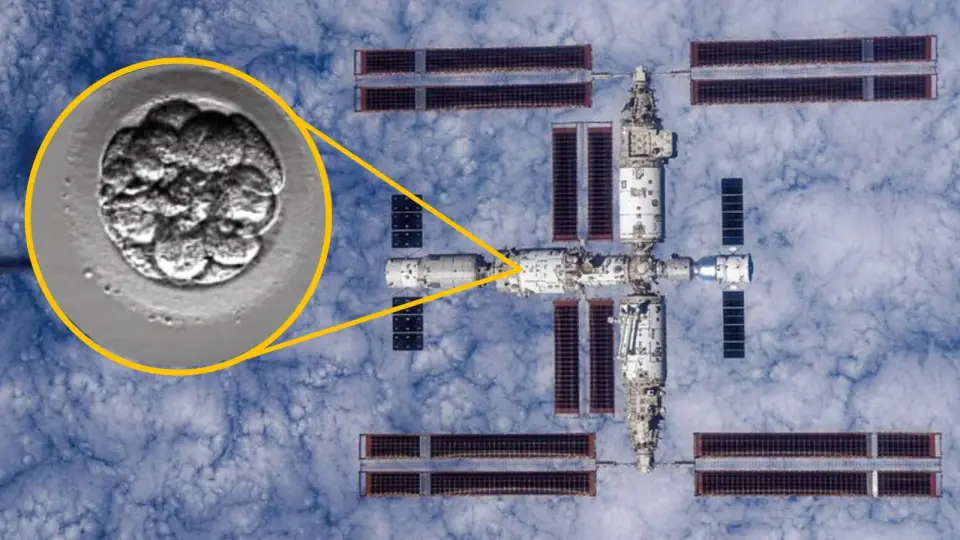
TL;DR
China’s Tianzhou‑10 cargo mission delivered roughly 7 tons of supplies to the Tiangong space station and carried two types of living stem‑cell–based “artificial embryos” to study early human development in microgravity. Representing 14–21 days after fertilization, the peri‑implantation and peri‑gastrulation embryos will be grown for about five days in orbit, then frozen and returned to Earth for analysis to assess how space radiation and zero gravity affect embryo development—an important step for potential off‑Earth reproduction—though the researchers emphasize these are embryo‑like and not viable human embryos.
- China launches 'human artificial embryos' to space in bid to see whether reproduction is possible off-world Live Science
- China has transformed its space station into a biology laboratory and is using fish embryos to understand bone loss in space. The results could benefit not only astronauts but also medicine on Earth. CPG Click Petróleo e Gás
- Chinese space station launches pioneering experiment on human reproduction in space AKIpress News Agency
- China to study human embryo models in space China Daily
- News China Has Sent Human Embryos Into Space – Artificial Ones, for Now Asgardia - The Space Nation
Want the full story? Read the original reporting
Read on Live Science