
Columbia's First Flight: How Launch Pad Acoustics Damaged 164 Heat Shield Tiles
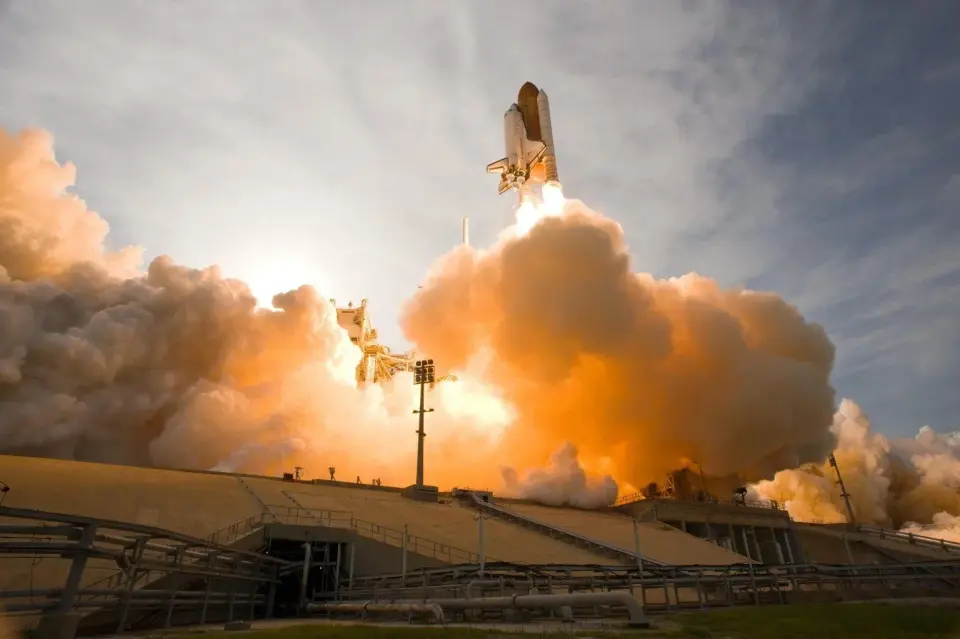
On April 12, 1981, the Space Shuttle Columbia suffered damage to 164 heat shield tiles during its maiden voyage. The damage was not caused by flight anomalies but by acoustic shockwaves from the engines reflecting off the launch pad. NASA subsequently implemented a water deluge system to absorb this energy, a technique still used today.
Key points
- Columbia lost 16 tiles and had 148 damaged after its first flight on April 12, 1981.
- The damage occurred in the first few seconds before the vehicle cleared the launch tower.
- The cause was an overpressure event where acoustic energy from ignition reflected off the concrete pad.
- NASA solved the issue by introducing a water deluge system to absorb acoustic energy via phase change.
- The modern Space Launch System uses approximately 400,000 gallons of water in under 30 seconds for this purpose.
Background
Thermal protection systems remain a critical focus in aerospace engineering. Recent archive coverage notes that SpaceX's Starship program faces challenges with tile boundary cracks, suggesting that while acoustic issues are solved, thermal fatigue during re-entry remains a hurdle. Additionally, missions like the Parker Solar Probe demonstrate the extreme precision required in heat shield design, using carbon-carbon composites to withstand temperatures exceeding 2,500 degrees Fahrenheit. These examples highlight that while launch pad acoustics are a solved problem, thermal protection integrity across various flight phases continues to evolve.
Why it matters
Understanding the acoustic dangers of launch pads is crucial for the safety of large-lift vehicles. The implementation of water deluge systems prevents structural damage that could compromise re-entry safety. This historical lesson underscores that the most dangerous moments in a launch often occur on the ground, not in space, and require specific engineering solutions to mitigate self-generated forces.
What to watch
Future launches will continue to rely on refined versions of the sound suppression water system. As vehicles grow larger, such as the Space Launch System, the volume of water required increases to manage higher acoustic energy. Engineers will also continue to monitor max Q events, where rockets throttle down to manage aerodynamic stress, ensuring that structural limits are not exceeded during the most demanding phases of flight.
Want the full story? Read the original reporting
Read on Space Daily