
Cygnus XL Completes Six-Month ISS Mission, Set for Atmospheric Burn
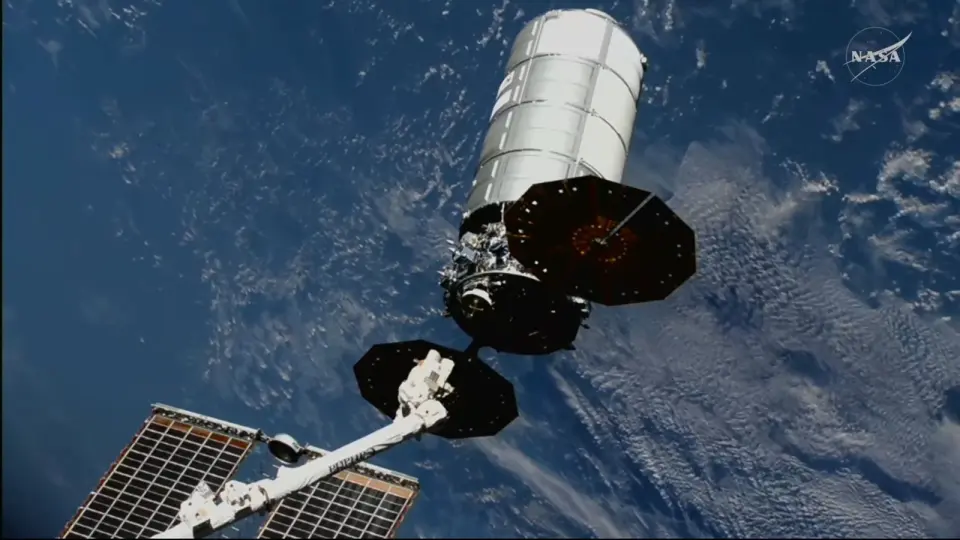
Northrop Grumman’s Cygnus XL cargo spacecraft, named S.S. Steven R. Nagel, undocked from the International Space Station (ISS) on October 9, 2026, after a six-month stay. The vehicle, which delivered 11,000 pounds of supplies and science equipment, is now carrying thousands of pounds of waste for a destructive re-entry into Earth’s atmosphere. This marks the 24th Cygnus resupply mission to the station.
Key points
- The Cygnus XL undocked from the ISS Unity module at 12:44 p.m. EDT on October 9, 2026, after being grappled by the Canadarm2 robotic arm.
- The spacecraft, designated S.S. Steven R. Nagel, launched on April 11, 2026, aboard a SpaceX Falcon 9 rocket from Cape Canaveral.
- It delivered approximately 11,000 pounds of cargo, including scientific experiments and hardware, to the station.
- The vehicle is scheduled to deorbit on October 12, 2026, burning up in the atmosphere over the Pacific Ocean.
- This was the 24th Cygnus mission of any type to the ISS and the second of the 'Cygnus XL' line.
Background
The departure follows recent crew rotations on the ISS, including the arrival of Crew 13 on October 1, 2026, and the undocking of Crew 12 on October 7. In September, the Cygnus XL had also performed a reboost maneuver to raise the station's orbit, facilitating the arrival of the Russian Progress 96 cargo ship.
How outlets are covering it
Space.com and NASA emphasize the technical details of the undocking, noting that the operation was commanded from the ground with monitoring by astronaut Luke Delaney. Aviation Week highlights the commercial aspect, labeling this as the 24th Commercial Resupply Services (CRS) mission for Northrop Grumman. Mirage News focuses on the logistical timeline, confirming the launch date and the planned deorbit. All sources agree on the six-month duration and the destructive re-entry fate of the spacecraft, distinguishing it from reusable vehicles like SpaceX's Dragon.
Why it matters
The successful undocking and subsequent re-entry demonstrate the reliability of Northrop Grumman's commercial resupply services, which are critical for maintaining the ISS's operational capabilities. The mission underscores the ongoing collaboration between NASA and private companies in sustaining the space station, while the disposal of waste cargo highlights the environmental considerations of orbital operations.
What to watch
The Cygnus XL is expected to complete its deorbit on October 12, 2026. NASA has stated it will not provide live coverage of the re-entry phase. Future Cygnus missions will continue to support the ISS, with the next resupply likely to follow standard commercial schedules.
- Private Cygnus XL cargo spacecraft departs the International Space Station after 6-month stay (video) Space
- Cygnus XL Cargo Spacecraft Released from Station by Canadarm2 NASA (.gov)
- Northrop Grumman’s 24th Resupply Mission Departs ISS Aviation Week
- NASA to Cover Northrop Grumman CRS-24 Departure Mirage News
- NASA Sets Oct. 9 Departure for Northrop Grumman CRS-24 Cygnus The Defense Watch
Want the full story? Read the original reporting
Read on Space