
Roman Telescope Arrives at L2 to Complement Webb’s Deep Zoom with Wide-Sky Surveys
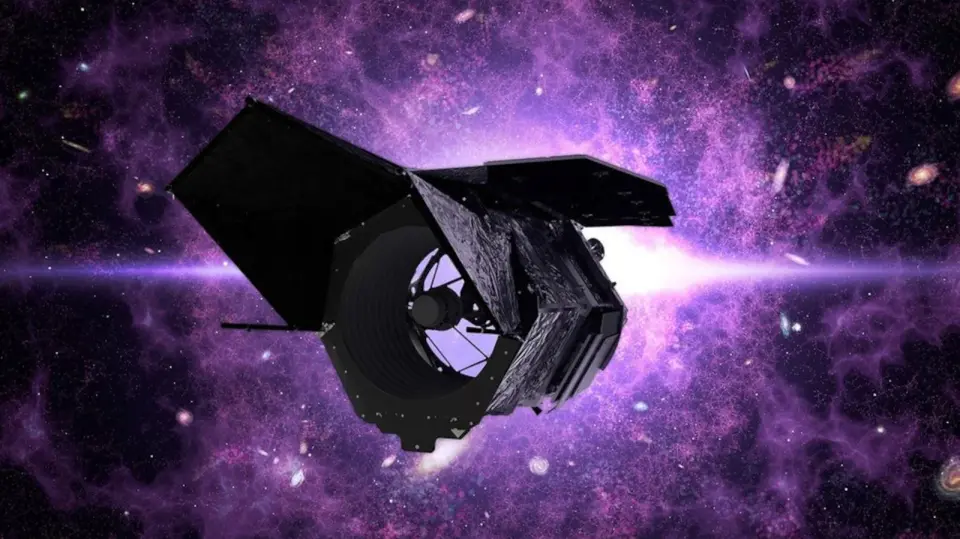
NASA’s Nancy Grace Roman Space Telescope is en route to the Sun-Earth L2 point, where it will join the James Webb Space Telescope. While Webb excels at high-resolution, narrow-field imaging, Roman features a wide field of view to survey large sky patches and detect new objects. Roman’s coronagraph will also enable detailed exoplanet observations by blocking starlight.
Key points
- Roman is traveling to L2, located 930,000 miles from Earth, to operate alongside James Webb.
- Roman’s Wide-Field Instrument captures large sky areas, whereas Webb focuses on detailed, narrow views.
- Roman’s coronagraph uses deformable mirrors to block starlight, allowing detailed observation of orbiting planets.
- The two telescopes are designed to work together, with Webb investigating objects discovered by Roman.
Background
Previous coverage noted Roman’s launch in August 2026 and the successful activation of its 300-megapixel camera, which produced initial test images. The telescope is expected to map the cosmos with a field of view 100 times larger than Hubble’s, potentially observing over a billion galaxies in its first five years.
Why it matters
The collaboration between Roman and Webb expands NASA’s ability to discover and analyze cosmic phenomena, from dark energy to exoplanets, by combining wide-area surveys with deep, high-resolution analysis.
What to watch
Roman is expected to arrive at L2 late in 2026 or early in 2027, after which it will begin full operations, including wide-field surveys and exoplanet detection, while Webb remains available for targeted follow-up observations.
Want the full story? Read the original reporting
Read on Jalopnik