
X-15 Pilot Joe Walker Reaches 67 Miles in 1963, Setting a Historic Altitude Record
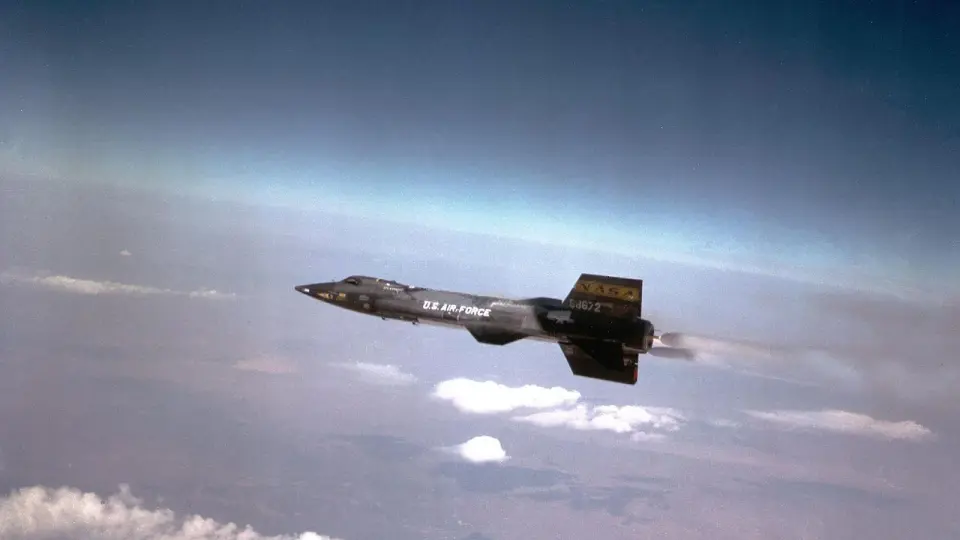
On August 22, 1963, U.S. Air Force Captain Joseph Walker piloted the X-15 rocket plane to an altitude of over 67 miles (108 kilometers), surpassing the previous world record. This flight marked the second and final suborbital spaceflight of the X-15 program, with Walker becoming the first person to fly to space twice. The mission provided critical data on hypersonic flight and human performance in the upper atmosphere, directly informing the development of NASA's Mercury, Gemini, and Apollo programs.
Key points
- Captain Joe Walker reached an altitude of over 67 miles (108 kilometers) on August 22, 1963, exceeding the previous world record by approximately 5 miles.
- The flight lasted 11 minutes, during which Walker experienced about five minutes of weightlessness as the aircraft crossed the boundary of space.
- Walker piloted the X-15 #3, which became the first reused spacecraft to return to space, making him the first person to fly to space twice.
- The X-15 program tested reaction-control systems for maneuvering in thin air and gathered data on heating, stability, and reentry techniques.
- Findings from these flights contributed to the development of the Space Shuttle and earlier human spaceflight programs.
Background
The X-15 program was a joint U.S. Air Force and NASA initiative designed to test the limits of human flight and aircraft performance at hypersonic speeds. While our archive notes that orbital mechanics rely on horizontal velocity rather than altitude, the X-15 flights focused on the transition between the atmosphere and the vacuum of space, providing essential insights for subsequent crewed missions.
Why it matters
The X-15 flights were pivotal in establishing the technical and physiological benchmarks for human spaceflight. By demonstrating that pilots could survive and operate in the upper atmosphere, the program laid the groundwork for the Mercury, Gemini, and Apollo missions, as well as the later Space Shuttle program.
What to watch
The X-15 program concluded after this final suborbital flight, with its data being integrated into the design and training protocols for NASA's subsequent crewed spaceflight initiatives.
Want the full story? Read the original reporting
Read on Space