
Europa's Hidden Ocean Could Surpass Earth's Seas, Kept Liquid by Jupiter's Tides
TL;DR
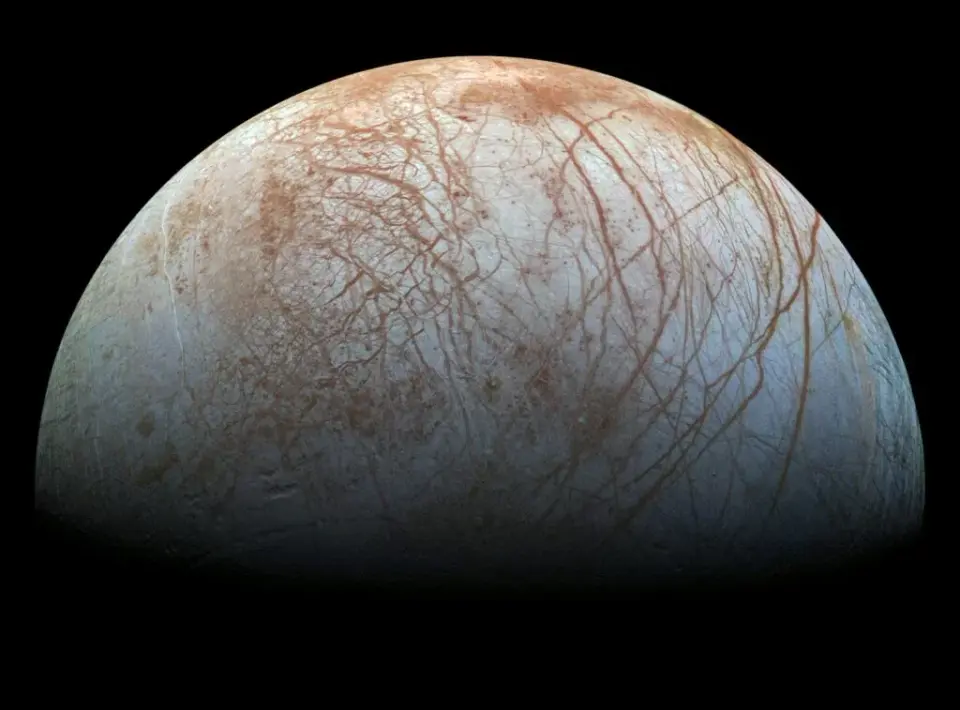
Europa, Jupiter's icy moon, may harbor a global salty ocean beneath its shell—potentially twice Earth's oceans—kept liquid by tidal heating from Jupiter's gravity. Evidence from Galileo's magnetic measurements and NASA's Europa Clipper mission suggests a conductive ocean beneath a likely thick ice shell, with no drilling yet. Clipper will conduct ~50 flybys using radar, magnetic, gravity, and thermal instruments to map the ice, probe the ocean, and assess habitability, not life detection. The ocean's persistence depends on ice thickness, heat transport, and chemistry, making Europa a leading target for understanding habitable worlds beyond Earth.
- Europa, one of Jupiter’s moons, is sealed beneath a shell of ice, but the ocean hidden below may contain twice as much liquid water as every ocean on Earth combined — and Jupiter’s gravity may have kept it liquid for billions of years Space Daily
- San Antonio Astronomical Association monthly public meeting: Europa Clipper Update Texas Public Radio | TPR
- Could Humans Survive on Europa? WorldAtlas
- A 2026 study found that Jupiter's ocean moon Europa may have a geologically quiet seafloor with little active faulting — meaning the vast hidden ocean long treated as our best bet for alien life may lack the very energy that life would need to survive Space Daily
- In 1610, Galileo spotted a small, smooth moon circling Jupiter and wrote it down; four hundred years later, scientists confirmed it likely holds the largest ocean in the solar system, buried under ice and never once touched by sunlight Space Daily
Want the full story? Read the original reporting
Read on Space Daily