
Giant 3.2-Gigapixel Eye to Map Billions of Galaxies Each Night
TL;DR
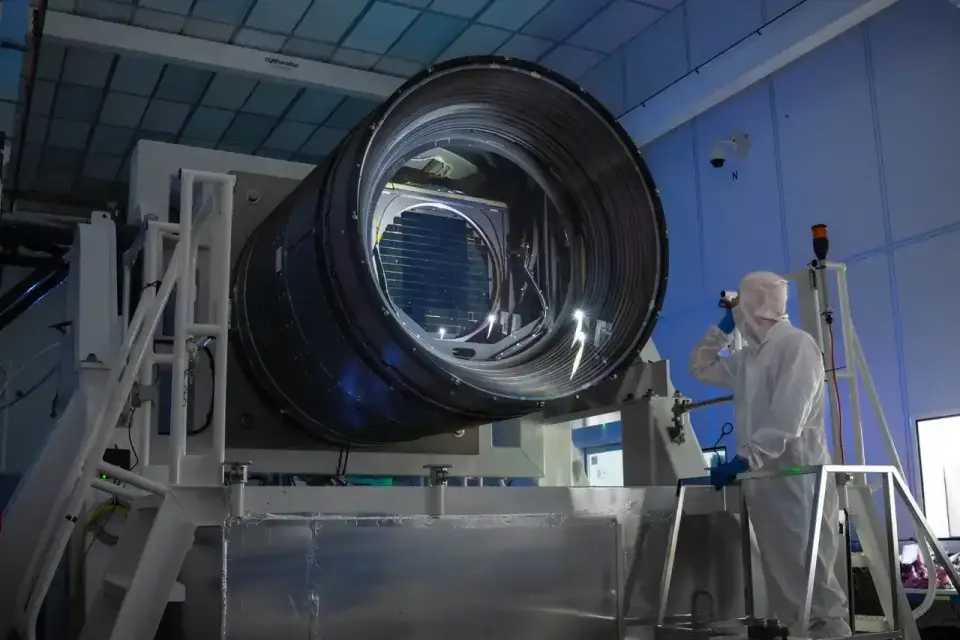
The Vera C. Rubin Observatory’s LSST camera—the largest digital camera ever built—uses a 3,200-megapixel (3.2 gigapixel) sensor array spread across 1.57 meters, with 189 ultra-clean CCDs cooled to -100°C to image the southern sky. It captures wide, fast exposures that sweep about seven times the width of a full moon, producing roughly 10 terabytes of data per night and aiming to catalog billions of galaxies and stars over its 10-year Legacy Survey, enabling unprecedented wide-field, time-domain astronomy and detailed structure in star-forming regions.
Topics:sciencespace#astronomy#galaxies#lsst#note-only-five-allowedadjusted-below#space#telescope#vera-rubin-observatory
Want the full story? Read the original reporting
Read on ZME Science