Tag

Lsst

All articles tagged with #lsst

Car-sized eye launches a decade-long survey of the southern sky
science6 days ago

Car-sized eye launches a decade-long survey of the southern sky

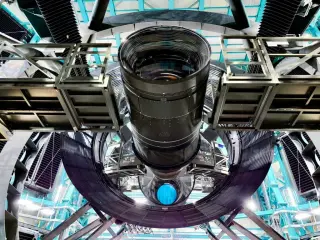
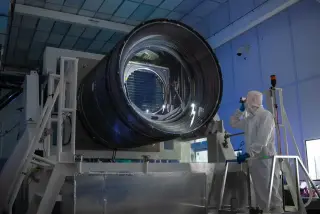
The Vera Rubin Observatory’s ten-year Legacy Survey of Space and Time began formal operations from Cerro Pachón, Chile, using a car-sized, 3-tonne camera to image the southern sky about every 40 seconds and revisit each field roughly 800 times over the decade. The 3,200-megapixel instrument, cooled to −100 C, feeds a massive pipeline that can issue millions of change alerts per night to brokers for quick follow-up, enabling study of supernovae, moving objects, variable stars, and other transients. Rubin combines an 8.4-meter telescope with a very wide field and runs four science programs—Solar System inventory, Milky Way mapping, time-domain astronomy, and dark matter/dark energy research—while data are processed at SLAC and distributed publicly to maximize participation over ten years.

Rubin Observatory Debuts Deep-Sky Mosaic Covering 500,000 Galaxies
science20 days ago

Rubin Observatory Debuts Deep-Sky Mosaic Covering 500,000 Galaxies

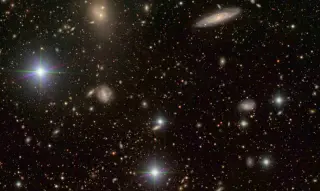
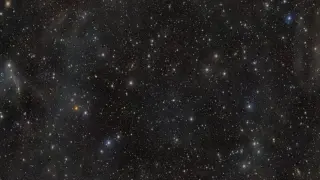
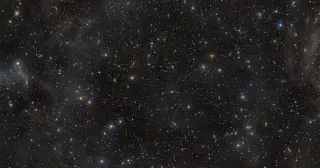
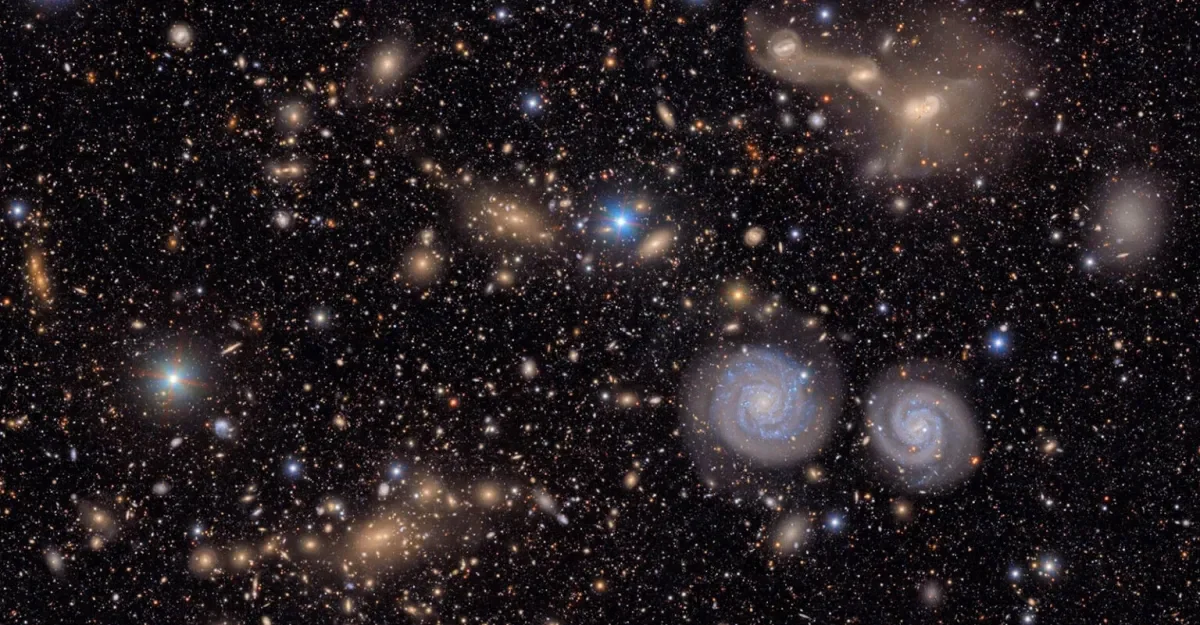
The Rubin Observatory released its first science image from the LSST, a deep view of the COSMOS field featuring more than 500,000 galaxies (and about 50,000 foreground stars) captured with the 3.2-gigapixel LSST Camera. Part of Early Data Preview 2, the image previews the decade-long Legacy Survey of Space and Time and will be followed by repeated observations to study galaxy evolution and transient events like supernovae, building what scientists describe as the most comprehensive cinematic record of the universe.

Rubin Observatory Captures 650,000 Galaxies in a Single COSMOS View
science21 days ago

Rubin Observatory Captures 650,000 Galaxies in a Single COSMOS View

A new Rubin Observatory image of the COSMOS field captures more than 650,000 galaxies and 50,000 stars in a single deep view, thanks to its 3.2-gigapixel camera. Rubin will image this patch repeatedly over its decade-long LSST survey, enabling comparisons with Hubble and Webb and advancing studies of dark matter, dark energy, supernovae, and near-Earth asteroids.

A decade-long sky movie: Rubin Observatory to map a dynamic universe
space1 month ago

A decade-long sky movie: Rubin Observatory to map a dynamic universe

The Vera C. Rubin Observatory's Legacy Survey of Space and Time (LSST) has begun, capturing thousands of 30-second exposures every night for 10 years to create a digital color movie of the southern sky, with real-time alerts on unusual changes and public data access. The project aims to illuminate dark matter and dark energy, map stellar histories and asteroids, and possibly uncover unexpected phenomena that could revolutionize astronomy, while facing challenges from ultra-bright satellites and other technical hurdles.

Rubin Observatory launches decade-long cosmic survey
science-space1 month ago

Rubin Observatory launches decade-long cosmic survey

The Vera C. Rubin Observatory in Chile has officially begun the decade-long Legacy Survey of Space and Time (LSST), snapping color-rich images of the southern sky every night (and roughly every 40 seconds with its 6,600‑pound camera) to create a living map of objects—from asteroids to distant galaxies—and to probe dark matter and dark energy. The project will generate about seven million alerts each night and, after data processing, release billions of objects for scientists and the public, with thousands of new asteroids already spotted during testing and NSF/DOE funding backing the effort.

Cosmic movie kicks off: Rubin Observatory's LSST unveils decade-long sky survey
space1 month ago

Cosmic movie kicks off: Rubin Observatory's LSST unveils decade-long sky survey

Rubin Observatory launches its ten-year Legacy Survey of Space and Time, using a 3.2 gigapixel camera to scan the southern sky repeatedly (about 800 visits per field) to create an ultra‑high‑definition, time‑resolved map that will probe dark energy and dark matter, track transient events, and reveal millions of solar-system objects; early months already yielded around 11,000 newly discovered asteroids.

Rubin Observatory's LSST set to reveal millions of unseen solar-system objects
science2 months ago

Rubin Observatory's LSST set to reveal millions of unseen solar-system objects

The Vera C. Rubin Observatory is gearing up to begin the decade-long Legacy Survey of Space and Time (LSST), which will repeatedly image the southern sky with a 3.2‑gigapixel camera to detect small, fast‑moving solar-system bodies. Simulations predict the survey could add roughly 5 million new main-belt asteroids, about 40,000 trans‑Neptunian objects, and over 10,000 comets, with near-Earth objects more than tripling, though these are model yields, not guaranteed discoveries. Data Preview 2 is planned for July–September 2026 ahead of the formal survey start, enabling early testing of the predicted yields. The project will boost planetary defense and solar-system science but will not replace targeted follow-up observations for composition and dynamics.

Rubin Observatory Unveils 11,000 Asteroids in Early Look, Heralding a Solar-System Census
science4 months ago

Rubin Observatory Unveils 11,000 Asteroids in Early Look, Heralding a Solar-System Census

In an early data release from the Vera C. Rubin Observatory, scientists identified 11,097 new asteroids (along with 33 near-Earth objects and about 380 trans-Neptunian objects), with results confirmed by the MPC. The findings demonstrate Rubin's unprecedented survey power and foreshadow a dramatic expansion of the Solar System inventory during the ten-year LSST era, with data openly available for ongoing research.

Rubin Observatory's cosmic census faces a satellite-streak crisis
space-exploration5 months ago

Rubin Observatory's cosmic census faces a satellite-streak crisis

Space.com reports that the Vera C. Rubin Observatory, with its massive camera and LSST survey, could transform astronomy, but the rapid growth of satellite megaconstellations (led by Starlink) threatens to create bright streaks that contaminate data and complicate moving-object detections, potentially affecting a sizable share of exposures. Scientists are pushing for collaboration with operators to dim satellites, share streak maps, and develop analysis methods to separate satellites from real signals, underscoring the urgency as mega-constellations expand.

Rubin Observatory logs 800k sky changes in a single night
space5 months ago

Rubin Observatory logs 800k sky changes in a single night

The Vera C. Rubin Observatory’s new alert system detected about 800,000 changes in the night sky in one night, underscoring the massive data flow of the Legacy Survey of Space and Time (LSST), which is expected to generate up to 7 million alerts per night and around 10 terabytes of data nightly as it sweeps the southern sky; these alerts will enable rapid follow-up for events like supernovae, asteroids, and interstellar objects and are publicly accessible through the ANTARES broker.

Rubin Observatory Unleashes Real-Time Sky Alerts, 800,000 Notifications Overnight
space-and-spaceflight5 months ago

Rubin Observatory Unleashes Real-Time Sky Alerts, 800,000 Notifications Overnight

The Vera C. Rubin Observatory kicked off its real‑time alert system, dispatching 800,000 sky-change notifications to researchers worldwide in its first run. The alerts flagged events like supernovae, asteroids, variable stars, and active galactic nuclei, and are powered by the Alert Production Pipeline designed to scale up to about 7 million alerts per night, enabling rapid follow‑up observations as the Legacy Survey of Space and Time proceeds.

Cosmic census begins: Rubin Observatory to map 20 billion galaxies over a decade
science6 months ago

Cosmic census begins: Rubin Observatory to map 20 billion galaxies over a decade

Over the next decade, the Vera C. Rubin Observatory will image the southern sky in unprecedented detail, cataloging about 6 million asteroids, 17 billion stars, and 20 billion galaxies. With roughly 10 terabytes of data per night, the Legacy Survey of Space and Time aims to uncover the nature of dark matter and dark energy, while a network of community brokers processes detections in near real time and the public can participate as citizen scientists via online tools and data releases.