
Unexplained Tapping on Shenzhou 5 Capsule Remains a Mystery for Chinese Space Program
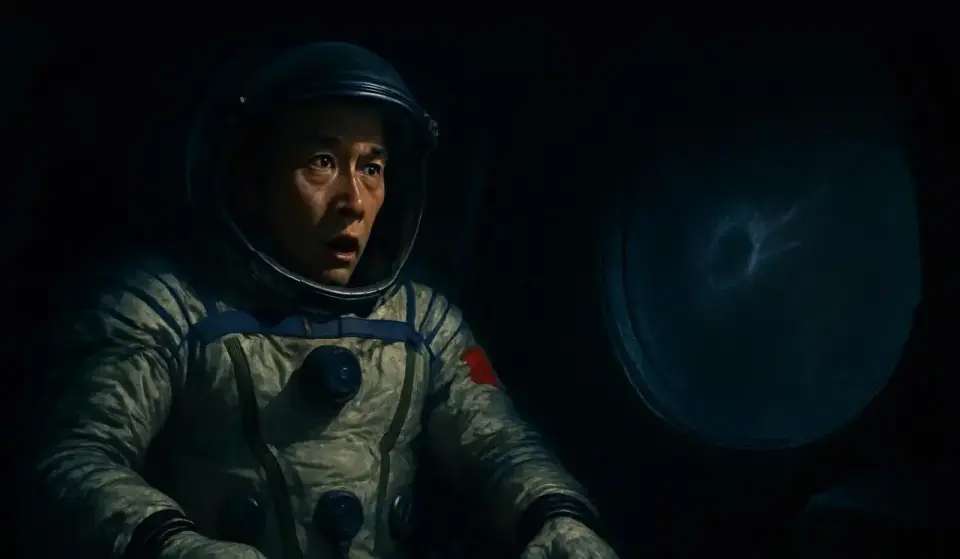
During China's first crewed orbital mission in 2003, astronaut Yang Liwei reported hearing a rhythmic knocking sound against his capsule's hull. Despite visual checks showing no external objects, the noise persisted and was later reported by astronauts on subsequent missions. While speculative theories abound, experts suggest thermal expansion of the spacecraft due to temperature fluctuations as the most plausible explanation, though the exact cause remains officially unresolved.
Key points
- On October 15, 2003, Yang Liwei launched aboard Shenzhou 5, marking China's first human spaceflight.
- During the 21-hour mission, Yang heard a distinct knocking noise described as an iron bucket struck by a wooden hammer.
- Yang checked his porthole but saw no external objects, debris, or other spacecraft.
- Astronauts on Shenzhou 6 (2005) and Shenzhou 7 (2008) reported hearing similar tapping noises.
- The phenomenon cannot be explained by sound traveling through the vacuum of space.
- Experts have proposed thermal expansion and contraction of the hull due to temperature changes as a likely cause.
Background
This incident occurred during the inaugural crewed flight of China's Shenzhou program, a milestone in the nation's space exploration history. The mystery gained wider attention when Yang discussed it in a 2016 interview with Chinese state media, prompting public speculation and scientific inquiry. It is part of a broader pattern of unexplained acoustic anomalies reported in orbital environments, though no definitive physical explanation has been universally accepted.
Why it matters
The incident highlights the unpredictable nature of human spaceflight and the limitations of current understanding regarding spacecraft behavior in orbit. It underscores the importance of rigorous acoustic and thermal monitoring in future missions to ensure crew safety and equipment integrity. The persistence of similar reports across multiple missions suggests a systemic issue rather than an isolated anomaly, prompting ongoing investigation into spacecraft design and environmental interactions.
What to watch
No new developments are expected, as the incident occurred over two decades ago. However, the mystery serves as a case study for engineers and scientists analyzing spacecraft performance in extreme environments. Future missions may incorporate more advanced acoustic sensors to detect and diagnose similar anomalies in real-time.
Want the full story? Read the original reporting
Read on Futura, le média qui explore le monde