
James Webb probes possible 100,000-solar-mass stars in the early universe
TL;DR
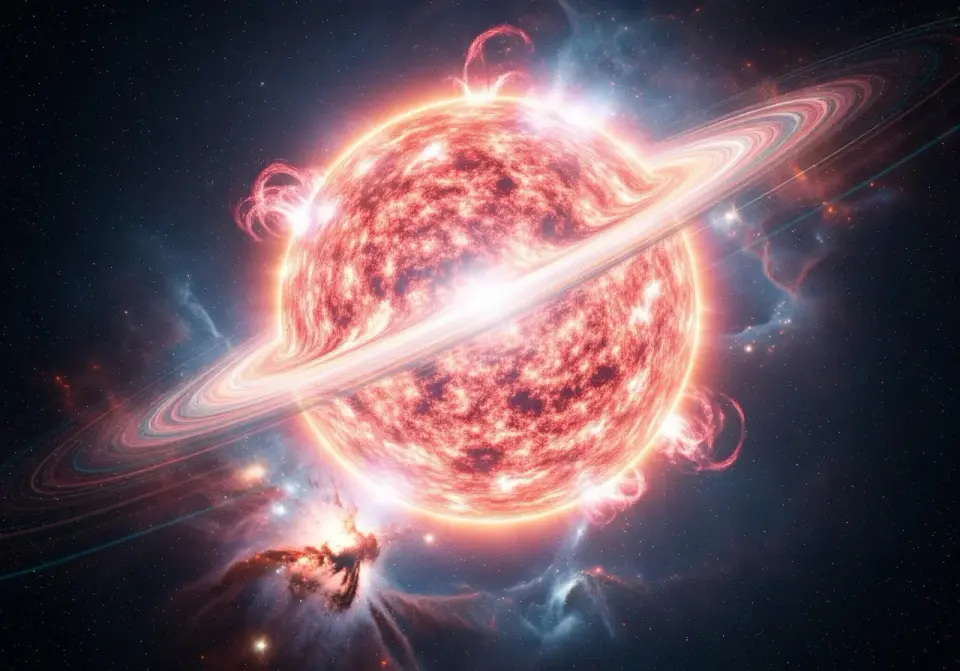
Using JWST, researchers have spotted more than 300 infrared “Little Red Dots” dating to about 600 million years after the Big Bang that appear compact and unusually red, potentially signaling supermassive stars up to around 100,000 solar masses (with hints of up to a million). If confirmed, these stars could illuminate how seeds of supermassive black holes form, though alternative explanations like dust-enshrouded galaxies or active nuclei remain under investigation.
Topics:sciencespace#black-hole-seeds#early-universe#james-webb-space-telescope#little-red-dots#space#supermassive-stars
- Red dots in space: could stars 100,000 times heavier than the Sun exist? Futura, le média qui explore le monde
- New James Webb telescope image may reveal the true identity of 'little red dots' — Space photo of the week Live Science
- Inside the mystery of the James Webb Space Telescope's little red dots — and how they might be evolving Space
- 'Little red dots' may be pulsating monster stars that created early-universe black holes Phys.org
- The James Webb Telescope Is Changing Astronomers’ Understanding of the Ancient Cosmos WIRED
Want the full story? Read the original reporting
Read on Futura, le média qui explore le monde