
Perseverance breaks Mars driving record as sample return and weather missions face redesigns
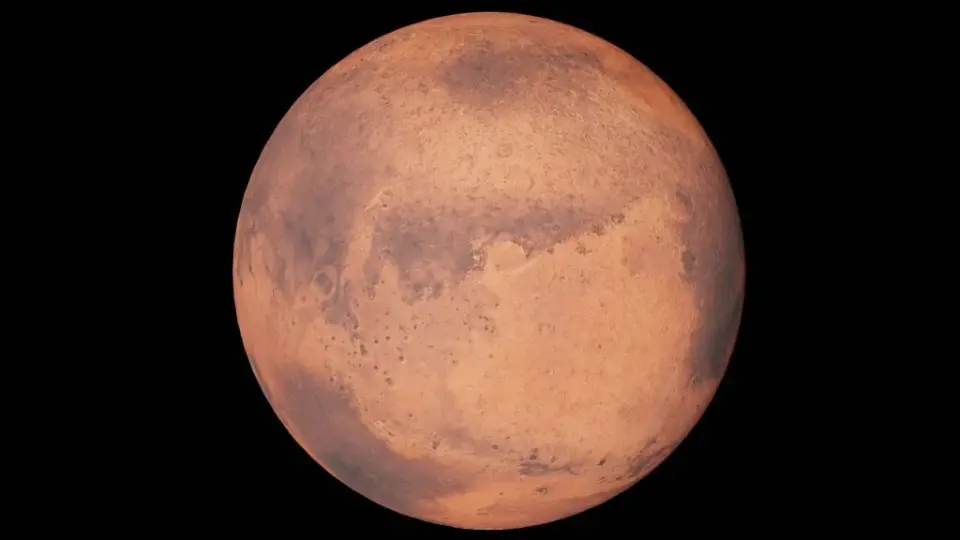
NASA’s Perseverance rover is set to surpass the all-time Mars driving record, driven by advanced autonomous navigation. However, the broader Mars program faces significant hurdles, including the ongoing redesign of the Mars Sample Return mission and new atmospheric research partnerships.
Key points
- Perseverance is approaching 45.16 km of driving, breaking the record held by Opportunity, in roughly a third of the time.
- Approximately 90% of Perseverance’s driving is autonomous, compared to 10% for Curiosity, due to a more modern Vision Compute Element.
- NASA is redesigning the Mars Sample Return mission, examining two landing options to simplify the complex engineering required to bring cached samples back to Earth.
- NASA announced a partnership with Relativity Space to launch the Aeolus atmospheric instrument suite to Mars in 2028 to improve weather data for future landings.
- Perseverance’s wheels show no significant wear, but actuators are being certified for at least 100 km of driving, with the rover powered by an RTG and lacking consumables.
Background
Perseverance previously completed a 42.195 km marathon in June 2026, as captured by the Mars Reconnaissance Orbiter. The rover has been caching 43 ultra-clean titanium sample tubes in Jezero Crater, designed to minimize Earthly contamination to nanoscale levels. Recent observations have also included interactions between dust devils, which contribute significantly to Martian atmospheric dust.
How outlets are covering it
Space Daily emphasizes the fragmented nature of Mars exploration, highlighting the 'brutal honesty' required in redesigning the sample return mission and the practical importance of the Aeolus weather mission. Ars Technica and eGamers.io focus heavily on the technical success of Perseverance’s autonomous navigation, contrasting it with Curiosity’s older 1990s-era chipsets. KeepTrack provides a brief overview of the record-breaking distance but also notes broader space industry trends, such as SpaceX launch rates and federal funding issues, which are not central to the Mars narrative but reflect the current space sector environment.
Why it matters
The success of Perseverance’s autonomous driving demonstrates the viability of advanced onboard computing for future Mars missions, while the redesign of the sample return mission and the new Aeolus partnership indicate a shift toward more pragmatic, incremental approaches to overcoming Mars’s engineering and atmospheric challenges.
What to watch
Perseverance is expected to officially break the 45.16 km driving record in the coming weeks. NASA will continue evaluating the two landing options for the Mars Sample Return mission, and the Aeolus instrument suite is scheduled for launch in 2028.
- Mars is no longer one grand mission: Perseverance has driven a marathon, sample return is still being redesigned, and NASA's Aeolus partnership shows how much Martian weather we still need to learn Space Daily
- The first self-driving vehicle on Mars has proven to be a smashing success Ars Technica
- Perseverance Nears Mars Driving Record at 45 km, Space Brief 9 Aug 2026 KeepTrack
- NASA’s Perseverance is about to out-drive every rover that ever reached Mars eGamers.io
Want the full story? Read the original reporting
Read on Space Daily