Tag

Perseverance Rover

All articles tagged with #perseverance rover

Oman-found Martian meteorite returns to Mars as Perseverance's calibration standard
space14 days ago

Oman-found Martian meteorite returns to Mars as Perseverance's calibration standard

A dark rock found in Oman is SaU 008, a fragment of Mars, and today a slice of it sits on the Perseverance rover as a SHERLOC calibration target. The meteorite’s 300,000-year journey — Mars to Earth and back to Mars — provides a known reference to ground-truth Raman and fluorescence readings and helps monitor the instrument’s response over time, making it an ordinary yet essential tool rather than a mere keepsake.

space-planetary-science18 days ago

Perseverance Discovers Shallow Organic Carbon Near the Martian Surface

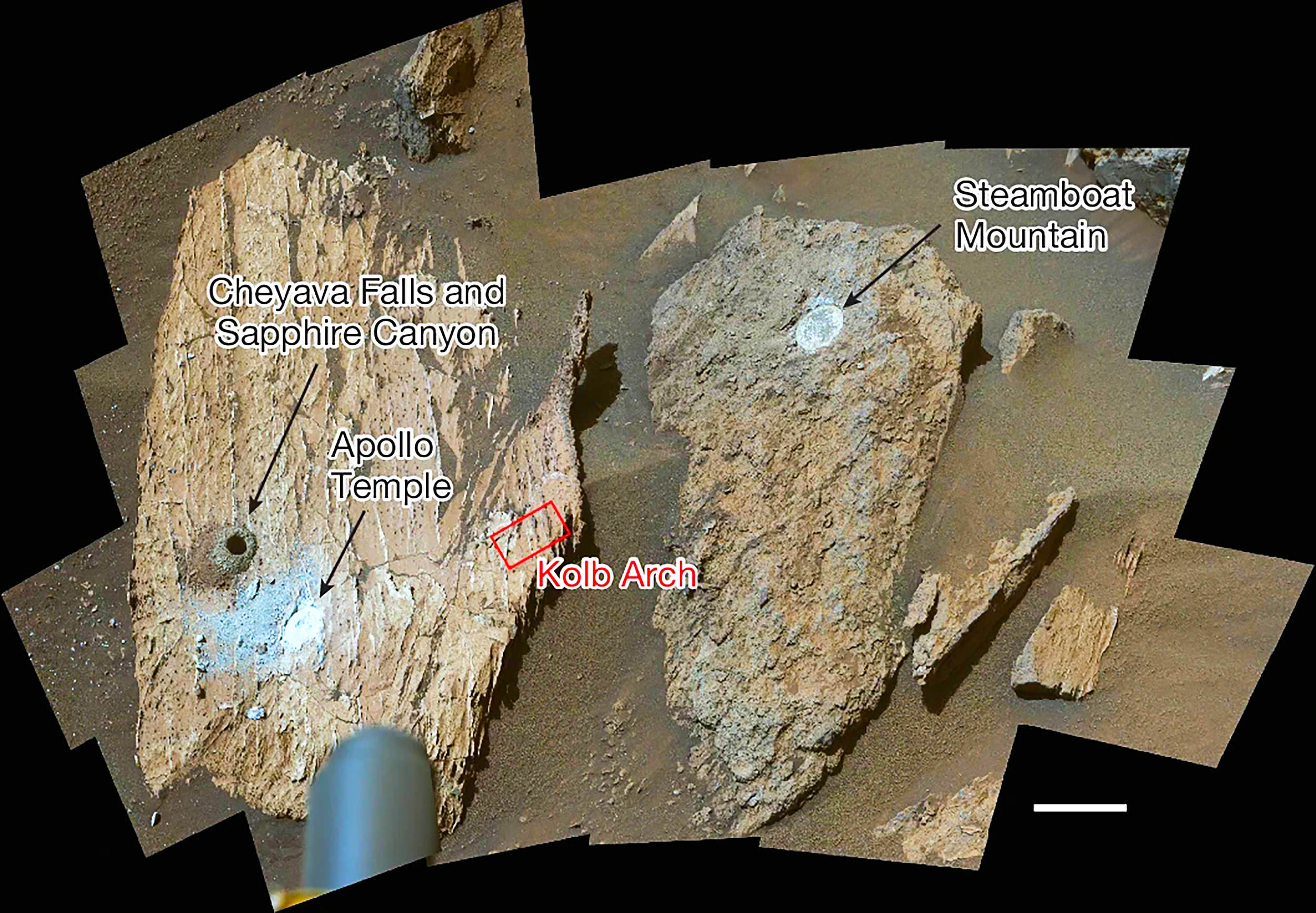
NASA’s Perseverance rover, using the SHERLOC Raman instrument, detected macromolecular carbon in Bright Angel formation rocks in Jezero Crater (including Cheyava Falls), preserved only microns beneath the surface—the shallowest MMC detection on Mars to date. This finding shows organics were present in ancient Martian environments and may have been preserved by minerals, but it does not prove life; determining an origin (biological or geological) will require more sensitive analyses on Earth or via future sample return.

Mars Dust Devils Duel: Perseverance Captures One Swallowing Another
space27 days ago

Mars Dust Devils Duel: Perseverance Captures One Swallowing Another

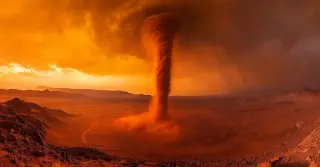
NASA’s Perseverance rover captured a dramatic Martian dust devil overtaking and swallowing a smaller one near Jezero Crater: the larger vortex was about 65 meters wide while the smaller was around 5 meters. Dust devils are common on Mars and contribute roughly half of the planet’s atmospheric dust, so observing their interactions helps scientists map wind patterns and Martian weather, with each event lasting about ten minutes.

Mars rocks reveal complex organics, fueling questions about ancient life
science2 months ago

Mars rocks reveal complex organics, fueling questions about ancient life

NASA’s Perseverance rover has detected complex organic matter, specifically macromolecular carbon, in rocks within the Bright Angel mudstone sequence in Jezero crater on Mars. The finding strengthens evidence for ancient organics on the planet, but MMC can form through both biological and non-biological processes, so scientists say more analysis is needed to determine if life-related origins are likely. The discovery, part of ongoing work to identify rocks worth returning to Earth for closer study, adds to the broader search for past life on Mars.

Perseverance Eyes Mars Ultramarathon as It Nears Record Distance
space-and-spaceflight3 months ago

Perseverance Eyes Mars Ultramarathon as It Nears Record Distance

NASA’s Perseverance has driven more than 26.05 miles (41.92 km) on Mars over five years, closing in on Opportunity’s 28.06-mile record. After leaving Jezero Crater, it’s pushing into Lac de Charmes with future stops like Gardevarri and Singing Canyon, inching toward what could become the rover’s ultramarathon finish line later this month.

MOXIE Signals Oxygen on Mars, but a Breathable Future Remains a Challenge
space3 months ago

MOXIE Signals Oxygen on Mars, but a Breathable Future Remains a Challenge

NASA confirms Mars has an atmosphere dominated by CO2 at about 1% of Earth’s pressure, with oxygen comprising only about 0.1%, making breathable air impossible without life-support; the MOXIE experiment on the Perseverance rover can generate oxygen from CO2 in small amounts, a critical step toward on-site resources for future crewed missions, but Mars’ extreme cold, radiation, and lack of liquid water mean astronauts would still need pressurized habitats and robust life-support systems. A human mission is being contemplated for the late 2030s, though sustaining life there remains a major challenge.

NASA's Perseverance Rover Finds Strongest Evidence Yet of Life on Mars
science7 months ago

NASA's Perseverance Rover Finds Strongest Evidence Yet of Life on Mars

NASA's Perseverance rover analyzed a Martian mudstone core, revealing mineral textures and patterns that resemble microbial activity on Earth, suggesting a potential biosignature. While promising, scientists caution that further tests are needed to confirm whether these signals are biological or abiotic, emphasizing careful scientific validation in the search for life on Mars.