Tag

Autonomous Navigation

All articles tagged with #autonomous navigation

German Agency Advances VaMEx Swarm Concept for Autonomous Mars Exploration
science11 days ago

German Agency Advances VaMEx Swarm Concept for Autonomous Mars Exploration

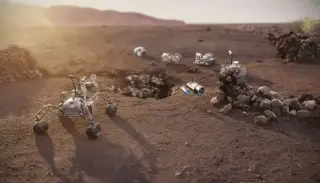
The German Space Agency’s VaMEx project has entered its fourth development phase, focusing on creating a swarm of autonomous robots to search for life in Mars’s Valles Marineris valley. The initiative addresses the lack of satellite navigation and communication delays by developing systems that allow robots to coordinate independently. Key components include SkyCAM stations for atmospheric monitoring and star-based navigation networks. A test of the SkyCAM system is scheduled for the AMADEE-27 analogue mission in Portugal next year.
Perseverance Captures Historic Tracks After Breaking Interplanetary Driving Record
space-exploration26 days ago

Perseverance Captures Historic Tracks After Breaking Interplanetary Driving Record

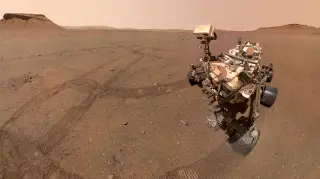
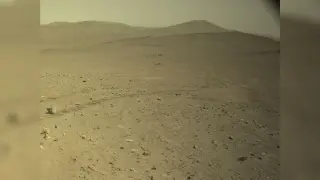
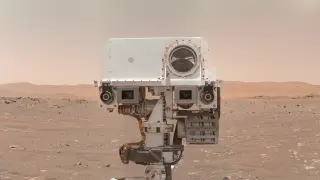
NASA's Perseverance rover has officially broken the record for the farthest distance traveled on another planet, reaching 28.10 miles (45.22 kilometers) on October 11, 2026. This milestone surpasses the previous record held by the Opportunity rover, which took 14 years to cover a similar distance, whereas Perseverance achieved it in just over five years. The achievement highlights advancements in autonomous driving technology, with the rover utilizing its AutoNav system for over 90% of its journey. While the Mars Sample Return program was canceled earlier this year, Perseverance continues its mission to search for signs of ancient life and prepare for future human exploration.

Perseverance Sets New Interplanetary Driving Record on Mars
science1 month ago

Perseverance Sets New Interplanetary Driving Record on Mars

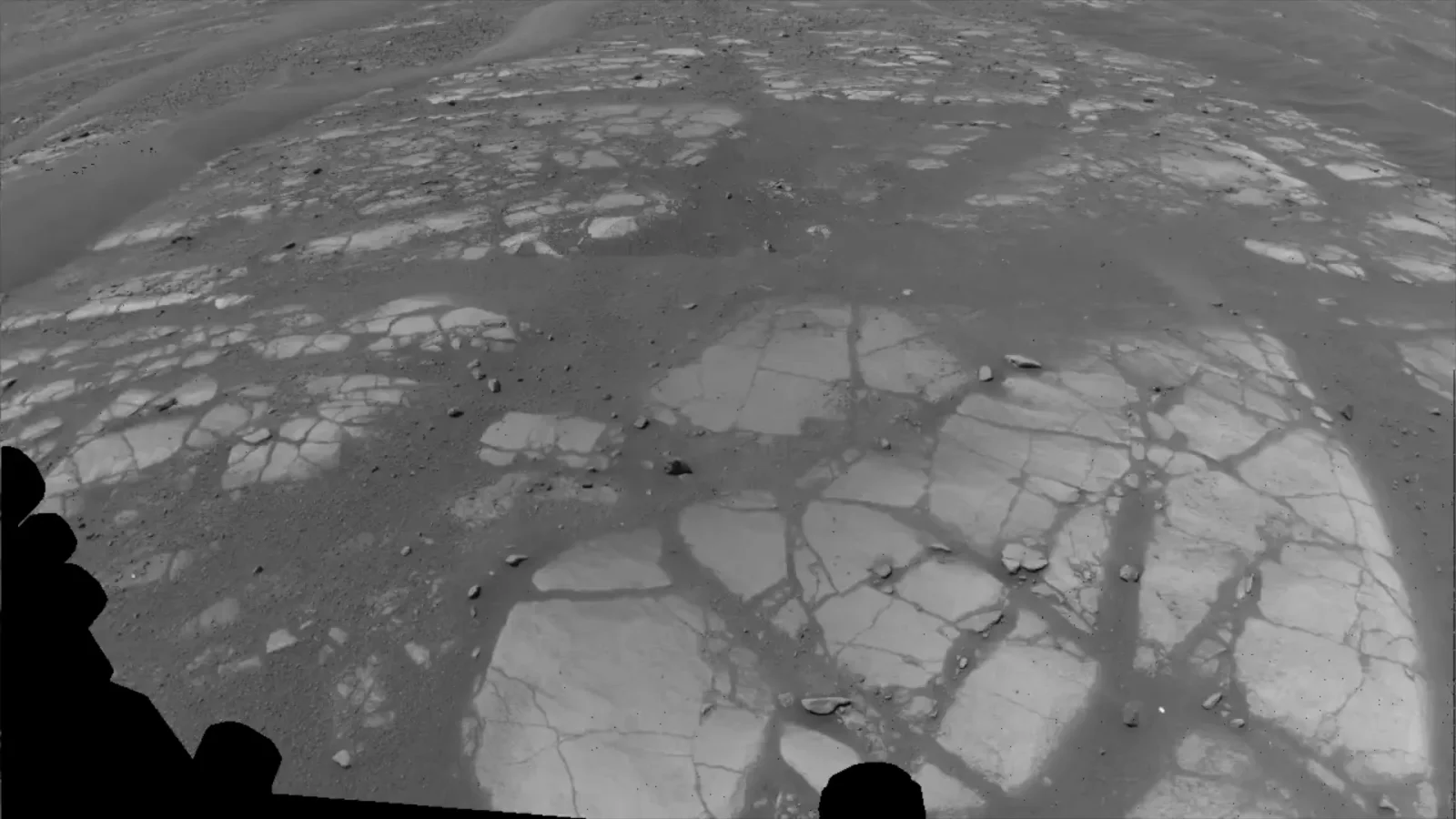
NASA's Perseverance rover has officially broken the record for the farthest distance traveled on another planet. On October 11, 2026, the rover reached 45.22 kilometers (28.10 miles), surpassing the 45.16 kilometers covered by Opportunity between 2004 and 2018. Perseverance achieved this milestone in approximately 5.5 years, less than half the time it took Opportunity. The rover utilized its AutoNav system for over 90% of its journey, allowing it to navigate complex terrain autonomously. This record-breaking drive occurred while Perseverance was exploring the Lac de Charmes region on the western rim of Jezero Crater, where it is analyzing ancient rocks potentially older than 4 billion years. The achievement highlights significant advancements in autonomous driving technology, including new capabilities like onboard Global Localization, which allows the rover to determine its position without human intervention. While the Mars Sample Return program was canceled earlier this year, leaving collected samples on Mars, Perseverance continues its mission to search for signs of ancient life and prepare for future human exploration.

Perseverance Shatters Mars Driving Record, Eyes 100km Future
science1 month ago

Perseverance Shatters Mars Driving Record, Eyes 100km Future

NASA's Perseverance rover has officially broken the record for the most distance traveled on another planet, surpassing the 28.06 miles (45.16 km) achieved by Opportunity in 2018. Perseverance reached 28.10 miles (45.22 km) on October 11, 2026, in just 5.5 years, compared to Opportunity's 14 years. The rover's advanced autonomous navigation system, AutoNav, allows it to drive up to 1,351 feet in a single Martian day. Mission leaders expect Perseverance to potentially double its current distance, reaching 100 km, as it continues exploring Jezero Crater's rim.

Trisat-S Nanosatellite Captures 'Black Sun' Effect to Validate Autonomous Navigation
space-technology1 month ago

Trisat-S Nanosatellite Captures 'Black Sun' Effect to Validate Autonomous Navigation

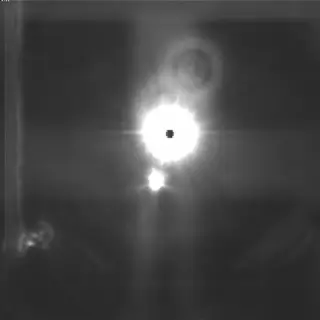
The Trisat-S nanosatellite, launched in September 2026, successfully captured an image of the Sun exhibiting the 'Black Sun' effect, where extreme brightness causes sensor pixels to appear dark. This visual artifact, rather than a failure, serves as a critical reference point for determining a spacecraft's attitude and orbit. The mission, led by the University of Maribor and SkyLabs, aims to develop miniaturized imaging technology for autonomous navigation in deep space. The satellite also tested advanced hibernation technologies and was launched by Isar Aerospace, marking the first European company to reach orbit with its own launch vehicle.

NASA's ERNEST rover tests autonomous desert trek to rewrite planetary mobility
space-exploration4 months ago

NASA's ERNEST rover tests autonomous desert trek to rewrite planetary mobility

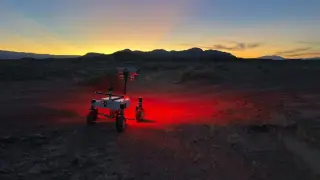
NASA's ERNEST rover prototype, built by JPL, completed a 16-mile desert trek in Southern California, mostly autonomously, thanks to new wheels, an active suspension and AI-driven obstacle navigation. The seven-day test aims to inform future lunar and Martian rovers with greater range, speed and terrain flexibility than traditional six-wheel rocker-bogie designs.

Japan’s Tiny Transforming Rover Demonstrates Autonomous Moon Navigation
space-exploration5 months ago

Japan’s Tiny Transforming Rover Demonstrates Autonomous Moon Navigation

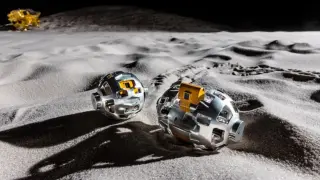
A compact 8 cm spherical rover named SORA-Q, developed by JAXA with Sony, Doshisha University and Takara-TOMY, transforms from a sphere into a two‑wheeled rover and autonomously explored the Moon after being deployed from JAXA’s SLIM lander in December 2023. The rover, alongside LEV-1, relayed data back to Earth, demonstrating miniature autonomous lunar robotics and onboard navigation; communications ceased after about 100 minutes, likely due to LEV‑1 or battery issues, but the mission showcases promising tech for future small-spacecraft explorers.

Autonomous robots map underground lava tunnels as templates for Moon and Mars bases
technology5 months ago

Autonomous robots map underground lava tunnels as templates for Moon and Mars bases

European researchers deployed three autonomous robots in Lanzarote’s La Corona lava tunnel to test mapping, collaboration, and decision-making for future Moon/Mars bases. The mission demonstrated self-guided 3D mapping in darkness and highlighted lava tunnels as potential shielded habitats, while noting remaining challenges in navigation in complete darkness and sensor reliability before real space deployments.

Honor’s humanoid robot edges past humans in Beijing half-marathon
technology7 months ago

Honor’s humanoid robot edges past humans in Beijing half-marathon

An Honor humanoid robot won the Beijing robot half-marathon, finishing 21 km in 50 minutes 26 seconds and beating the human world record, though the event included hiccups like robots faltering at the start. About 40% of the entrants navigated autonomously, with a separate remotely controlled Honor robot finishing in 48 minutes 19 seconds; the race highlights rapid advances in humanoid robotics and China’s push to lead in tech with potential industrial applications.

Honor Lightning robot shatters half-marathon record in Beijing
technology7 months ago

Honor Lightning robot shatters half-marathon record in Beijing

A Chinese smartphone maker Honor unveiled its humanoid robot Lightning, which completed the Beijing E-Town Half Marathon in 50:26 to beat the human half-marathon world record (~57 minutes). Dozens of humanoid robots competed alongside about 12,000 human runners, with roughly half using autonomous navigation while others were remote-controlled; some robots stumbled or veered into barriers. Engineers say the feat underscores China’s push in robotics and AI, with potential tech spillovers to industry, though AI software is still catching up to human-level efficiency.

Beijing half-marathon sees humanoid robots outrun humans, signaling rapid AI progress
technology7 months ago

Beijing half-marathon sees humanoid robots outrun humans, signaling rapid AI progress

Dozens of Chinese-made humanoid robots competed in Beijing’s 21-km half-marathon, with several self-navigating entrants finishing faster than human winners; the Honor-built robot won in 50:26, beating the human winner by over 10 minutes and underscoring rapid progress in humanoid robotics, even as experts say AI software and real-world dexterity still limit widespread industrial use.

Perseverance Marks Mars’ First AI-Driven Drive
space9 months ago

Perseverance Marks Mars’ First AI-Driven Drive

NASA’s Perseverance completed the first Mars drives planned by artificial intelligence, using vision-language AI to generate safe waypoints around Jezero Crater on Dec. 8 and 10, 2025. The AI-generated routes were tested via a digital twin before commands were sent, showcasing autonomous navigation that could reduce operator workload and boost science return for future off-Earth missions.