
Saturn’s Tiny Moon Methone Hides No Craters Due to Porous Ice and Tidal Shaping
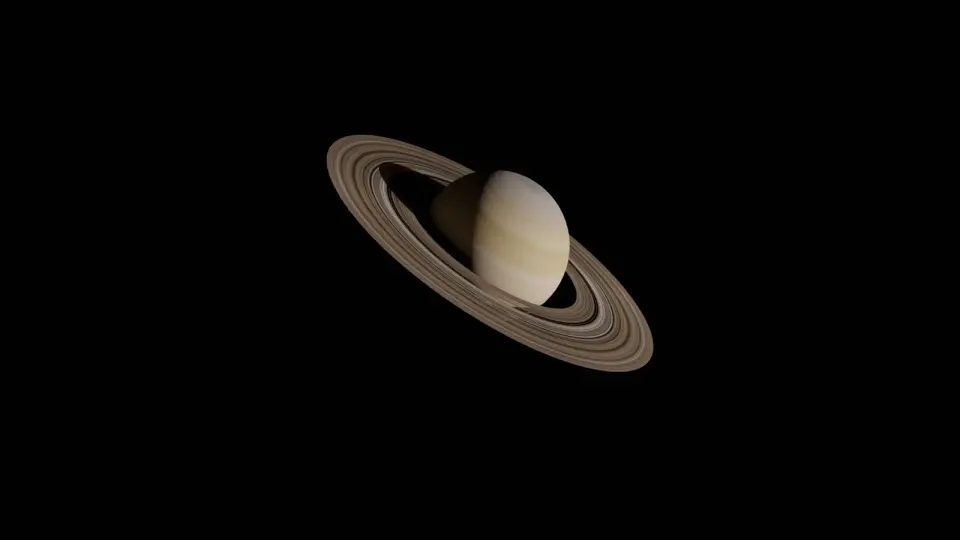
NASA’s Cassini spacecraft revealed that Saturn’s moon Methone, roughly 3 kilometers across, lacks craters larger than 130 meters. This smooth, egg-like shape results from its extremely porous, weak icy structure, which allows tides and rotation to reshape the surface, erasing impact scars over time.
Key points
- Cassini’s 2012 flyby showed Methone has no craters larger than 130 meters, unlike other small bodies of similar size.
- The moon’s surface is likely composed of porous ice with up to 70% empty space, allowing impacts to compact rather than excavate durable craters.
- Saturn’s tidal forces and Methone’s synchronous rotation mold its weak material into a smooth, triaxial ellipsoid shape.
- Methone exists within Saturn’s E ring, exchanging dust with Enceladus, which may further soften surface features through deposition.
Background
Methone orbits between Mimas and Enceladus, approximately 194,000 kilometers from Saturn. Recent studies of Mimas suggest hidden oceans beneath icy shells, highlighting that small moons can have complex internal structures despite simple appearances. Methone’s lack of craters contrasts with Mimas’s heavily cratered surface, illustrating how material composition, not just gravity, determines a body’s shape.
Why it matters
Methone’s smooth surface challenges the assumption that small bodies must be irregular and cratered. It demonstrates that porous, weak materials can be reshaped by tides and rotation, offering insights into how surface features form and erode on icy moons across the solar system.
What to watch
No new missions are planned to revisit Methone, as Cassini ended its mission in 2017. Future research will rely on existing data to refine models of its density and surface dynamics, while broader studies of Saturn’s small moons may reveal similar resurfacing processes on other bodies.
Want the full story? Read the original reporting
Read on Space Daily