
NASA Commits $359M to Boeing Starliner as SpaceX Dragon Nears Retirement
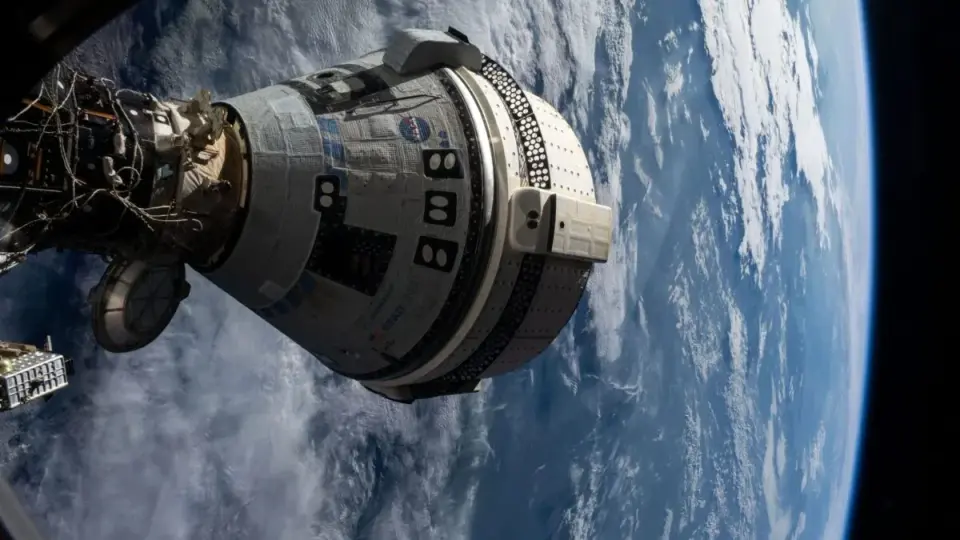
NASA Administrator Jared Isaacman announced a new roadmap for Boeing’s Starliner, committing an additional $359 million to fix thruster issues and certify the Vulcan Centaur rocket. An uncrewed test flight is scheduled for no earlier than December 2026, with a potential crewed mission by mid-2028. This move ensures a second U.S. crew transport option as SpaceX prepares to retire its Crew Dragon capsule by 2030.
Key points
- NASA will spend $359 million to upgrade Starliner’s reaction control system and certify the Vulcan Centaur rocket for crewed missions, replacing the retiring Atlas V.
- An uncrewed Starliner-1 test flight is targeted for December 2026 or January 2027; a crewed Starliner-2 mission is expected by mid-2028, commanded by astronaut Woody Hoburg.
- NASA is exercising options for two additional Starliner flights, bringing the total contract to six missions, while SpaceX has agreed to three more Crew Dragon flights through 2030 for $946 million.
- Isaacman classified the 2024 Starliner test flight as a 'Type A mishap,' citing inadequate systems engineering that led to thruster failures and helium leaks, which stranded astronauts Butch Wilmore and Suni Williams for nine months.
- Boeing has not yet committed to pricing for future commercial LEO destination (CLD) contracts, citing the lack of certification for both the spacecraft and the Vulcan rocket.
Background
This development follows months of delays and technical setbacks for Boeing’s Starliner program, which has incurred over $2 billion in losses. The 2024 crewed test flight ended with the spacecraft deemed unsafe for return, forcing NASA to use a SpaceX Dragon capsule to bring the crew home. Recent archive coverage highlights NASA’s growing reliance on Starliner as SpaceX shifts focus to Starship and plans to retire Crew Dragon, creating a potential monopoly for Boeing in U.S. crew transportation to low Earth orbit.
How outlets are covering it
Gizmodo emphasizes the urgency of NASA’s decision, noting that SpaceX’s intent to sunset Crew Dragon leaves Starliner as the only viable alternative for preserving U.S. crew access to the ISS. CNN highlights the severity of the 2024 failure, with Isaacman comparing it to the Columbia and Challenger disasters, and notes the additional $359 million investment as a significant commitment. Ars Technica focuses on the commercial implications, pointing out that Boeing is 'incredibly excited' to become the sole provider but has refused to commit to pricing for future commercial space station contracts due to unresolved certification issues. Space.com underscores the timeline, confirming that no crewed Starliner flight will occur before 2028, and notes the dependency on the new Vulcan Centaur rocket.
Why it matters
The success of Starliner is critical for maintaining a competitive, multi-provider system for U.S. crew transportation to low Earth orbit. If Starliner fails to meet its 2028 target, the U.S. could face a single-point-of-failure scenario with SpaceX, potentially impacting access to the International Space Station and future commercial LEO destinations. The $359 million investment and the Type A mishap classification underscore the high stakes and technical risks involved in this transition.
What to watch
NASA and Boeing will monitor the December 2026 uncrewed test flight to validate thruster upgrades and thermal performance. If successful, the agency will proceed with the mid-2028 crewed mission commanded by Woody Hoburg. Boeing will also need to finalize pricing for commercial LEO destination contracts once the Vulcan Centaur and Starliner are fully certified. SpaceX will continue operating Crew Dragon through 2030 under its new contract, providing a backup option during the transition.
- Boeing’s Starliner Faces a Critical Test This Year as NASA Runs Out of Options gizmodo.com
- NASA reveals new plan for Boeing’s troubled Starliner spacecraft and commander of future mission CNN
- NASA ramps up support to get Boeing’s astronaut capsule flying after Butch and Suni fiasco ABC7 Los Angeles
- Boeing “incredibly excited” to serve as nation’s only astronaut transportation arstechnica.com
- Boeing's Starliner won't launch astronauts until 2028 (and may need a new rocket), NASA says Space
Want the full story? Read the original reporting
Read on gizmodo.com