
NASA commits $359M to Boeing Starliner fixes, targeting 2028 crewed return
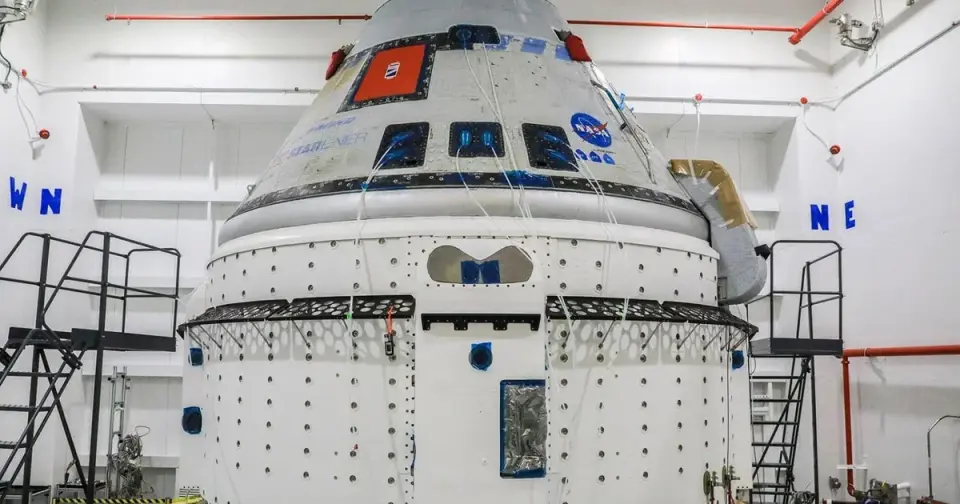
NASA and Boeing have outlined a path to return the Starliner spacecraft to crewed service by mid-2028, following a 2024 mission that stranded two astronauts for nine months. The agency will fund an uncrewed test flight in late 2026 or early 2027 to validate thruster upgrades and certify the Vulcan rocket. This move ensures a second U.S. crew transport option as SpaceX prepares to retire its Crew Dragon capsule.
Key points
- NASA will pay an additional $359 million to Boeing to fix Starliner thruster issues and certify the Vulcan Centaur rocket for human spaceflight.
- An uncrewed Starliner-1 mission is planned for December 2026 or January 2027 to test propulsion system upgrades and thermal modifications.
- A crewed Starliner-2 mission is targeted for mid-2028, commanded by veteran astronaut Woody Hoburg.
- NASA is exercising options for two additional crewed flights, bringing the total contract to six missions, to ensure access to low Earth orbit after SpaceX retires its Crew Dragon.
- The 2024 Crew Flight Test resulted in a 286-day stay for astronauts Butch Wilmore and Suni Williams due to propulsion failures, which NASA has classified as a 'Type A' mishap.
Background
The 2024 Starliner mission suffered multiple propulsion system failures, including helium leaks and thruster outages, leading to a 'close call' classification by an independent review board. The astronauts remained on the International Space Station for nine months before returning via a SpaceX Crew Dragon in March 2025. NASA’s Program Investigation Team identified 61 recommendations to address technical and programmatic issues, including inadequate systems engineering and integration. The agency is also preparing for the retirement of the ISS in the early 2030s and the transition to commercial low Earth orbit destinations.
How outlets are covering it
CNN emphasizes the severity of the 2024 incident, noting NASA Administrator Jared Isaacman’s classification of the event as a 'Type A' mishap, comparable to the Columbia and Challenger disasters. Ars Technica highlights Boeing’s potential monopoly on U.S. crew transportation after SpaceX retires its Dragon, noting concerns over pricing and the lack of competition. NASA’s official statement focuses on the technical validation process and the commitment to multiple crew transportation options, while CBS News details the specific engineering fixes, such as redesigned thruster valves and improved parachutes. All sources agree on the timeline for the uncrewed test and the 2028 crewed return, but differ in emphasis on the risks and the strategic importance of maintaining a second provider.
Why it matters
The return of Starliner to crewed service is critical for maintaining a sustainable U.S. capability to access low Earth orbit, particularly as SpaceX plans to retire its Crew Dragon and Falcon 9 rockets. A single provider would create a vulnerability in the U.S. space program, especially as the International Space Station is decommissioned and commercial space stations are developed. The $359 million investment and the rigorous testing process underscore the importance of ensuring safety and reliability in human spaceflight, while also addressing the long-term need for multiple crew transportation options to support future missions and commercial destinations.
What to watch
The uncrewed Starliner-1 mission is expected to launch in December 2026 or January 2027, where it will undergo rigorous testing of the propulsion system and thermal modifications. Following this, NASA and Boeing will complete the thruster valve design modification and other improvements before certifying the spacecraft for crewed flight. The first crewed mission, Starliner-2, is targeted for mid-2028, with Woody Hoburg as the commander. NASA will also work with United Launch Alliance to certify the Vulcan Centaur rocket for human spaceflight, replacing the retiring Atlas V.
- NASA plans unpiloted Starliner test flight after astronauts got stuck at space station in 2024 CBS News
- NASA reveals new plan for Boeing’s troubled Starliner spacecraft and commander of future mission CNN
- Boeing “incredibly excited” to serve as nation’s only astronaut transportation arstechnica.com
- NASA, Boeing Share Update on Commercial Starliner Development Plans NASA (.gov)
- Boeing's Starliner won't launch astronauts until 2028 (and may need a new rocket), NASA says space.com
Want the full story? Read the original reporting
Read on CBS News