
NASA's 'Big Bang' Power Swap Extends Voyager 2's Interstellar Science Mission
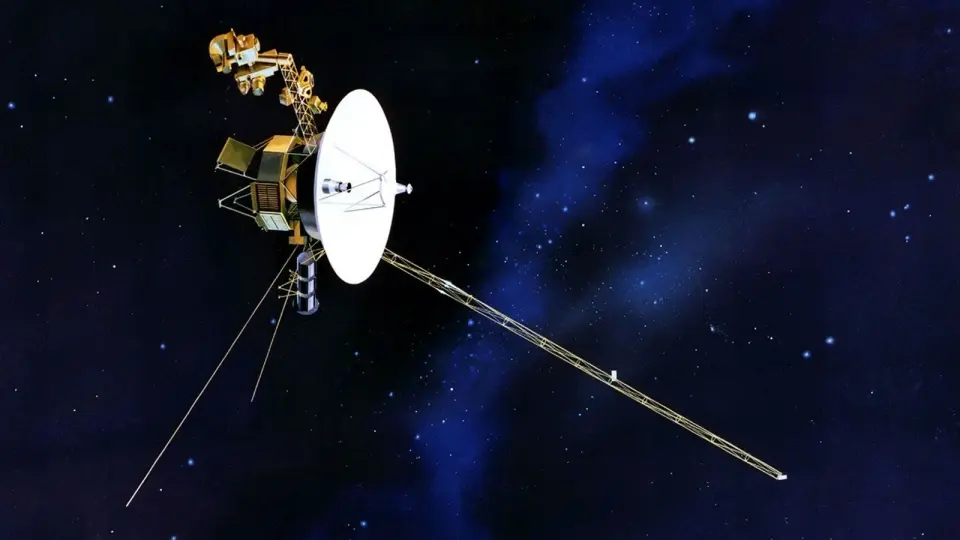
NASA engineers successfully implemented a power-saving maneuver nicknamed the 'Big Bang' on the Voyager 2 spacecraft, extending its operational life by at least one year. By swapping high-power heaters and a digital tape recorder for lower-power alternatives, the team preserved power for three remaining science instruments. This move prevents the loss of a fourth instrument and sets the stage for a similar update on Voyager 1.
Key points
- The 'Big Bang' update was executed on July 9, 2026, after months of testing to ensure the spacecraft remained warm enough to function.
- Voyager 2, located 21.35 billion kilometers from Earth, now has enough power to keep its three remaining instruments operational for at least another year.
- The maneuver involved turning off two dedicated heaters and a digital tape recorder, replacing them with lower-power devices that still provide necessary residual heat.
- NASA plans to apply the same power-saving strategy to Voyager 1, which is located 25.40 billion kilometers away, potentially allowing the restart of its Low-energy Charged Particles instrument.
- Both Voyager probes lose approximately 4 watts of power annually due to the decay of their plutonium-based radioisotope thermoelectric generators.
Background
Voyager 2 and its twin, Voyager 1, launched in 1977 and have operated far beyond their original five-year design life. Previous archive coverage highlights the critical nature of power management, including a 2025 fuel-line clog on Voyager 1 that threatened communications, and a 2024 memory corruption event that required software rerouting. The 'Big Bang' maneuver follows a 2023 power-saving measure that tapped a hidden voltage-protection system on Voyager 2 to delay instrument shutdowns.
How outlets are covering it
Space.com and NASA Science emphasize the success of the 'Big Bang' in extending Voyager 2's mission by at least one year, highlighting the team's effort to balance power and thermal requirements. CNN provides a more detailed technical breakdown, noting that the fix was tested in May and June before implementation in July, and that it could allow the restart of the Low-energy Charged Particles instrument on Voyager 1. Mashable focuses on the broader context of the probes' aging power supplies and the historical significance of their interstellar exploration, noting that Voyager 2 has already lost two instruments since 2024. All sources agree on the success of the maneuver but differ in the level of technical detail and the emphasis on future implications for Voyager 1.
Why it matters
The 'Big Bang' maneuver demonstrates the ingenuity required to maintain deep-space missions beyond their expected lifespans. By extending the operational life of Voyager 2, NASA ensures continued data collection from interstellar space, providing valuable insights into the environment beyond our solar system. The success of this maneuver also sets the stage for similar updates on Voyager 1, potentially extending its mission into the 2030s and allowing for the restart of key scientific instruments.
What to watch
NASA plans to implement the same 'Big Bang' power-saving strategy on Voyager 1 in the coming months. If successful, this could allow the restart of the Low-energy Charged Particles instrument and extend the mission's operational life by at least one year. The team will continue to monitor both spacecraft to ensure they remain warm enough to function and to maintain precise antenna pointing for communications with Earth.
- NASA figured out how to keep its 48-year-old Voyager 2 probe running for yet another year Space
- ‘Big Bang’ fix boosts Voyager 2’s mission in interstellar space CNN
- How NASA is powering the Voyager 2 probe from a galaxy away Mashable
- NASA Engineers Help Prolong Voyager 2’s Science Mission NASA Science (.gov)
- NASA grants Voyager 2 probe another year of power with risky 'Big Bang' maneuver. Now, will it work for Voyager 1? Live Science
Want the full story? Read the original reporting
Read on Space