
New interstellar sulfur molecule reshapes the tale of life’s origins
TL;DR
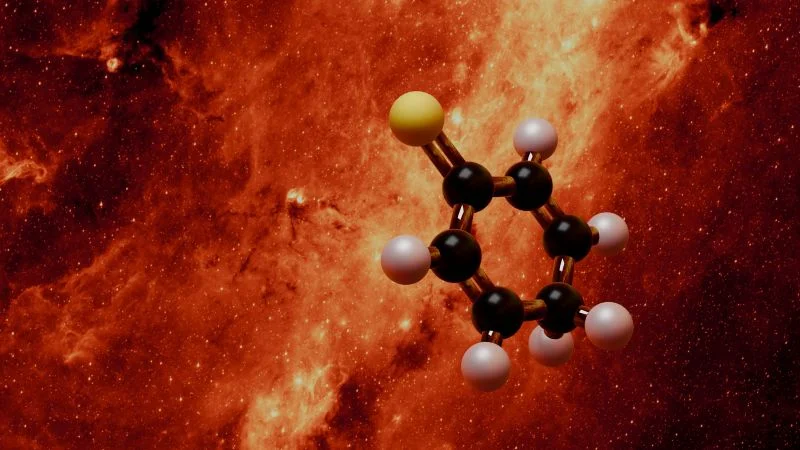
Astronomers have detected the largest sulfur-bearing molecule in interstellar space—a 13-atom compound called 2,5-cyclohexadiene-1-thione—inside a molecular cloud about 27,000 light-years away, bridging a gap between simple space chemistry and the complex molecules linked to life. The molecule was synthesized in the lab from thiophenol, its radio fingerprint matched observations from the IRAM-30m and Yebes telescopes, and researchers say sulfur-containing compounds could be more common in space than previously thought, potentially seeding early Earth’s chemistry via comets and meteorites.
- Scientists discover molecule in space that hints at origin of life CNN
- A detection of sulfur-bearing cyclic hydrocarbons in space Nature
- New Research Reveals the Ingredients for Life Form on Their Own in Space Universe Today
- Proteins before planets: How space ice may have created the 1st building blocks of life Space
- New study of chemical reactions in space 'could impact the origin of life in ways we hadn't thought of' Live Science
Want the full story? Read the original reporting
Read on CNN