
No Ground Below: Jupiter’s Interior Is a Dense, Metallic Fluid, Not a Surface
TL;DR
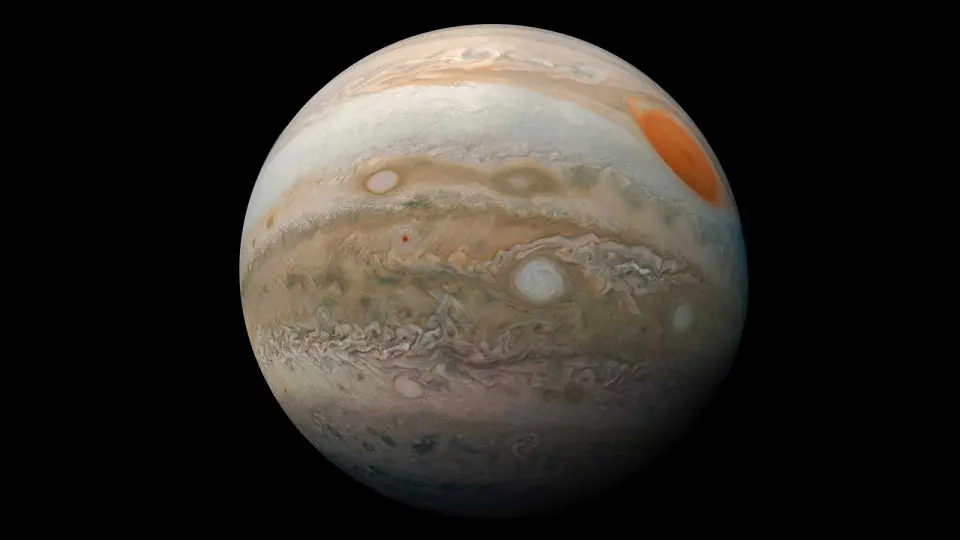
Jupiter has no solid surface; below its cloudy atmosphere the gas becomes a hot, dense, electrically conducting fluid of metallic hydrogen with no distinct boundary. The one-bar “surface” is an arbitrary reference level, not a real ground. A descending probe would be crushed, heated, and dissolved long before any crust could be reached. Galileo sampled only upper atmospheric layers, while Juno data suggest a diluted, boundary-free core. In short, Jupiter is a continuum interior, not a planet with a landing site.
- There is no surface anywhere on Jupiter to land on or crash into, just hydrogen that thickens with depth until it stops behaving like a gas and starts conducting electricity like a metal, so a descending probe would be crushed and absorbed into the planet long b Space Daily
- APOD: 2014 May 17 - Hubble's Jupiter and Shrinking Great Red Spot NASA Science (.gov)
- APOD: 1998 October 22 - Jupiter: When Storms Collide NASA Science (.gov)
- APOD: 2000 September 26 - Approaching Jupiter NASA Science (.gov)
Want the full story? Read the original reporting
Read on Space Daily