
Soviet Meteor 2-7 Satellite Fragments Again, Highlighting Rising Orbital Debris Risks
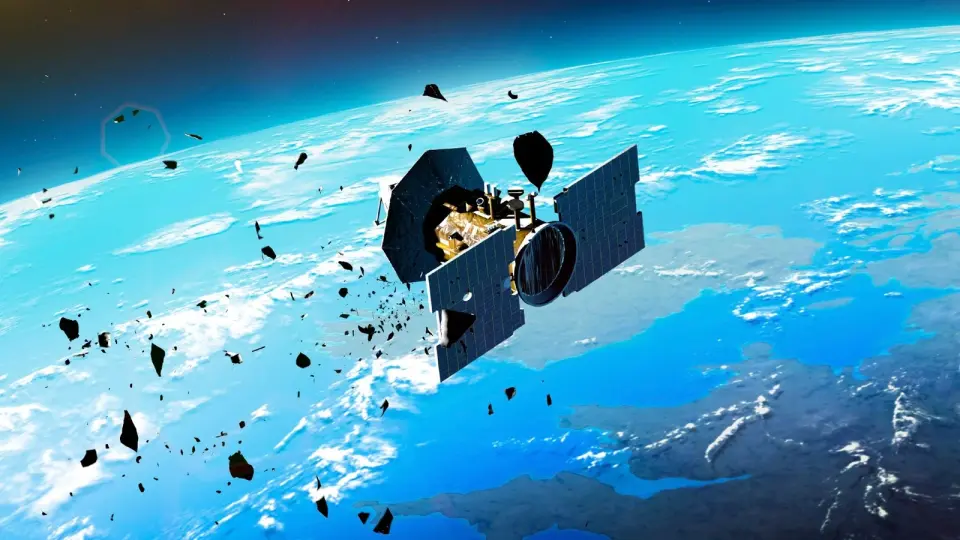
The Soviet-era Meteor 2-7 weather satellite, launched in 1981, has fragmented for the second time in low Earth orbit. Detected by LeoLabs in October 2026, the event produced tens of new debris pieces at an altitude of 530 miles. Experts warn this is part of a worrying trend, as tracked orbital debris has increased by 180% since 2005, raising collision risks for active spacecraft.
Key points
- LeoLabs detected the fragmentation of Meteor 2-7 on October 5, 2026, as it passed over a radar site in Western Australia.
- The event generated an estimated 'tens of fragments' in low Earth orbit, specifically at an altitude of 530 miles (855 km).
- This is the second time Meteor 2-7 has broken apart; the first event occurred in March 2004, according to orbital debris expert Jim Shell.
- The breakup follows other recent fragmentation events, including the U.S. spy satellite USA 32 in September 2026 and a Chinese rocket body in August 2026.
- The European Space Agency (ESA) reports tracking over 44,000 debris pieces in 2026, up from 16,000 in 2005, an 180% increase.
Background
This event occurs against a backdrop of increasing satellite launches and orbital congestion. While previous archive items focused on specific satellite failures like Russia's Rassvet constellation or experimental missions like 'Space Puffin,' the current trend highlights a broader systemic issue: the accumulation of debris from aging spacecraft. The 180% increase in tracked debris since 2005 underscores the growing challenge of maintaining orbital safety as more satellites are deployed.
How outlets are covering it
LeoLabs emphasizes the 'worrying trend' of recent fragmentation events, stressing the need for persistent sensing to ensure space safety. Jim Shell, an orbital debris expert, highlights the specific altitude of 530 miles as a region of high debris density, noting that Meteor 2-7 previously broke apart in 2004. Starlust.org adds context on the broader debris environment, citing ESA data that estimates 1.5 million objects between 1 and 10 cm in size, and notes that such debris has previously forced the International Space Station to raise its orbit to avoid collisions.
Why it matters
The fragmentation of dead satellites like Meteor 2-7 creates new debris that poses collision risks to active spacecraft, including the International Space Station. As the number of tracked debris pieces grows, the likelihood of cascading collisions increases, potentially threatening the sustainability of low Earth orbit for future missions and commercial operations.
What to watch
Space domain awareness companies like LeoLabs and s2a Systems will continue to monitor the debris cloud from Meteor 2-7 and other recent fragmentation events. Agencies will likely track the trajectory of these fragments to assess collision risks for active satellites and may need to adjust orbits of spacecraft like the ISS to avoid impacts.
- A dead Soviet satellite just broke apart in orbit (again). Experts say it's part of 'a worrying trend' Space
- Debris Event Detection Underscores Growing Demand for LeoLabs Space Safety Services TipRanks
- Satellite launched in 1981 breaks up in low Earth orbit; debris may put other spacecraft at risk Starlust.org
Want the full story? Read the original reporting
Read on Space