
SpaceX Moon Impact Highlights Lunar Debris Risk For Future Bases
TL;DR
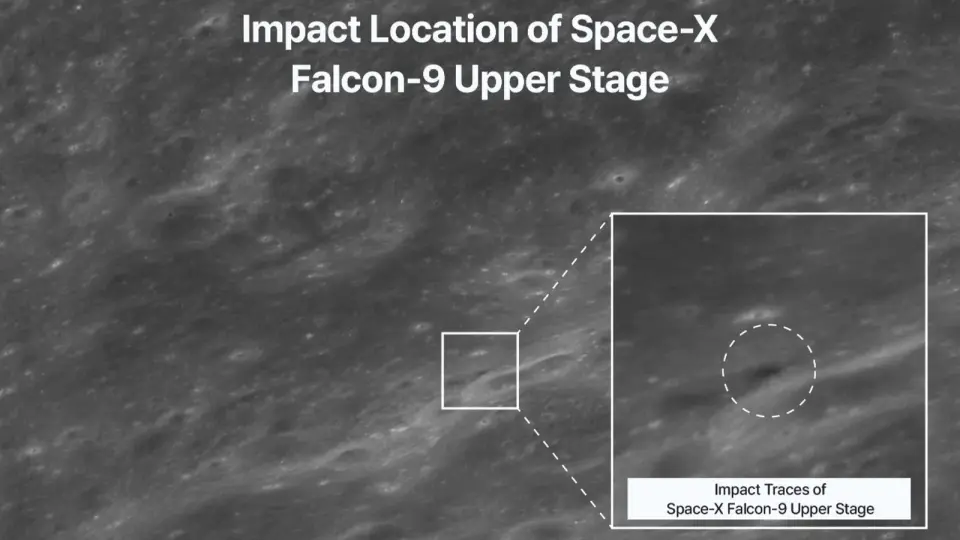
A 4.5-ton SpaceX Falcon 9 upper stage slammed into the Moon near Einstein Crater on Aug. 5, 2026, ejecting a high-velocity plume that was captured by South Korea’s Danuri orbiter, NASA’s LRO, and Earth-based observatories (ESO’s VLT and Lowell) which detected brief sodium and lithium signals; the encounter, partly mitigated by a Danuri orbital adjustment to avoid a close pass, underscores tangible debris hazards as plans for permanent lunar infrastructure expand, prompting calls for designated impact zones and strict deorbit protocols to protect habitats, solar arrays and astronauts while scientists use the data to refine ejecta models and surface-impact understanding.
- SpaceX rocket's moon crash highlights 'a tangible operational risk' of lunar settlement Space
- The SpaceX Rocket Finally Hit the Moon. Here’s What Scientists Saw ZME Science
- Hackers, a moon crash and a breakthrough flu shot Scientific American
- SpaceX leaves its mark on the Moon, Trump’s odyssey, and scepticism of Fed head SWI swissinfo.ch
- The Moon, the Graveyard of Human Satellites Kompas.id
Want the full story? Read the original reporting
Read on Space