
Voyager 1 Inches Toward One Light-Day From Earth After a Half-Century Journey
TL;DR Summary
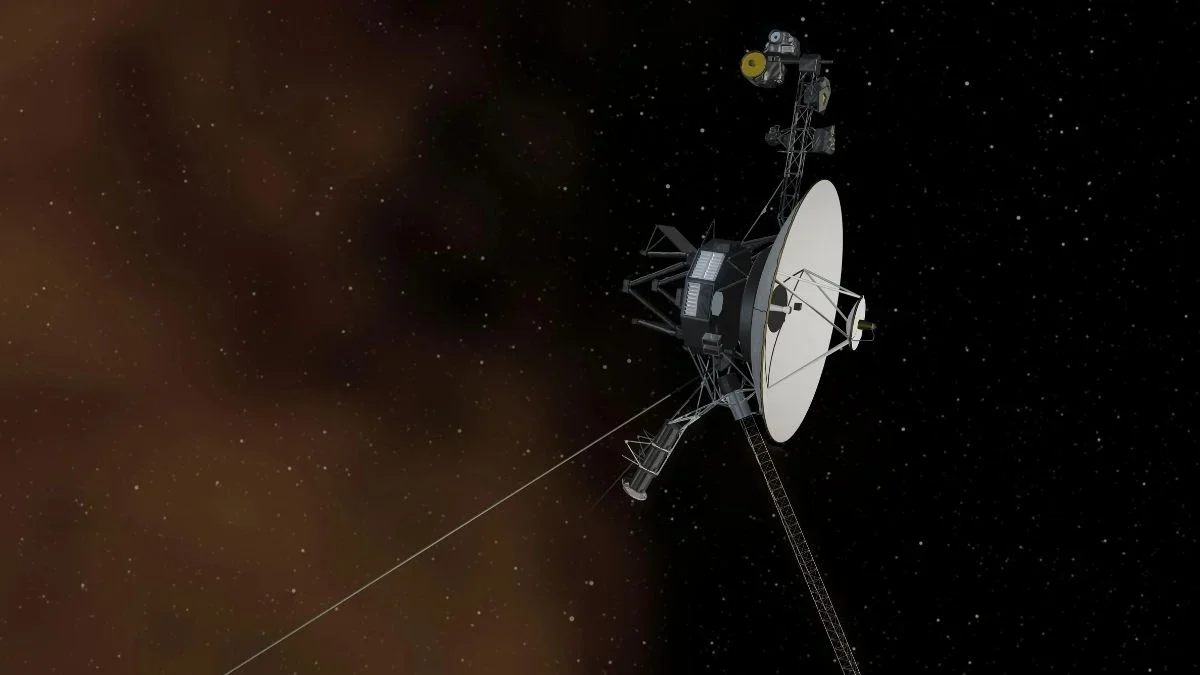
Launched in 1977, Voyager 1 has traveled at about 38,000 mph and became the first human-made object to enter interstellar space. NASA says it will reach a distance equivalent to one light-day from Earth on November 18, 2026 (≈25.9 billion kilometers), a milestone that underscores how far light must travel in a day. As its plutonium power declines, engineers are turning off instruments to extend the craft’s life, with comms expected into the early 2030s. Voyager 1, along with Voyager 2, carries the Golden Record—Earth’s sounds and greetings—intended for any future finders, continuing a historic legacy of space exploration.
- Voyager 1 Has Traveled Through Space at 38,000 Mph Since 1977 And Still Hasn't Reached 1 Light-Day ScienceAlert
- The Voyager 1 probe, launched in 1977, is now so far from Earth that a radio signal travelling at the speed of light takes over 22 hours to reach it, and it is still sending data back from interstellar space on a power source the size of a car battery Space Daily
- Voyager 1 was launched in 1977 with a suite of 10 science instruments — as of 2026, only two remain switched on, and the spacecraft's nuclear power source loses roughly 4 watts every year, a slow drain that is now deciding what humanity still gets to learn fr ScienceBlog.com
- Voyager Spacecraft: The Ultimate Power Management Challenge? EE Times
- On November 18, 2026, Voyager 1 becomes the first thing humanity has ever built to sit a full light-day away — a full day for any signal to reach it. 19FortyFive
Reading Insights
Total Reads
0
Unique Readers
26
Time Saved
5 min
vs 6 min read
Condensed
91%
1,113 → 99 words
Want the full story? Read the original article
Read on ScienceAlert