Tag

Golden Record

All articles tagged with #golden record

Voyager Probes Mark 49-Year Odyssey Beyond the Solar System
science1 day ago

Voyager Probes Mark 49-Year Odyssey Beyond the Solar System

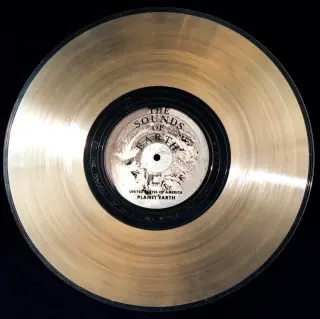
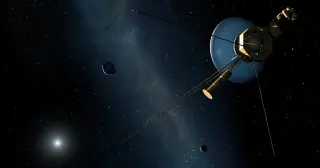
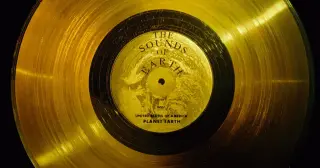
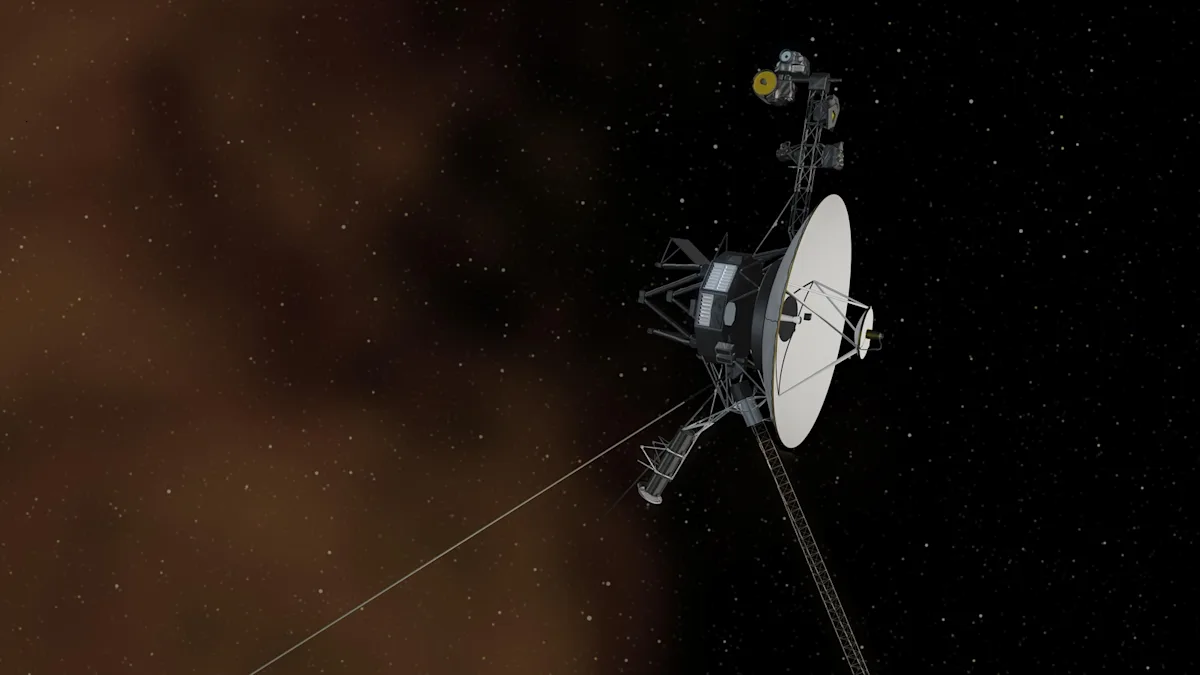
NASA’s Voyager 1 and Voyager 2, launched in 1977, continue their historic mission far past its four-year plan, visiting all four outer planets and now venturing in interstellar space while sending data back to Earth. Even as aging power limits require hardware tweaks to extend life, the probes remain functional and keep delivering space measurements, carrying the Golden Record and providing the famous 1990 pale blue dot Earth image as they drift farther from home.

Six-Year-Old’s Hello Sets Sail on Voyager’s Golden Record
space17 days ago

Six-Year-Old’s Hello Sets Sail on Voyager’s Golden Record

NASA’s Golden Record on Voyager 1 carries a greeting spoken by six-year-old Nick Sagan: “Hello from the children of planet Earth.” The line, chosen for the record assembled by Carl Sagan and colleagues, is part of a 55-language message meant as a message in a bottle for any potential finders. Voyager 1, launched in 1977, has since reached interstellar space, turning a child’s voice into a lasting trace of humanity as Nick and his father reflect on immortality and legacy.

Pulsars as Cosmic Address: Voyager’s Language-Free Map
space1 month ago

Pulsars as Cosmic Address: Voyager’s Language-Free Map

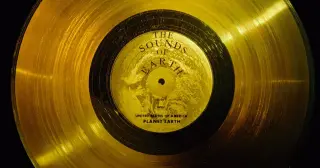
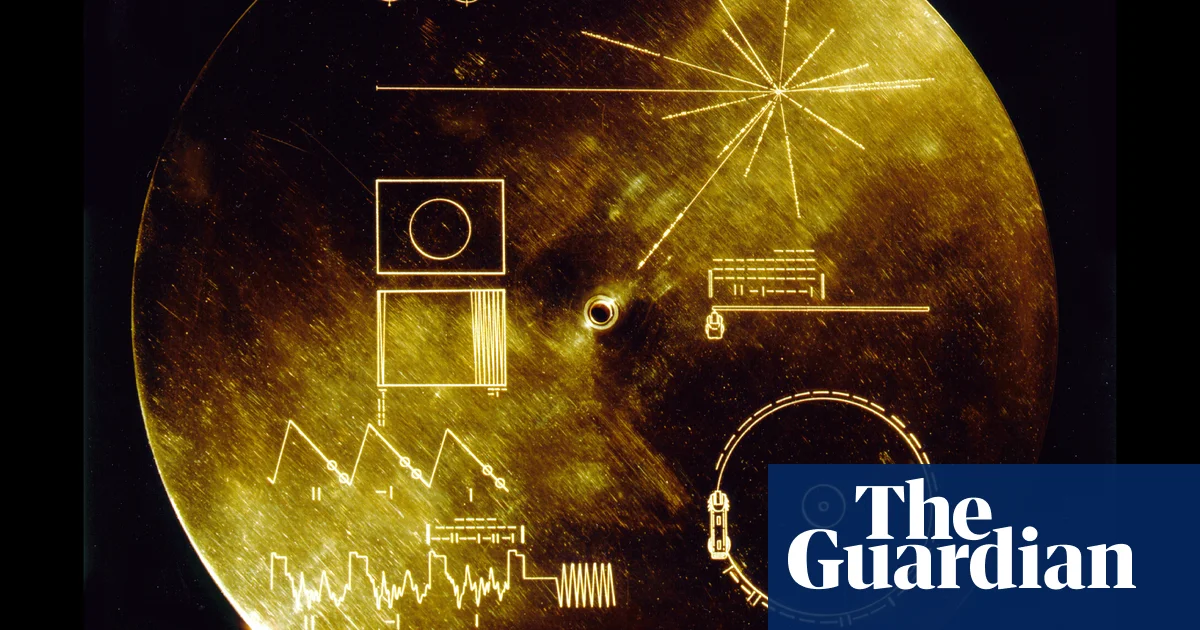
Voyager's Golden Record cover encodes a pulsar map and a hydrogen time standard to locate the Sun and roughly date the message, designed to work without a shared human language. Fourteen pulsars provide directional clocks (with a fifteenth pointing to the Galactic center for orientation), and a uranium-238 patch offers an independent age check. The scheme relies on interpretation and the galaxy's motion over time, reflecting a compact, language-free cosmic address with built-in redundancies and caveats.

Voyager 1 Inches Toward One Light-Day From Earth After a Half-Century Journey
space1 month ago

Voyager 1 Inches Toward One Light-Day From Earth After a Half-Century Journey

Launched in 1977, Voyager 1 has traveled at about 38,000 mph and became the first human-made object to enter interstellar space. NASA says it will reach a distance equivalent to one light-day from Earth on November 18, 2026 (≈25.9 billion kilometers), a milestone that underscores how far light must travel in a day. As its plutonium power declines, engineers are turning off instruments to extend the craft’s life, with comms expected into the early 2030s. Voyager 1, along with Voyager 2, carries the Golden Record—Earth’s sounds and greetings—intended for any future finders, continuing a historic legacy of space exploration.

A Private Heartbeat on Voyager: The Golden Record’s Hidden Love Letter
space2 months ago

A Private Heartbeat on Voyager: The Golden Record’s Hidden Love Letter

NASA’s Voyager Golden Record carries a minute-long compressed recording of Ann Druyan’s brainwaves and heartbeat from 1977, recorded just after she and Carl Sagan agreed to marry. The clip, intended as a life-sign, sits alongside music, greetings and diagrams as a public time capsule, but it also preserves a private emotional moment that science cannot fully decode. As Voyager travels beyond 25 billion kilometres from Earth, the minute remains a human touch embedded in a machine, a reminder that our messages carry both data and intimate feeling into the cosmos.

Car-sized Voyager 1 keeps moving outward past Pluto, outlasting its builders
space2 months ago

Car-sized Voyager 1 keeps moving outward past Pluto, outlasting its builders

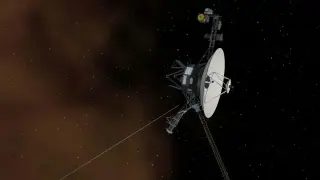
Launched in 1977, Voyager 1—roughly the size of a small car—still sails outward at about 17 km/s, now well beyond Pluto’s orbit at 166 AU. It communicates at light speed, with signals taking over 23 hours to reach Earth, while its power has dwindled to ~250 watts and only two instruments remain active. The mission has outlived its original four-year plan, outlasting most of its creators, and it carries the Golden Record as a lasting message as it drifts through interstellar space for billions of years.

Ann Druyan’s Brainwaves Echo Across the Cosmos on Voyager’s Golden Record
space2 months ago

Ann Druyan’s Brainwaves Echo Across the Cosmos on Voyager’s Golden Record

The Voyager Golden Record includes an hour-long recording of Ann Druyan’s brainwaves and heartbeat, compressed into a one-minute track created in 1977 to guide thoughts about Earth’s history, civilization, and her love for Carl Sagan. Druyan intended it as a private meditation that could hint at inner life to any future listener, perhaps alien; today, neuroscience would say such thoughts are unreadable without the full context. The piece frames a hopeful, human, interior moment encoded for interstellar travel as Voyager 1 and 2 sail onward through interstellar space.

Voyager's Golden Record Still Speaks in 55 Languages as Power Fades
space3 months ago

Voyager's Golden Record Still Speaks in 55 Languages as Power Fades

NASA's JPL shut down Voyager 1's Low-energy Charged Particles instrument in 2026 due to dwindling plutonium power; both Voyager probes will likely go quiet in coming years, but the Golden Record—carrying greetings in 55 languages from Akkadian to Wu—remains as a timeless, symbolic self-portrait of humanity, a gesture rather than a scientific instrument, designed to convey Earth's diversity to any distant listener.

"NASA's Europa Clipper Mission: Humanity's Message to Jupiter Unveiled"
space2 years ago

"NASA's Europa Clipper Mission: Humanity's Message to Jupiter Unveiled"

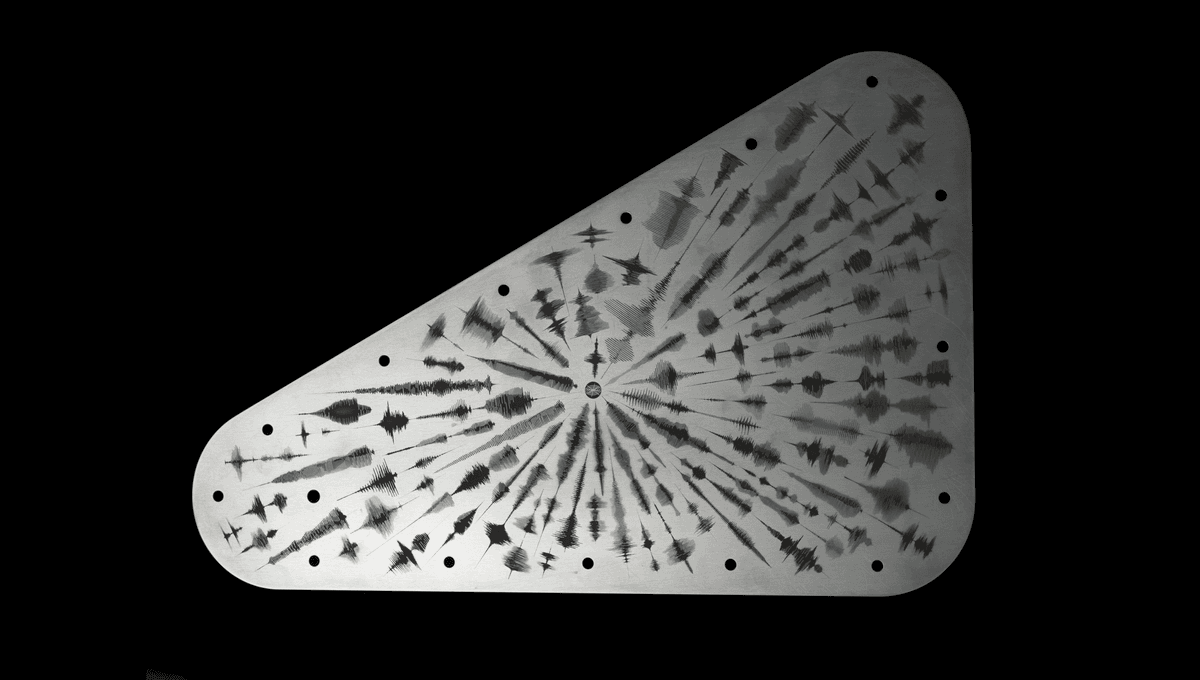
NASA is sending a "Golden Record" on the Europa Clipper mission to Jupiter's moon, Europa, featuring millions of names, a poem, equations, and more, showcasing global diversity. The plate will include sound waves for the word "water" in 104 languages, a "Message in a Bottle" with 2.6 million names, a poem by U.S. Poet Laureate Ada Limón, the Drake equation, radio waves representing the water hole, and a tribute to planetary scientist Ron Greeley. The mission aims to study Europa and its potential for life, with a planned arrival at Jupiter in 2030.