
Webb Telescope captures massive water vapor plume on Enceladus.
TL;DR
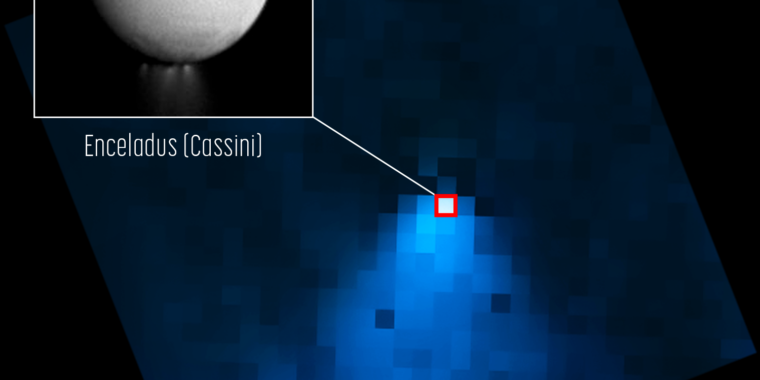
NASA's James Webb Space Telescope has captured a water vapor plume on Enceladus, a frozen moon orbiting Saturn, that is over 9,500 km long, making it the most extensive spray of water ever seen in space. The plumes of water vapor erupt from Enceladus via cryovolcanoes that form over cracks in the ice, and the halo Enceladus leaves in its wake creates most of Saturn's E-ring. The observations from Webb's Integral Field Unit reveal that Enceladus supplies the Saturnian system with most of its water, and while there were no organics in the megaplume, the vaporous plumes of Enceladus are thought to originate from hydrothermal vents deep in its subsurface ocean.
Want the full story? Read the original reporting
Read on Ars Technica