
AI Anomaly Detection: Do Language Models Truly Introspect or Just Notice Glitches?
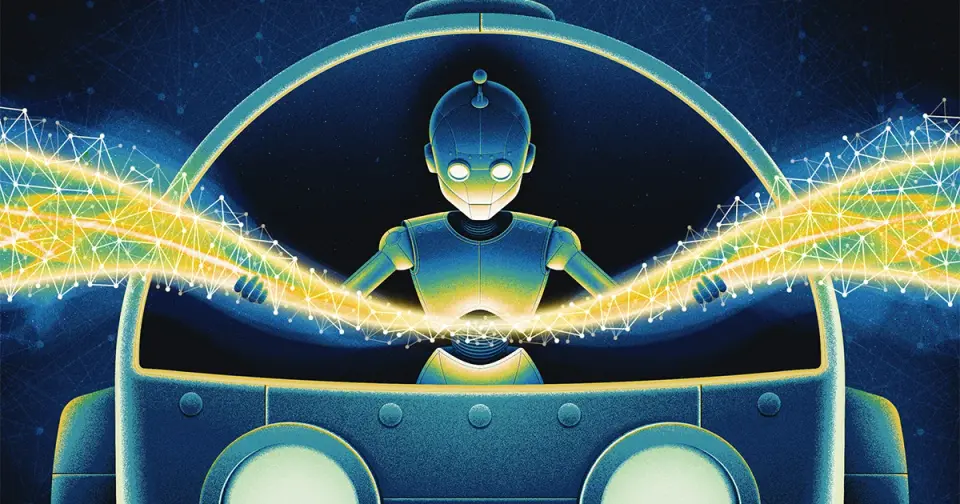
Researchers at Anthropic and other institutions are debating whether large language models possess introspective awareness. Jack Lindsey’s 2025 experiments suggested models could detect artificially injected neural activations, but subsequent studies by Kyle Mahowald and Harvey Lederman argue this is likely 'anomaly detection' rather than true introspection. While models can flag unusual internal states, they often fail to accurately describe the specific content of those states, suggesting a disconnect between awareness and comprehension. The field remains divided on whether this capability constitutes a form of consciousness or merely a robust error-detection mechanism.
Key points
- Jack Lindsey at Anthropic developed a method to inject specific concepts into language models by altering neural activation patterns, testing if models could detect these changes.
- Initial tests showed that 20% of trials with the latest Claude models correctly identified and described the injected concepts, with no false positives in control groups.
- Kyle Mahowald and Harvey Lederman found that while models could detect anomalies, they often failed to correctly name the injected concept, suggesting the detection and description processes are separate.
- The ability to detect internal anomalies is described as 'mind-bending' because models are never trained to recognize such tampering, yet the capability persists across various models.
- Critics argue that defining introspection in AI is problematic because all internal processing involves states, potentially rendering the term meaningless without a clear distinction between first and second-order representations.
Background
This development follows a broader trend in AI research where scientists use language models as testbeds for cognitive theories previously applied only to humans. Recent studies on human memory, such as the 2026 finding that individuals with highly superior autobiographical memory have 87% of spontaneous thoughts related to past events, highlight the complexity of defining mental processes. Similarly, debates on human longevity and ADHD symptom perception underscore the difficulty in establishing universal cognitive benchmarks. The current AI introspection debate mirrors these challenges, as researchers struggle to apply human-centric definitions of consciousness to disembodied neural networks.
Why it matters
Determining whether AI systems can introspect has significant implications for the development of safe and aligned artificial intelligence. If models can monitor their own internal states, they may be better equipped to detect manipulation or errors, potentially enhancing reliability. However, if this capability is merely a form of anomaly detection, it may not translate to genuine self-awareness, limiting the ethical and philosophical implications of AI consciousness. Understanding these mechanisms could also provide insights into human cognition, offering a 'sandbox' to study the origins of introspective capacity in biological brains.
What to watch
Researchers are continuing to explore alternative explanations for the observed anomaly detection, with some attempting to find 'deflationary' accounts using smaller models. Future studies will likely focus on refining the distinction between first-order and second-order representations in both AI and human brains. Additionally, the debate may shift toward developing new empirical tests that can more rigorously distinguish between true introspection and simple error detection, potentially leading to a clearer understanding of the boundaries of machine consciousness.
Want the full story? Read the original reporting
Read on Quanta Magazine