
KAIST Uses Chip-Making Tech to Solve EV Battery Lifespan Issues
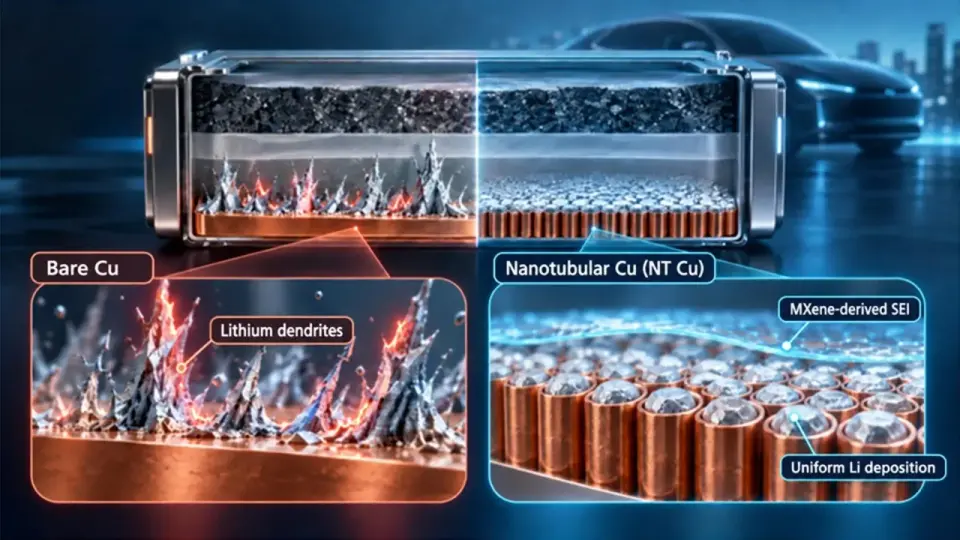
South Korean researchers have developed a method to extend the life of anode-free electric vehicle batteries by using semiconductor fabrication techniques to evenly distribute lithium and create a stable protective layer, potentially allowing for smaller, lighter batteries with greater range.
Key points
- KAIST scientists addressed the short lifespan of anode-free batteries, which lack traditional graphite anodes to save weight but suffer from uneven lithium buildup.
- The team used secondary sputtering lithography, a chip-making technique, to create microscopic tubes on copper foil, increasing surface area fourfold to prevent damaging dendrite formation.
- A 10-nanometer MXene coating was applied to the copper to encourage the formation of a stable lithium fluoride protective layer, reducing chemical degradation.
- The research, published in Advanced Functional Materials, suggests this approach could enable high-energy batteries without adding significant weight or volume, aiding commercial EV development.
Background
This development follows earlier battery innovations, such as 2024 research into low-cost lithium-sulfur batteries and 2022 studies on 3D imaging of dendrite formation, which highlighted the persistent challenges of battery durability and material efficiency in the electric vehicle transition.
Why it matters
By solving the durability issue of anode-free batteries without adding weight, this technology could allow manufacturers to produce smaller battery packs that offer longer driving ranges, directly addressing consumer concerns about range anxiety and vehicle cost.
What to watch
The next step involves scaling the semiconductor-based fabrication process for mass production and testing the long-term stability of the MXene-coated electrodes in real-world vehicle conditions to confirm commercial viability.
Want the full story? Read the original reporting
Read on Science Daily